
Norah Richards was founder of Punjabi theatre. Born in 1971 she was the wife of Edward Richards, an Irish Unitarian minister who came to Lahore in 1911 to teach English at Dyal Singh College. As an amateur actress, she had been associated with the Irish National Theatre in Dublin. She was saturated with Lady Gregory`s rural comedies, not so much with Yeats`s dance-dramas, Synge`s sombre plays, or O`Casey`s cultural testaments. Inspired by the experience of directing Shakespeare`s `A Midsummer Night`s Dream` with the college students, she set about creating serious theatre in Punjab that went against the grain of the commercial variety then prevalent under the name of Parsi theatre.
To begin with, Norah Richards gathered around herself those college students in Lahore who were enthusiasts of theatre and staged English plays with them. These also included some that she wrote herself. Drawing upon the past and on folklore, she composed such plays-in-miniature as Sati, Valmiki, Gautama, and Mother Earth, similar to Lady Gregory`s village comedies. In 1912 she instituted an annual competition in playwriting, which brought I. C. Nanda to the fore, by adjudging his Punjabi script Suhag or `Wedding` in 1913 as the best. She tirelessly busied herself in writing pamphlets and booklets like Village Play, Play Writing and Play Makings Studio Theatre, and Drama as a Cultural Force and Its Place in the University, which brought into vogue a cultured theatre with incidents and characters merging in the plot, and integrally related scenery.
Upon her husband`s premature death in 1920, Norah retired from the stage. After the partition of India and Pakistan, she left for Andretta, a hamlet in the Kangra valley now in Himachal Pradesh. There she set up an acting school and amphitheatre on land given her by the Punjab government. Norah Richards died in 1971.
This article is a stub. You can enrich by adding more information to it. Send your Write Up to content@indianetzone.com
Norah Richards
Norah Richards was the founder of modern Punjabi theatre.
Recently updated articles in Indian Drama & Theatre
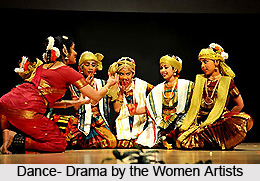
Amateur Theatre
Development of Amateur Theatre has been responsible for useful innovations in theatre culture of Karnataka.
Surendranath Ghosh
Surendranath Ghosh or Dani Babu was a Bengali thespian active during the mid-20th century. He was mostly known for his contributions to Bengal’s moder...
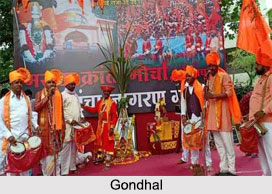
Gondhal Dance
Gondhal is a religious folk dance of Maharashtra. It is performed on special days like when there is a newborn in a family or marriage. Dedicated to g...

Pravritti in Natyashastra
Pravritti in Natyashastra refers to specific human behaviour varying from region to region. There are four types of Pravritti namely, dakshinatya, ava...
Padma Bhushan Awardees (2010-2019)
Padma Bhushan Awardees (2010-2019)
Related articles in Indian Drama & Theatre
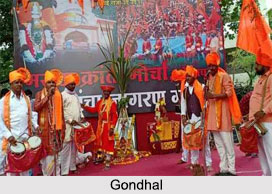
Gondhal Dance
Gondhal is a religious folk dance of Maharashtra. It is performed on special days like when there is a newborn in a family or marriage. Dedicated to g...
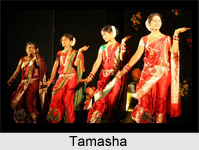
Tamasha Folk Dance
Tamasha is a folk art, which includes the love songs, which are traditional lavanis and dance along with the music.
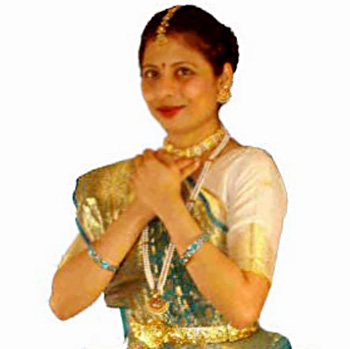
Sringara Rasa
Sringara Rasa is mentioned in Natyashastra as one of the important rasas. The Sthayi bhava in Sringara rasa is Rati or love.
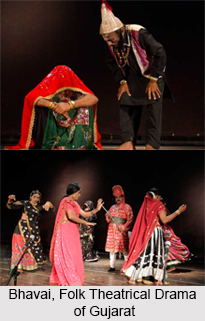
Bhavai - Folk Theatre of Gujarat
Bhavai is a popular folk theatre form of Gujarat that belongs to the tradition of theatre of entertainment.
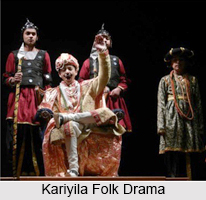
Kariyila Folk Dance
Kariyila is one of the most appealing and popular folk drama forms of Himachal Pradesh, portraying social satire with the accompaniment of folk dance...