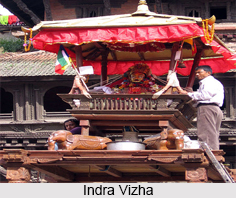
 Indra Vizha festival was celebrated in Tamil Nadu during the Sangam Age (2nd century B.C. – 3rd century A.D.) to please Lord Indra. In ancient India, Lord Indra was one of the most popular deities. In the Marudam region, Tamil agriculturists used to worship Indra as their "Lord". Indra was considered as the God of the rains and since the farmers were dependent on rains for their crops, they used to worship Lord Indra for rain, thunder and lightning. It was generally believed that this festival was actually a prayer to Indra, and would remove the difficulties and dangers to those who celebrate it.
History of Indra Vizha
The Chola kings whose port-city was Kaveripattinam used to take the responsibility of this festival. The detailed information on the celebration of Indra Vizha festival can be seen in the Tamil epics, the "Silappadikaram" and the "Manimekhalai". As per the Manimekhalai, the famous sage Agasthya helped the people of Kaveripattinam during a period of drought. He advised the Chola king Todittol Sembian to celebrate a festival for Lord Indra to please him and then only Indra would bring rain to this city. According to the advice, the king arranged a big festival for Lord Indra. In return, they got rain in the city and experienced the benefits of this, his successors also continued to celebrate this festival every year.
According to Manimekhalai, once a Chola king named Nedumkilli could not celebrate the Indra Vizha festival. As a consequence to this, the wrath of the deity fell on the kingdom and the king. The sea engulfed the famous port city of Kaveripattinam and all the inhabitants had to suffer for this.
Celebration of Indra Vizha
The Indra Vizha festival generally continues for a period of 28 days. The festival usually commenced with a group beating drums and announcing to the people the start of the celebrations. The citizens of the town then clean the streets and roads and redecorate the city, with each house being adorned with many decorations. The officials of the kingdom would pay their respects to the king and wish him and the kingdom well. Musical performances would be held and the fire oblations are offered in many temples for Lord Shiva, Lord Vishnu and other deities. The festival ends with people bathing in the sea with the members of the family.