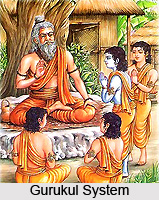
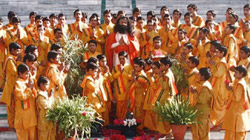
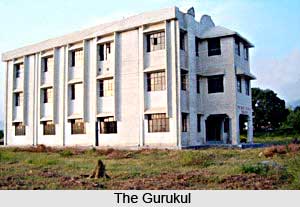
 History of Education in India can be traced back to the ancient era. Education in Ancient India conforms to the third century BC. During that early period sages and scholars imparted education orally and after the introduction of alphabets writing developed on Palm leaves and barks of trees. In addition to that temples and community centers often took the role of schools. Gradually the concept of Gurukul System originated. The Gurukul system of education is one of the oldest on earth. Gurukuls were traditional Hindu residential schools of learning. At the Gurukuls, the teacher imparted knowledge of Religion, Scriptures, Philosophy, Literature, Warfare, Statecraft, and mathematics, Medicine, Astrology and History. The Gurukuls abide by the principles that only students belonging to Brahmin and Kshatriya communities were taught in these Gurukuls.
Education in medieval India was the result of fundamental changes brought about by rise of Buddhism and Jainism. According to the History of Education in India, in the medieval period universities imparting higher education at Nalanda, Takshila, Ujjain, and Vikramshila flourished. During the medieval period the Mughals came to India and introduced Madrasah system to the Indian educational system. In addition to that the Persian influence was quite visible in the Indian education system.
Another noticeable modification took place during the British period. Education in Modern India refers to the period of 18th century. The concept of school developed during this era. Every temple, mosque or village in country had schools. These schools guided students to read, write, arithmetic, theology, law, astronomy, metaphysics, ethics, medical science and religion. The style and content of Indian society during the 19th century witnessed a radical change. Women education was introduced and educational rights became a Fundamental Right for citizens of India. History of Education in India proves that the existing education system has been roughly modeled upon the British system.