 A great deal of Gandhara sculptures has survived dating from the first to probably as late as the sixth or even the seventh century. Gandhara was a Holy Land of Buddhism and excluding a handful of Hindu images, sculpture took the form either of Buddhist sect objects, Buddha and Bodhisattvas, or of architectural embellishment for Buddhist monasteries.
It was during Kanishka`s reign; representation of Buddha`s human form came into being and was much illustrated amidst the sculpture of the Bodhisattva. The striking influence of Grecian and Roman classicalism finds a remarkable definition amidst the proportion and ornamentation of the Gandhara Bodhisattva sculpture.
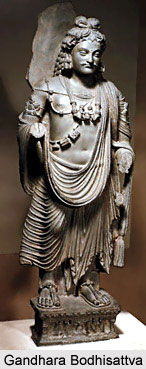
Gandhara Bodhisattva is basically a standing, full length, grey schist stone statue of a young and handsome man. Draped in elaborate garments, wearing lots of ornaments round his neck, arms and fingers this statue of Bodhisattva seems as if palpating. There is a turban like head gear which adorns his head and sandals on his feet which looks so real. The face of the statue of Gandhara Bodhisattva is dashingly moustachioed and the halo behind his head makes the figure a rare example of the brilliance of the Gandhara School of art.
None of the Gandhara bodhisattvas have attributes that easily identify them as Maitreya, the Lord Buddha of the Future. The articulated musculature of this second-century sculpture is similar to western prototypes. The standing bodhisattva of Gandhara remains an enduring symbol of diverse culture.
This article is a stub. You can enrich by adding more information to it. Send your Write Up to content@indianetzone.com