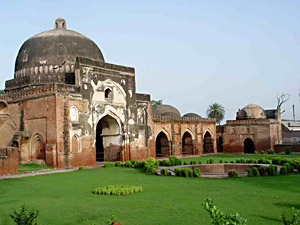
 Due to an amalgamated style a separate set of features of Mughal sculptures evolved. These features were also apparent in the sculptures during Humayun Era. It was under the Mughal emperor, Akbar that the Mughal art and sculpture truly flourished. The Mughal architecture thus witnessed the construction of some of the most opulent buildings in its history. The sculptures during Akbar era comprised calligraphy and thick foliage designs. Architectural elements like domes, chhatris, jharokhas and arched gateways were primarily used. The tradition of constructing grand buildings continued. This is evident from the architecture and sculptures during Jahangir era.
But the Mughal architecture and sculptures reached their zenith under the rule of Shah Jahan. The sculptures during Shah Jahan era are reminiscent of the passion of the emperor for art and architecture. The Taj Mahal was built by the same emperor. However the sculptures during Aurangzeb era show a downward slide. These sculptures were simpler and style and lacked the love and passion of the early emperors.
One of the most prominent features of Mughal architectures was that it was successful in influencing the native style, especially the Rajput sculpture and architecture.
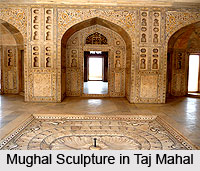 With the emergence of the Delhi Sultanate a new style evolved. The features of Mughal Sculpture were not different from that of the Delhi Sultanate sculptures but the monuments were indeed more lavish. Under the patronage of Mughal emperors like Akbar and Shah Jahan art and architecture thrived. One of the important features of
 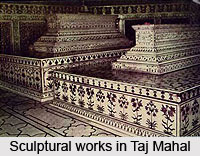 The inlaid stone work was also an art to reckon with. Shallow relief depictions of flowers to intricate pierced-marble screens known as jails were part of the carved Mughal stone sculptures.