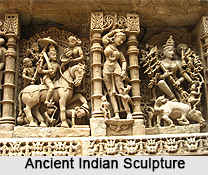
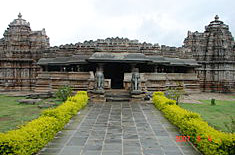
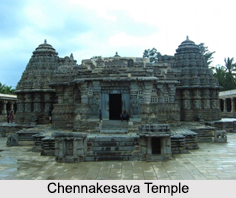
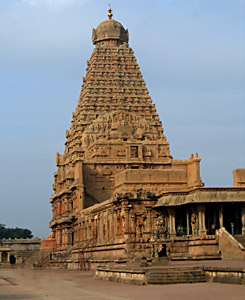
 Religion was a key influence as far as the Chola sculpture is concerned. It was during their reign that the construction of the gopuram or gateway came into vogue. The gopurams were often quite high but these were vividly sculpted with different god and goddesses. These sculptures are vivid and intricate. The images of Lord Shiva are frequently found in the temples built by the Chola rulers. In fact the Brihadeeswarar Temple in Tanjore displays hundred and eight dance poses of the Lord carved on its inner walls.
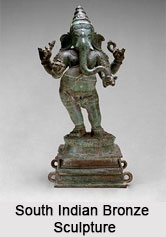
The plastic art of Chola bronze is another distinguished feature of their architecture. Exquisite idols of Hindu gods and goddesses have been made out of bronze. Magnificent structures and minute sculptures perfectly define Chola art and sculpture. The imperial Chola kings of Tanjore, who patronised the sculptors and brought the art to perfection. More than 60 bronze images of deities were donated to the temple of Tanjore.
The Chola bronze casters achieved a lot with the patronage of these south Indian kings of kings. These bronze deities stand silent yet with their hands they speak which resemble south Indian dance. A sense of sensuality was evoked by the sculptures of Chola dynasty.
It is the Nataraja that is the ultimate Chola icon. The dancing figure of the god is an emblem of higher truth. The Cholas worshipped and propitiated Kali, the fearsome goddess of destruction. One bronze sculpture shows her adorned with earrings of human cadavers. The distinctive Chola style emerged during the reign of Aditya Chola. The bronzes of this period are characterised by display of supple body with flowing contours and an oval face.