
The tribal republics of the Punjab, the Audumbara, Kunida and Yaudheya had almost similar administration. They issued coins in the name of their presiding deities and this practice continued even in the medieval period. In the modern times also this practice was well known.
Before the rise of the Magadha Empire, a number of tribal republics existed in Punjab. They had lost their independence during the imperial supremacy, but as soon as the empire collapsed, they returned to their own republican system and started issuing coins. The tribes that issued their coins in the second century B.C were the Agreya, Kshudraka, Rajanya, Sibi, Trigarta and Yaudheya. The early tribal republics of the second century B.C called themselves `janapada` and referred to their names and the places on their coins in the Brahmi script. The other republics had their names on the coins along with some personal name with the title `Raja` or `Maharaja`. In some cases the coins bore their presiding deities. Copper was the prime issue of all republics. Each tribe seemed to have had its own weights for their coins and a number of them issued coins in more than one weight and sometimes multiples or sub multiple weights were also found. Silver coins were also issued by some of the tribes during this time. These silver coins followed the weight of `hemidrachm` of the Indo-Bactrian rulers.
The well executed copper coins of the Yaudheyas (an ancient tribal confederation who lived in the area between the Indus river and the Ganges river) of the later period show Kushana influence in their type and style. Many of the coins bore the symbols that were current earlier and many new symbols were grouped together within a die to form the devices for stamping these coins. A tendency to do away with the symbol groups and an aim to introduce some simple devices were also perceptible in the coins. Maintaining the pattern of the Indo-Bactria, these coins introduced gods and goddesses on some coins. Some of the rulers also placed the effigy of the sage Visvamitra in the familiar Hellenistic style and inscribed his name like the Kushanas. The Yaudheyas sometimes placed their favourite god Kartikeya and his consort on their coins.
The coins of tribal republics throw light on the history, culture, religion, economy, polity, trade, commerce, technology, symbolic use, metrology, movements, etc. of the various tribes in ancient India. These coins are the representation of various aspects of the life and culture of the tribal republics existed in ancient India. Several excavations have enriched the numismatic history and elucidated newer techniques of analysis which were rendered unspoken.
Coins of Tribal Republics
Coins of tribal republics were the representation of various influences.
Recently updated articles in Indian Coins
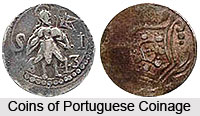
Portuguese Indian Coinage
The Portuguese Indian Rupiya was the currency of Portuguese India until 1958.
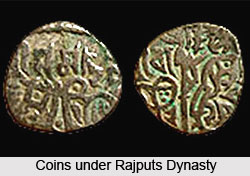
Delhi Coinage under Rajputs
Delhi Coinage under Rajputs comprised uniform precious metal content. It was only after the Ghurid conquest that the Delhi billon coins moved into Afg...
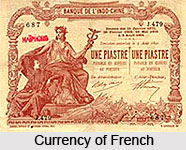
French Indian Coinage
Coins were first minted in French India in 1700, and banknotes were first issued by the Banque de l`Indochine.
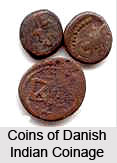
Danish Indian Coinage
Danish India is a term for the former colonies of Denmark in India.
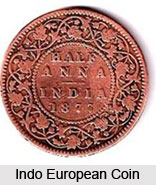
Indo European Coins
Indo European coins reflected the amalgamation of cultures and were widely circulated while trading.
Related articles in Indian Coins
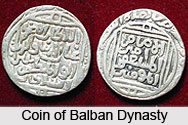
Coins in Medieval India
Coins in medieval India were governed by severance and distinctiveness in each of the Islamic rulers and their vision.
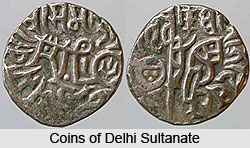
Coins of Delhi Sultanate
Coins of Delhi Sultanate had introduced a new genre of melioration that set a mark in history.
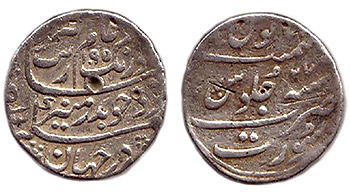
Coins of Mughal Empire
Coins of Mughal Empire depict the history of the then culture and society. It remains manifestations to the economic and cultural heritage of the Mugh...
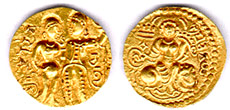
Coins of the Gupta Dynasty
The Gupta coinage started with a remarkable series in gold issued by Chandragupta I, the third ruler of the dynasty.
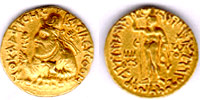
Coins of Kushana Empire
The Kushana coins are made of gold which reveal a great deal about the rulers of that time.