
The ancient coins got a considerable position and the coins of Mauryan Empire as well in the manuscript of Kautilya. As per the `Arthasashtra` of Kautilya, the metal was first melted in crucibles (musha) and purified with alkalis or `kshara` as part of the manufacturing of coins. These purified metals were then beaten into sheets on an anvil with a hammer, cut into pieces with clippers and finally were stamped with dies or punches with symbols.
The coins of Mauryan period manifest that they were cut and clipped for proper adjustment of weights. These coins were struck in conceivable geometric form including round, oval and elliptical. Primarily the coins bore only one symbol and it had been observed that the idea was perhaps taken from the Vedic period. Later the number of symbols increased and the punching devices of these coins had no inscriptions but they bore a number of symbols. The symbols varied from geometrical and floral patterns, with hills, birds, animals, reptiles, human figures and the like. A particular symbol stands for the representation of a particular place or area. Often the flans or planchets of the coins were smaller than the size of the punches. Sometimes, in an attempt to accommodate the complete symbols; they were punched together, one overlapping another. Several symbols were introduced in the ancient Indian coins abut with the commencement period of the Mauryan empire the symbols got a bolder look. The earlier coins with five symbols were a representation of a particular feature. Even silver punch marked coins were also issued during this age. Silver coins were found in four denominations viz. `pana`, `ardha-pana`, `pada` and `asta-bhaga` or `ardhapadika`. These coins were issued from the mints of the Mauryan Empire as per `Arthasastra`.
Earlier several punches were used on the coins but the Mauryans, set the standard of smaller round or square coins with five random punch marks. These coins circulated well beyond Mauryan borders and these coins were termed as `karshapana`. Basically the punched used on the Maurya coins were a sun and a six-armed symbol. The other three may include representations of plants, animals, auspicious or religious symbols and everyday objects. According to the Indian text Visuddhimagga, these marks enabled a money changer to know who issued each coin and where it was struck.
However, in a number of hoards, a few coins had been identified which were pieces cut from full coins. As per the historical evidences, the full coins were cut into halves to suit the purpose of the half denominations and they were accepted as legal tender. During this period, some minute coins weighing between 2 and 3 grains were made and these were used in transaction. They were found occasionally along with the `panas` and were said to be `mashaka` which was one sixteenth of the `pana`.
Coins of Mauryan Empire
Coins of Mauryan Empire were the representation of the first step taken to modify the ancient coins.
Recently updated articles in Indian Coins
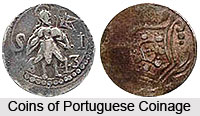
Portuguese Indian Coinage
The Portuguese Indian Rupiya was the currency of Portuguese India until 1958.
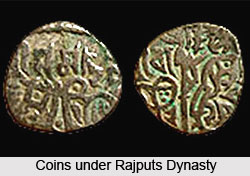
Delhi Coinage under Rajputs
Delhi Coinage under Rajputs comprised uniform precious metal content. It was only after the Ghurid conquest that the Delhi billon coins moved into Afg...
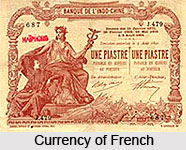
French Indian Coinage
Coins were first minted in French India in 1700, and banknotes were first issued by the Banque de l`Indochine.
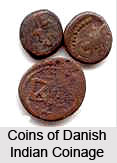
Danish Indian Coinage
Danish India is a term for the former colonies of Denmark in India.
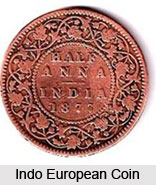
Indo European Coins
Indo European coins reflected the amalgamation of cultures and were widely circulated while trading.
Related articles in Indian Coins
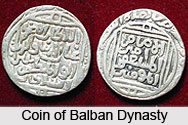
Coins in Medieval India
Coins in medieval India were governed by severance and distinctiveness in each of the Islamic rulers and their vision.
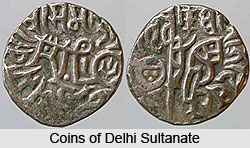
Coins of Delhi Sultanate
Coins of Delhi Sultanate had introduced a new genre of melioration that set a mark in history.
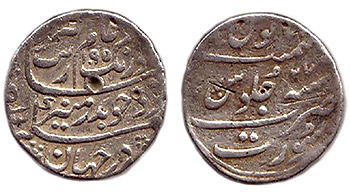
Coins of Mughal Empire
Coins of Mughal Empire depict the history of the then culture and society. It remains manifestations to the economic and cultural heritage of the Mugh...
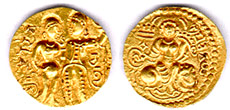
Coins of the Gupta Dynasty
The Gupta coinage started with a remarkable series in gold issued by Chandragupta I, the third ruler of the dynasty.
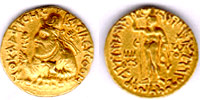
Coins of Kushana Empire
The Kushana coins are made of gold which reveal a great deal about the rulers of that time.