
 Buddhist Indian sculpture is a type of sculpture which was developed in India around 255 BC, especially, due to the efforts of Mauryan emperor, Ashoka. He was impressed by the ideologies of Buddhism and adopted it as the state religion. It was on his initiative that some remarkable Buddhist Indian sculptures were carved out. These sculptures were used for popularising this new religion. Buddhist Indian sculpture was simpler compared to the later sculptures which evolved in India.
Buddhist Indian Sculptures
Buddhist Indian sculptures can be best defined as splendid examples of religious sculpture and architecture.
Introduction
Buddhist Indian sculpture is a type of sculpture which was developed in India around 255 BC, especially, due to the efforts of Mauryan emperor, Ashoka. He was impressed by the ideologies of Buddhism and adopted it as the state religion. It was on his initiative that some remarkable Buddhist Indian sculptures were carved out. These sculptures were used for popularising this new religion. Buddhist Indian sculpture was simpler compared to the later sculptures which evolved in India.History of Buddhist Indian sculpture
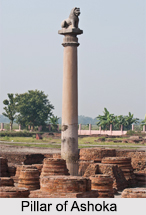
The first historical Buddhist sculpture in India is of the Mauryan period in the 4th-3rd centuries B.C. Emperor Ashoka rooted the formation of monolithic pillars of stonework which are about 30 to 40 feet high, topped by animal figures like the bull, lion and elephant, and had engraved with the Buddhist concepts of ethics, humanity and holiness. The most amazing of them all is the extremely polished monolithic lion-capital found at Sarnath, which is now the Emblem of the Government of India. The expansion of Buddhist art influenced the development of Hindu art, until Buddhism nearly disappeared in India about the 10th century due to the crucial development of both Islam and Hinduism.
Features of Buddhist Indian sculpture
The features of Buddhist Indian sculpture include an iconic representation of Lord Buddha. The style evolved by Ashoka can also be seen in buildings that sprang up in the Buddhist pilgrimage centres. The sculpture of Sanchi Stupa is a fine specimen of the Buddhist art.
Another important construction that emerged with the Buddhist religious principles are the Buddhist caves. Apart from this the sculpture of chaityas, sculpture of Vihara and sculpture of Ashoka Pillar are quite significant too. The human figure replaced the representation of Buddha and his teachings. Buddhist art reproduces devotedly all the significant features of Buddhism. In ancient Buddhism, Gautama Sakyamuni has been viewed as a principle human being and fairly of course people can find in the early Buddhist art of Bharhut, Sanchi, Bodh-Gaya and Amaravati.
Another important construction that emerged with the Buddhist religious principles are the Buddhist caves. Apart from this the sculpture of chaityas, sculpture of Vihara and sculpture of Ashoka Pillar are quite significant too. The human figure replaced the representation of Buddha and his teachings. Buddhist art reproduces devotedly all the significant features of Buddhism. In ancient Buddhism, Gautama Sakyamuni has been viewed as a principle human being and fairly of course people can find in the early Buddhist art of Bharhut, Sanchi, Bodh-Gaya and Amaravati.
Famous Buddhist sculptures in India
Buddhist sculpture in India is a massive style marked by some realism employing foreign elements from Achaemenid Persia. Following are the famous Buddhist sculptures in India:
Pillar of Ashoka: Great Pillar of Ashoka has animal figures like the bull, lion and elephant. The most remarkable of all the Pillars built during Ashoka`s reign is the highly polished monolithic lion-capital found at Sarnath, which is now the Emblem of the Government of India. This sculpture reveals the aristocratic and international nature of Mauryan art.
Emblem of the Government of India: It symbolizes four roaring lions back to back facing the four basic directions. The round abacus is decorated with four dharmachakras or wheels of law, alternating with an elephant, a bull, a horse and a lion, all engraved with masterly skill. The abacus is hold by a bell-shaped base consisting of a lotus with dharmachakra, which conceivably symbolized the triumph of justice over physical force. The superb modelling of the figures executed in a realistic manner with a certain stylization is invested with a great control and dignity.
 Great Stupa: The Great Stupa at Sanchi is possibly the supreme surviving historical object of the Mauryan Empire and is a renowned Buddhist monument.
Great Buddha: Situated in Bodhgaya with 25 m (82 ft) high in meditation pose, the Great Buddha is probably the largest Buddha statue in meditation pose built in India with the blend of brickwork blocks and red sandstone.
Standing Buddha: Situated in Sarnath, Standing Buddha is about 80 ft high. It is a standing statue of Lord Buddha. The standing statue of Sarnath is one of the country`s tallest standing statues of Lord Buddha.
Monolith Buddha Statue: It is the world"s tallest monolith statue of Gautama Buddha. It stands in an island in the centre of the Hussain Sagar Lake.
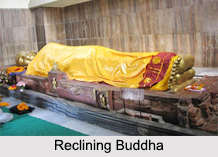
Reclining Buddha: The reclining Nirvana statue of the Buddha is within the Parinirvana Stupa is 6.10 metres long and is made of monolith red brickwork.
Maitreya Buddha: Situated near Diskit Monastery in the Nubra Valley of Ladakh, the Maitreya Buddha statue is 32 metre tall. Diskit Monastery is also acknowledged as Deskit Gompa is the oldest and largest Buddhist monastery in Ladakh.
Belam Caves Buddha: It is a massive Buddha Statue close to a hillock near the Belum Caves of Andhra Pradesh. The part of cave was recognized as Meditation hall which was used by Buddhist Monks.
The bull capital of Ashoka from Rampurva, Bihar belongs to the third century B.C. is a mixture of Persian and Indian elements. The motifs on the abacus are decorative elements like the rosette, palmette and the acanthus ornaments which have no Indian element at all. The crowning element of the bull capital is a master-piece of Indian craftsmanship, showing a humped bull, well modelled, with its soft flesh beautifully represented, with its strong legs, sensitive nostrils and the ears cocked as if it were listening.
At Dhauli in Odisha, there is a representation of an elephant depicted as if emerging from a rock which has been so cut that it resembles the front part of an elephant including the head and trunk. This representation is in the native tradition of the country.
Excellent specimens of the Buddhist sculptures are revealed in the colossal statues of Yakshas and Yakshis, the deities of fertility and abundance. The Yakshi is a striking example of sculpture dated between 3rd-2nd century B.C. The figure possesses elaborate jewellery and a heavy undergarment portrays the Indian ideal of feminine beauty in her full breasts, slender waist and broad hips.
Pillar of Ashoka: Great Pillar of Ashoka has animal figures like the bull, lion and elephant. The most remarkable of all the Pillars built during Ashoka`s reign is the highly polished monolithic lion-capital found at Sarnath, which is now the Emblem of the Government of India. This sculpture reveals the aristocratic and international nature of Mauryan art.
Emblem of the Government of India: It symbolizes four roaring lions back to back facing the four basic directions. The round abacus is decorated with four dharmachakras or wheels of law, alternating with an elephant, a bull, a horse and a lion, all engraved with masterly skill. The abacus is hold by a bell-shaped base consisting of a lotus with dharmachakra, which conceivably symbolized the triumph of justice over physical force. The superb modelling of the figures executed in a realistic manner with a certain stylization is invested with a great control and dignity.
Great Stupa: The Great Stupa at Sanchi is possibly the supreme surviving historical object of the Mauryan Empire and is a renowned Buddhist monument.
Great Buddha: Situated in Bodhgaya with 25 m (82 ft) high in meditation pose, the Great Buddha is probably the largest Buddha statue in meditation pose built in India with the blend of brickwork blocks and red sandstone.
Standing Buddha: Situated in Sarnath, Standing Buddha is about 80 ft high. It is a standing statue of Lord Buddha. The standing statue of Sarnath is one of the country`s tallest standing statues of Lord Buddha.
Monolith Buddha Statue: It is the world"s tallest monolith statue of Gautama Buddha. It stands in an island in the centre of the Hussain Sagar Lake.
Reclining Buddha: The reclining Nirvana statue of the Buddha is within the Parinirvana Stupa is 6.10 metres long and is made of monolith red brickwork.
Maitreya Buddha: Situated near Diskit Monastery in the Nubra Valley of Ladakh, the Maitreya Buddha statue is 32 metre tall. Diskit Monastery is also acknowledged as Deskit Gompa is the oldest and largest Buddhist monastery in Ladakh.
Belam Caves Buddha: It is a massive Buddha Statue close to a hillock near the Belum Caves of Andhra Pradesh. The part of cave was recognized as Meditation hall which was used by Buddhist Monks.
The bull capital of Ashoka from Rampurva, Bihar belongs to the third century B.C. is a mixture of Persian and Indian elements. The motifs on the abacus are decorative elements like the rosette, palmette and the acanthus ornaments which have no Indian element at all. The crowning element of the bull capital is a master-piece of Indian craftsmanship, showing a humped bull, well modelled, with its soft flesh beautifully represented, with its strong legs, sensitive nostrils and the ears cocked as if it were listening.
At Dhauli in Odisha, there is a representation of an elephant depicted as if emerging from a rock which has been so cut that it resembles the front part of an elephant including the head and trunk. This representation is in the native tradition of the country.
Excellent specimens of the Buddhist sculptures are revealed in the colossal statues of Yakshas and Yakshis, the deities of fertility and abundance. The Yakshi is a striking example of sculpture dated between 3rd-2nd century B.C. The figure possesses elaborate jewellery and a heavy undergarment portrays the Indian ideal of feminine beauty in her full breasts, slender waist and broad hips.
Buddhist Sculptures in Maharashtra
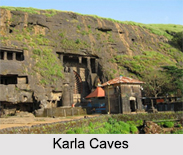 Buddhist Sculptures in Maharashtra are concentrated in places like Karla Caves, Ajanta Caves, Lonavla and Aurangabad.
Maharashtra is not a state remembered for its Buddhism but rather and for its international and industrial capital, Mumbai. However, for a thousand years, the present day state of Maharashtra provided a home for Buddhism in India. Buddhist Sculptures in Maharashtra are now the tourism delight.
History of Buddhist Sculptures in India
Gautama Buddha had come from Nepal and spent much of his active life in Bihar in the eastern India. Nevertheless, after his death, Buddhism spread across to different parts of India and, for about 1,000 years, the Western Ghats Mountain Range in India were to provide support for this religion. At that time, Western Ghats are considered as the most remote area which the monks and occasionally, nuns, found more favourable for their contemplative lifestyles. For this, the Buddhist monks used to do meditation in the Western Ghats Mountain Range.
Karla Caves, Mumbai
 Karla Cave is considered as one of the most beautiful architectural and sculptural specimen of Buddhism dominance era. Karla Caves are located in the mountain ranges of Lonavala hills near Mumbai, Maharashtra. These are popularly known for rock- cut architecture and temples. Karla caves are the oldest and well maintained caves of Buddhist tradition.
Karla Caves in 5th Century BC and its later had been one of the important centers of spiritual growth and education. These caves include one principle cave that is 15 km wide and 16km high.
Karla Caves are decorated with well carved sculptures of male and females, these caves define Buddhist art in India. Along with this, it also includes the sculptures of some animals. These are among the oldest caves of India which are saved from weather erosion.
Karla Caves maintains the sculptures of the cave in a better condition. Apart from other features, these caves are also popular for the arched roof which is supported by the wooden beams which has survived for the last 2000 years.
The entrance of Karla Cave is well decorated with choicest pillars with sculptures along with lion capitals which are similar to the lions of Ashokan pillars of Sarnath. At the entrance of the cave there is the temple of Goddess Ekveera which is considered to be a popular local pilgrimage. Karla caves also include a wooden umbrella which has been unique in these caves.
 Bhaja Caves, Pune
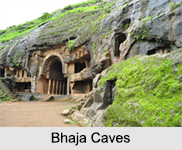
Bhaja Caves are the rock-cut caves dating back to the 2nd century BC. It is located in Pune, near Lonavala, Maharashtra. Bhaja Caves are 400 feet above the village of Bhaja, on an important ancient trade route running from the Arabian Sea eastward into the Deccan Plateau. The inscriptions and the cave temple are protected as a National Monument, by the Archaeological Survey of India.
Bhaja Caves have a number of stupas, one of their significant features. The most prominent excavation is its Chaityagrha. This architectural design is demonstrating prototypes of wooden architecture and a vaulted horseshoe ceiling. Its vihara has a pillared verandah in front and is adorned with unique relief. These caves are notable for their indications of the awareness of wooden architecture. The carvings prove thattabla - a percussion instrument - was used in India for at least two thousand years. The carving shows a woman playing tabla and another woman, performing dance.
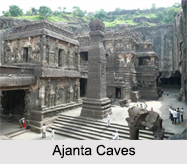
Ajanta Caves, Aurangabad District
Ajanta Caves constitute ancient monasteries and worship halls of different Buddhist traditions carved into a 250 feet wall of rock. The caves also present paintings depicting the past lives and rebirths of Gautama Buddha, pictorial tales from Aryasura`s Jatakamala, as well as rock-cut sculptures of Buddhist deities in vogue between the 2nd century BC and 5th century CE.
The textual records suggest that caves of Ajanta Caves served as a monsoon retreat for monks, as well as a resting site for merchants and pilgrims in ancient India. While vivid colours and mural wall painting were abundant in Indian history as evidenced by historical records, Caves 16, 17, 1 and 2 of Ajanta form the largest corpus of surviving ancient Indian wall-painting.
Recently updated articles in Indian Sculpture
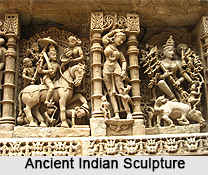
Ancient Indian Sculptures
Ancient Indian sculptures date back to the days of the Indus Valley Civilization. It was relatively simple.
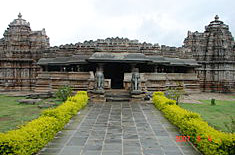
Hoysala Temple Art and Architecture
The Hoysala architecture and sculpture is a typical example of South Indian Dravidian art style.
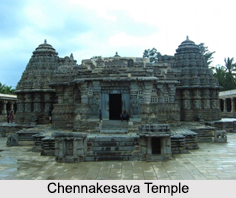
Chennakesava Temple in Somanathapura
Chennakesava Temple is a Hoysala temple sculptural example of Hoyasala art and sculpture.
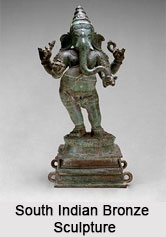
South Indian Sculptures
Types of South Indian Sculptures are categorized with the social and religious life of Hindus during the rule of Pallavas, Cholas and Rashtrakutas.
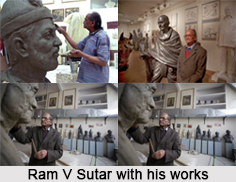
Ram V Sutar
Ram Vanji Sutar is an Indian sculptor and he is the recipient of Padma Bhusan in the year 2016.
Related articles in Indian Sculpture
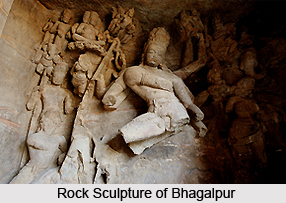
Rock sculptures
Champa, an important city during 6th century BC, was the ancient name of Bhagalpur. A number of Rock sculptures have been found here in the course of...
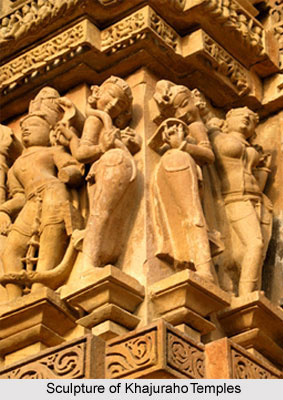
Indian Temple Sculptures
Indian Temple sculptures exhibits to the world the astonishing pieces of art. The religious places were the seats of learning and developing art in th...
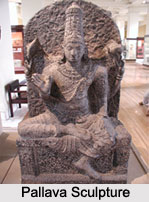
Pallava Sculptures
Pallava Sculptures for the first time introduced the use of rock in Indian architecture.
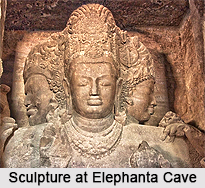
Gupta Sculptures in India
Gupta sculptures exhibit the art works which was prevalent during the Gupta rule. The sculptures of the Gupta period remained as the ideals of art for...
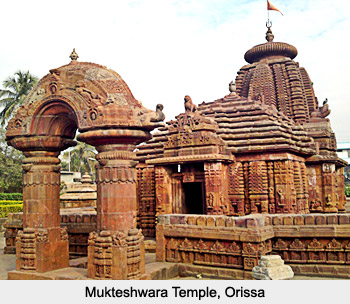
Nagara Style of Architecture
Nagara style of Architecture, developed during the 5th century, is an emblem of architectural wonder and is scattered through out various regions of t...