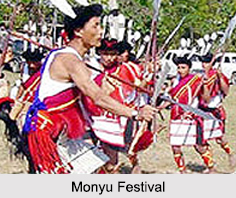
 Monyu Festival is a major festival of the Phom Nagas of Nagaland. The festival celebrates the onset of the approaching harvest season. It marks the conclusion of the winter season and the start of the bright seasons of spring and summer. The festival commences after the paddy fields have been sowed. People pray for their farms to be blessed and attain a triumphant harvest for the season. Phom Nagas celebrate this festival every year with renewed spirits.
History of Monyu Festival
The festival is said to bring abundant blessings to people if they carry out the rituals and ceremonies precisely. However, people also share the belief that if the rituals are neglected and treated with disrespect it may cause disasters and hinder the growth of their paddy. A certain rhythm of drumming is performed which is known as "Lan Nyangshem".
Celebration of Monyu Festival
The women are treated with respect and appreciated by offering pure beverages made of rice. Men conduct a special ceremony for the women. Arrival of the festival is confirmed through the gesture of beating of drums two days prior to when the festival starts. The festival is a 12 day long festival. However, people only celebrate the festivities for about six days.
•The first day of Monyu is called "Shongten-Laiphen". On this day people gather resources such as wrapping leaves and bamboo shoots from forests.
•On the second day people engage in the brewing of beverages. Rice is used for the purpose.
•"Aiha Okshok" is the third day of the festival for honouring the old traditional dances and folk music. People also feast on this day.
•On the fourth day people visit the homes of their relatives and reconnect with their loved and dear ones. This day is locally known as "Chingi Okshok". People also exchange gifts, drinks, meat and grains.
•On the fifth day, known as "Paangmohah", men dress up in their vibrant new clothes and sing and dance away in joy and laughter.
•The last day is observed by honouring the elders in the village. People feast on drinks and delicious meat preparations.