Introduction

Early History of Thissur DistrictEarly history of Thissur District is closely interlinked with trade with Greece, Italy, Rome and Germany. The early political history of Thrissur is interlinked with that of the Chera Dynasty of the Sangam age, who ruled over vast portions of Kerala with their capital at Vanchi. Kodungallur was also the capital of Cheraman Perumal, the last Chera ruler in the 7th century.

Medieval History of Thissur DistrictMedieval History of Thissur District explains the rule of Kingdom of Cochin. The main revenue was coming from Muziris Port which was destroyed due to the flood. But there is no extant written evidence about the emergence of Kingdom of Cochin or of the Cochin Royal Family, also known as Perumpadapu Swaroopam.

Modern History of Thissur DistrictModern History of Thissur District begun with the hands of Kings of Travancore. As, Raja Rama Verma became the ruler of Travancore, the British rose into prominence. The British East India has a close fight against Tipu Sultan, the ruler of Mysore, where the rulers of Travancore encouraged their countrymen with art and architecture.


Chera Dynasty in Thisur

During the time of the Chera ruler, Kodungallur was an important trade link in Indian Ancient Maritime History. The whole of the present Thrissur district was included in the early Chera Empire. The district can claim to have played a significant part in fostering the trade relations between Kerala and outside world in the ancient and medieval period. It can also claim to have played an important part in fostering cultural relations and in laying the foundation of a cosmopolitan and composite culture in this part of the country. Muziris (Muchiri) was an important port city in the pre-historic era.


Muziris Port in Thissur

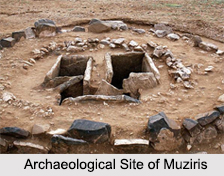
Muziris is a lost port city in Kodungallur and was a major center of trade in Kerala between the Chera Empire and the Roman Empire. Muziris was destroyed by massive flooding of the river Periyar in 1341, opening a new port called Kochi. Muziris was also known as Mahodayapuram, Shinkli, Muchiri and Muyirikkodu. It is known as `Vanchi` to locals.


Importance of Muziris in Early Age

Early History of Thissur DistrictMuziris was opened for Arabs, Romans, Portuguese, Dutch and English to Indian sub continent and South East Asia. Muziris dealers had set Indo-Greek and Indo-Roman trade with Egypt, which comes in gold and other metals, pepper and spices, precious stones and textiles. It was famous as a major port for trade and commerce for more than 2,500 years. Muziris became an interest to classical authors because of the Romans` interest in trading, and their desire to have contact with regions beyond the reach of easy conquest so they had set up trading routes with these places. The merchants from a number of cultures are believed to have operated in the port, and there are numerous Indian finds from the time as well as Roman ones.


St Thomas in Thissur

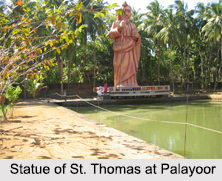
During 52 AD, St Thomas landed at Palayoor by boat from Muziris. He came to visit the Jewish merchants at Palayur Judankunnu and to preach the good news in course of time. The indigenous church of Kerala has a tradition that St. Thomas sailed there to spread the Christian faith. He landed at the ancient port of Muziris. He then went to Palayoor (near present-day Guruvayoor), which was a Hindu priestly community at that time. He left Palayoor for the southern part of Kerala, where he established the Ezharappallikal, or "Seven and Half Churches". These churches are at Kodungallur, Kollam, Niranam, Nilackal (Chayal), Kokkamangalam, Kottakkavu, Palayoor (Chattukulangara) and Thiruvithancode Arappally - the half church.


Cheraman Juma Masjid in Early Era

It was believed that Cheraman Juma Masjid was built in 629 AD by Malik Bin Deenar. Cheraman Juma Masjid is considered as the oldest mosque in India and the second oldest mosque in the world to offer Jumu`ah prayers. It was constructed during the lifetime of Muhammad, the bodies of some of his original followers are said to be buried here. Unlike other mosques in Kerala that face westwards, this mosque faces eastwards.


Perumpadapu Grandavari

The Perumpadapu Grandavari, a historical medieval book of Thissur contains an additional account of the dynastic origins. The last Thavazhi of Perumpadapu Swaroopam came into existence on the Kaliyuga day Shodashangamsurajyam. Cheraman Perumal divided the land in half, 17 amsha north of Neelaeswaram and 17 amsha south, totaling 34 amsha, and gave his powers to nephews and sons.


Keralolpathi

Keralolpathi recorded the division of his kingdom in 345AD.


Kulasekharas of Mahodayapuram

The history of Thrissur from the 9th to the 12th centuries is the history of Kulasekharas of Mahodayapuram This is the history of the rise and growth of Perumpadapu Swaroopam. Perumpadappu Swarupam had its capital at different places. According to the literary works of the period, the Perumpadapu Swaroopam had its headquarters at Mahodayapuyram and had a number of Naduvazhies in southern Kerala. Central Kerala was recognized as the supremacy of the Perumpadappu Moopil and he is even referred to as the `Kerala Chakravarthi` in the `Sivavilasam` and some other works.


Pudu Vaipu era

The landmarks in the history of the Perumpadapu Swaroopam are the foundation of a new era called Pudu Vaipu era. The Pudu Vaipu era is traditionally believed to have commenced from the date on which the island of Vypeen was thrown from the sea.


Age of Wars in Thissur

The 14th and 15th centuries constituted a period of aggressive wars in the course of which the Zamorins of Calicut acquired a large part of the present Thrissur district. In the subsequent centuries, the Portuguese traders dominated the scene. By the beginning of the 17th century the Portuguese power in Kerala was on the verge of collapse. About this time other European powers like the Dutch East India Company and the British East India Company appeared on the scene and challenged the Portuguese. Perumpadappu Swarupam helped the Dutch in getting a footing on the Kerala coast. As the Kerala chiefs were conscious of the impending doom of the Portuguese, they looked upon the Dutch as the rising power and extended a hearty welcome to them.


Flood of 1341

The flood of the river Periyar in 1341 resulted in the splitting of the left branch of the river into two just before Aluva. The flood silted the right branch and the natural harbour at the mouth of the river, and resulted in the creation of a new harbour at Kochi. An island was formed with the name Vypinkara between Vypin to Munambam during the flood. During this time there was the rise of the Samoothiri Rajas of Kozhikode.


Cranganore Fort

Cranganore Fort was built by Portuguese in 1523 and later in 1565 it was enlarged. It is also known as Kottappuram Fort. The Dutch took possession of the fort in 1661. In 1776, Tipu Sultan seized control of fort. The Dutch wrested it back from Tipu Sultan, but the fort eventually came under the control of Tipu Sultan, who destroyed it in the following year. The remains of the fort show that the original fort wall was 18 feet in thickness. The ruin is also known as Tipu`s fort.


Mysorean Invasion

The 1773 conquest of the Mysore King Hyder Ali in the Malabar region descended to Kochi. The Kochi Raja had to pay a subsidy of one lakh of Ikkeri Pagodas (equaling 400,000 modern rupees). Later on, in 1776, Hyder Ali captured Thrissur, which was under the Kingdom of Kochi. Thus, the Raja was forced to become a tributary of Mysore and to pay a nuzzar of 100,000 of Pagodas and 4 elephants and annual tribute of 30,000 Pagodas. His son Tipu Sultan`s invasion had an adverse impact on the Syrian Malabar Nasrani community of the Malabar coast. Many churches in Malabar and Cochin were damaged. Tipu`s army set fire to the church at Palayoor and attacked the Ollur Church in 1790. Furthermore, the Arthat church and the Ambazhakkad seminary was also destroyed. Over the course of this invasion, many Syrian Malabar Nasrani were killed or forcibly converted to Islam. Most of the coconut, areca nut, pepper and cashew plantations held by the Syrian Malabar farmers were also indiscriminately destroyed by the invading army. The Syrian Christian community fled Calicut and small towns like Arthat to new centers like Kunnamkulam, Chalakudi, Ennakadu, Cheppadu, Kannankode, Mavelikkara, etc. where there were already Christians. They were given refuge by Sakthan Tamburan, the ruler of Cochin and Karthika Thirunal, the ruler of Travancore, who gave them lands, plantations and encouraged their business. Colonel Macqulay, the British resident of Travancore also helped them.

Rule of Sakthan Thampuran

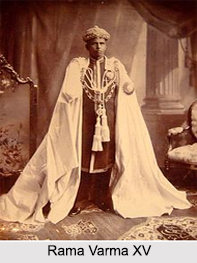
In 1790, Raja Rama Varma popularly known as Sakthan Thampuran ascended the throne of Kingdom of Cochin. With the accession of this ruler, the modern period in the history of Kochi and the Thrissur District and the city begin.


Thissur during British Rule

In 1919 a Committee of the Indian National Congress was functioning in Thrissur. In the Civil Disobedience Movement of 1921, several persons in Thrissur city and other places in the District took active part and courted arrest. Thrissur District can claim the honour of having been in the forefront of the country-wide movement for temple entry and abolition of unsociability.


Guruvayur Satyagraha

Guruvayur Satyagraha is a memorable episode in the history of the national movement. The Government of Cochin under the guidance of R.K. Shanmughom Chetti followed a policy of conciliation. By degrees the public demand for the introduction of responsible Government in the State grew strong.


Cochin State Legislature in 1938

In August 1938, Cochin has announced a scheme for reforming the State legislature and introducing a system as per the Government of India Act of 1919 in the British Indian provinces. The administration of certain departments was entrusted to an elected member of the legislature to be nominated by the King of Travancore.


Quit India movement of 1942

The Quit India movement of 1942 had deeply affected the social and political life of Thissur District. After the release of the leaders from jail in 1943, the Cochin State Praja Mandal pursued its organizational activities more vigorously. In the elections to the State Legislature in 1945 it won 12, of the 19 seats contested by its candidates. At the annual conference of the Praja Mandal held at Ernakulam in 1946 it was decided to start a statewide movement for the achievement of a responsible government.


Transfer of Power and Independence of India in 1947

The Maharaja of Cochin announced in August 1946 the decision to transfer all departments of the State Government except Law and Order and Finance to the control of Ministers responsible to the State Legislature. In co-operation with other parties in the State Legislature, the Cochin State Praja Mandal decided to accept the offer. Consequently, the first popular Cabinet of Cochin consisting of Panampilly Govinda Menon, C.R. Iyyunni, K.Ayyappan and T.K. Nair assumed office. The first step towards the achievement of the goal of Aikyakerala was taken with the integration of Travancore Cochin States in July 1949. With the linguistic reorganization of States in India, in November 1956 the Kerala came into existence in modern Independent India.