
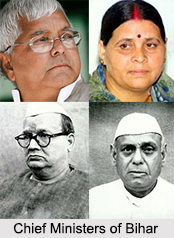
 Bihar, a state steeped in history and culture, has witnessed a succession of political leaders at its helm since its inception. The role of Chief Minister in Bihar holds immense significance, acting as the head of the government and overseeing various aspects of state governance. Chief Minister of Bihar is responsible for all the administrative functions of Bihar. All the operations related to the state government of Bihar are looked after by the Chief Minister. The Chief Minister"s term is for 5 years.
Premiers of Bihar
Before the establishment of the modern Chief Minister role, Bihar had Premiers who governed the region when it was part of a larger province. On April 1, 1936, Bihar and Odisha (former Orissa) emerged as separate provinces following the partition of Bihar and Orissa. Under the Government of India Act 1935, a bicameral legislature was introduced, comprising a legislative assembly and a legislative council, with a Premier leading the government. This marked a significant chapter in the political evolution of Bihar.
List of Premiers of Bihar
Here is a list of the leaders who served the region of Bihar before it received statehood.
| Premiers | Tenure | Political Party | ||||||||||||||||||||||||||||||||||||||||||||||||||||||||||||||||||||||||||||||||||||||||||||||||||||||
| Mohammad Yunus | 1937 – 1937 (109 days) | Muslim Independent Party | ||||||||||||||||||||||||||||||||||||||||||||||||||||||||||||||||||||||||||||||||||||||||||||||||||||||
| Shri Krishna Sinha | 1937 – 1947 | Indian National Congress | ||||||||||||||||||||||||||||||||||||||||||||||||||||||||||||||||||||||||||||||||||||||||||||||||||||||
| Chief Ministers | Tenure | Political Party |
| Sri Krishna Sinha | 1947 – 1961 | Indian National Congress |
| Deep Narayan Singh | 1961 -1961 (17 days) | Indian National Congress |
| Binodanand Jha | 1961 – 1963 | Indian National Congress |
| K. B. Sahay | 1963 – 1967 | Indian National Congress |
| Mahamaya Prasad Sinha | 1967 – 1968 | Jana Kranti Dal |
| Satish Prasad Singh | 1968 – 1968 (5 days) | Shoshit Dal |
| B. P. Mandal | 1968 – 1968 (51 days) | Shoshit Dal |
| Bhola Paswan Shastri | Indian National Congress | |
| Harihar Singh | 1969 – 1969 (117 days) | Indian National Congress |
| Bhola Paswan Shastri | 1969 – 1969 (13 days) | Indian National Congress |
| Daroga Prasad Rai | 1970 – 1970 (310 days) | Indian National Congress |
| Karpoori Thakur | 1970 – 1971 (163 days) | Socialist Party |
| Bhola Paswan Shastri | 1971 – 1972 | Indian National Congress |
| Kedar Pandey | 1972 – 1973 | Indian National Congress |
| Abdul Ghafoor | 1973 – 1975 | Indian National Congress |
| Jagannath Mishra | 1975 – 1977 | Indian National Congress |
| Karpoori Thakur | 1977 – 1979 | Janata Party |
| Ram Sundar Das | 1979 – 1980 | Janata Party |
| Jagannath Mishra | 1980 – 1983 | Indian National Congress |
| Chandrashekhar Singh | 1983 – 1985 | Indian National Congress |
| Bindeshwari Dubey | 1985 – 1988 | Indian National Congress |
| Bhagwat Jha Azad | 1988 – 1989 | Indian National Congress |
| Satyendra Narayan Sinha | 1989 – 1989 (270 days) | Indian National Congress |
| Jagannath Mishra | 1989 – 1990 | Indian National Congress |
| Lalu Prasad Yadav | 1990 – 1995 | Janata Dal |
| Lalu Prasad Yadav | 1995 – 1997 | Janata Dal |
| Rabri Devi | 1997 – 1999 | Rashtriya Janata Dal |
| Rabri Devi | 1999 – 2000 | Rashtriya Janata Dal |
| Nitish Kumar | 2000 – 2000 (7 days) | Samta Party |
| Rabri Devi | 2000 – 2005 | Rashtriya Janata Dal |
| Nitish Kumar | 2005 – 2014 | Janata Dal (United) |
| Jitan Ram Manjhi | 2014 – 2015 | Janata Dal (United) |
| Mahamaya Prasad Sinha | 1967 – 1968 | Jana Kranti Dal |
| Nitish Kumar | 2015 – present (Incumbent) | Janata Dal (United) |
President"s rule in Bihar
President`s rule, a constitutional provision invoked in exceptional circumstances, has been imposed in Bihar multiple times, each instance reflecting a distinct set of challenges. From June 29, 1968, to February 26, 1969, Bihar experienced a period of direct governance by the President. Subsequently, President`s rule was again imposed from July 6, 1969, to February 16, 1970, followed by another episode from January 9, 1972, to March 19, 1972. The state witnessed further instances of central intervention during April 30, 1977, to June 24, 1977, and then from February 17, 1980, to June 8, 1980. In more recent times, President`s rule was declared from March 28, 1995, to April 4, 1995, and then from February 11, 1999, to March 9, 1999. The most recent instances occurred during March 7, 2005, to November 24, 2005. These periods of central administration signify times of political uncertainty and governance challenges in Bihar, where the central government took charge to restore stability and order.
Recently updated articles in Personalities in India

Governors of Mizoram
The Governor of Mizoram is the constitutional head of the state and is appointed by the President of India. The Governor performs various constitution...
Governors of Jharkhand
Governors of Jharkhand have served as the constitutional heads of the state since its formation on 15 November 2000. Appointed by the President of Ind...
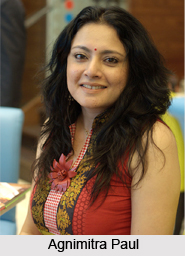
Agnimitra Paul
Agnimitra Paul is an Indian fashion designer and politician serving as a Member of the West Bengal Legislative Assembly from Asansol Dakshin. A senior...
Governors of Uttarakhand
Governor of Uttarakhand is the nominal head of the state. The Governor is also the representative of the President of India in the state of Uttarakhan...
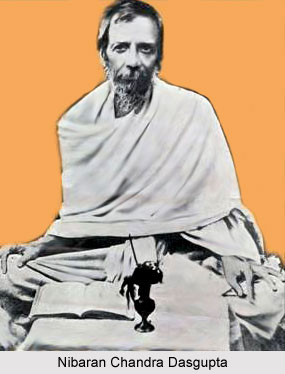
Nibaran Chandra Dasgupta
Nibaran Chandra Dasgupta was a distinct personality of Bengal who became famous for the establishment of ‘Shilpashram,’ a rural industry within the ma...
Related articles in Personalities in India

Sanskrit Theatre Personalities
Sanskrit Theatre Personalities was the main elements of Indian theatre with culture, customs and ethnicity.
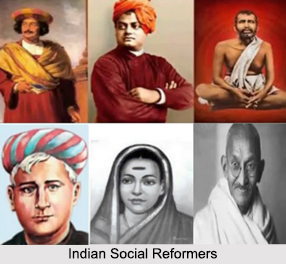
Indian Social Reformers
The Indian Social Reformers are responsible for liberating the nation of several social and religious evils.
Raja Ram Mohan Roy
Raja Ram Mohan Roy is a great Indian social reformer who is celebrated all over the country. He has done many operations for the liberation of women....