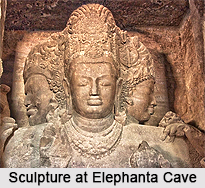
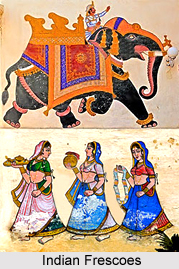
 Chola frescoes were discovered underneath the paintings of the Nayak period. These frescoes had an element of Shaivism in them. The frescoes and sculptures in the cave temples of Ellora and Elephanta were probably built later than the ones in Ajanta. These frescoes and sculptures depict Hindu tales and metaphors and in style they evolve from the earlier Ajanta styles. The depiction of the eyes is a unique quality in the frescos of Ajanta. The eyes of the princess, kings and celestial gods are of meditative nature in order to depict the sublime look of grace and compassion. These frescoes were painted between c. 200 BC and 600 and are the oldest known frescoes in India. Jataka stories are depicted here. They have been illustrated one after another.
Other places with valuable preserved ancient and early medieval frescoes include Bagh Caves, Ellora Caves, Sittanavasal, Armamalai Cave, Badami Cave Temples and other locations. Indian frescoes have been made in several techniques including tempera technique.
Chola paintings were discovered in 1931 within the circumambulatory passage of the Brihadeesvara Temple in India. In these frescoes a smooth batter of limestone mixture is applied over the stones, which took two to three days to set. Such large paintings were painted with natural organic pigments. The chola paintings were painted over during the Nayak period. The Chola frescos are synchronised with the completion of the temple by Rajaraja Chola the Great.
The frescoes in Dogra or Pahari paintings exist at Sheesh Mahal of Ramnagar in Jammu and Kashmir. Scenes from epics of Mahabharata and Ramayana along with portraits of local lords have been depicted. Rang Mahal of Chamba in Himachal Pradesh is another site of historic Dogri fresco with wall paintings depicting scenes of Draupadi Cheer Haran, and Radha- Krishna Leela .
The tradition and methods of Indian cliff painting gradually evolved throughout many thousands of years. The Rock Shelters of Bhimbetka is on the edge of the Deccan Plateau. The many caves and grottos found there contain primitive tools and decorative rock paintings reflect the ancient tradition of human interaction with their landscape. The oldest frescoes of historical period have been preserved in Ajanta Caves.
Kerala mural painting has well preserved fresco wall painting in temple walls in Pundarikapuram, Ettumanoor and Aymanam and elsewhere.