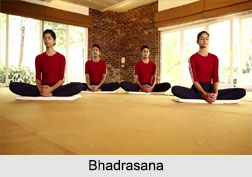
 Bhadrasana is one of the prominent asanas mentioned in the Hatha Yoga Pradipika, although it has been recorded in several older texts. The posture tones the lumbar region and flexes various muscles in the lower back.
Meaning of Bhadrasana
Consisting of two words, Bhadra and Asana, the word Bhadra is derived from the Sanskrit language, which means "auspicious" or "gracious", while the word Asana indicates the yogic posture. Together the word Bhadrasana means "the posture of the blessing".
Yoga Texts and Bhadrasana
Bhadrasana is highly prominent in the Yogic canon. It was first described in the Yoga Yajnavalkya dating 200 BC and was frequently mentioned in the Puranas that followed. The Bhadrasana was given special importance in the Hatha Yoga Pradipika, which marks the yogic posture as one of the first four and most important of the 84 asanas taught by Lord Shiva.
Practice of Bhadrasana
A sequential process for performing Bhadrasana is given below:
•Be seated with your legs together in the front, hands by the side with palms resting on the ground. The finger should remain together pointing forward.
•Then folding the left and right legs slowly at the knees, join both the soles with each other.
•Hold onto your ankles with your hands.
•Slowly bring the legs towards yourself till they reach under the perineum. Knees should remain on the ground, the body erect and the gaze in front.
•While returning back to the original position loosen the legs and comeback to the first position
Effects of Bhadrasana
Bhadrasana helps in expanding the tissues, nerves and arteries of the pelvic region. Through this asana, the pelvis, abdomen and the back are stimulated and receive a good supply of blood. According to the Hatha Yoga Pradipika, the Bhadrasana is `the destroyer of all diseases`. Practicing Bhadrasana calms the mind and brings about a feeling of well roundedness and also activates the muladhara (root) chakra.
Bhadrasana also strengthens the muscles of the groin and the pelvis. The weight of the flexed knees stretches and tones up the adductor muscles running along the inner thighs. It has a beneficial effect on the muscles and ligaments of the uro-genital region, promoting in it a supply of fresh blood. It restores elasticity to stiff knees, hips and ankle joints. Practicing Bhadrasana relieves tension in the sacral and coccygeal regions of the spine. It keeps the kidneys, the prostrate, and the urinary bladder healthy and also improves concentration and digestion. The main function of the asana is to keep the mind completely relaxed and numb to all the external thoughts.
Precautions in the practice of Bhadrasana
The Bhadrasana must be practiced with care as the asana stretches the muscles under the thighs somewhat intensely with the waist and neck remaining erect. People suffering from sciatica should not practice Bhadrasana.
Bhadrasana`s several virtues and its high esteem in the yogic canon have made it a significantly iconic Indian Yoga posture.