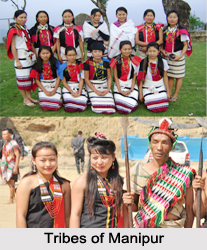
Koireng Tribes belong to the north-eastern state of Manipur, India. This tribal community has been recognised as a Schedule Tribe of India. Originally the tribe was referred to as Kolren or Koren. The former has been derived from two words, `Kol`, meaning east and `ren` which means men. Thus, these people are referred to as the men from east. The term Koireng was applied to the tribal community by the Meities. The Koireng tribes can be located in the foothills surrounding the Imphal Valley. In places like the Senapati district, Thanglong Village, Awang Longa Koireng, Sadu Koireng, Tarung, Kamu Koireng, etc the people of this tribe are generally found. According to the 2001 Census report the Koireng tribe residing in Manipur are 1053 in number. However it has also been specified that the number might vary. The language of the Koireng people belongs to the Sino-Tibetan family.
History of Koireng Tribe
As per the history of Koireng tribe they belong to Burma (now Myanmar). They had later migrated to Manipur probably in the 1st century AD. There are chronicles that state that the Koireng tribe faced a series of wars while they were migrating from one place to another. In ancient Manipur, in fact, they were hailed as one of the most powerful tribes. The folk songs of this tribe also serve as the sources of their history. The Koireng people have Mongoloid features. They are short in height and have brown eyes, brown skin and straight black hair.
Culture of Koireng Tribe
Religious rites are integrally associated with the lives of the Koirengs. Although the old people followed Paganism but the younger generation mostly follows Christianity. According to the Pagan rites, the Koirengs worship Pathian. As house gods they also worship in-Pathian. There are several customs associated with childbirth, marriage, child-naming ceremony, etc. A number of festivals are also celebrated by the Koireng tribe. These include Theikal, Lamkir Lei, Chamer Sier, Lengwai and others. As far as their occupation is concerned the Koireng are mostly depended on agriculture. As a result a number of agrarian festivals are also performed, such as, Bedal, Chaonlei, Chalam Kei, Chathar Lei, etc. Music generally accompanies these festivals.