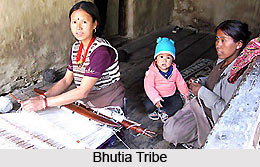
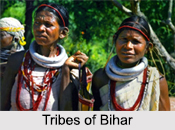
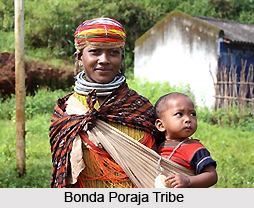
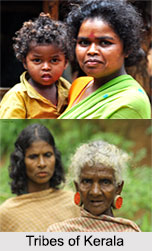
 Khond tribes of Bihar are basically of Proto-anstraloid race and are considered as one of the scheduled tribes. Jharkhand, Singbhum, Hazaribagh are the abode of this tribal community. As per the history, the Khond tribe is migrated from Orissa and is one of the major tribes of India. This tribal community linguistically belongs to Anstro-Asiatic family. Their language is known as `Kuvi` and is a type of Dravidian language.
Khonds, also known as Kandhs, are an aboriginal tribe. They are divided in groups like hill Khonds or Kutia and plain-dwelling Khonds. They know the use of medicinal plants and treat diseases with the plants. The Khonds are a group of people who are tall and have some features of Aryan. They are considered as mixed Dravidian race. Khonds are divided in clans like Hansa, Beck, Hembram, Bedia, etc.
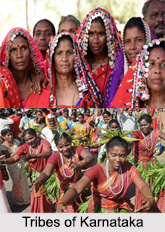
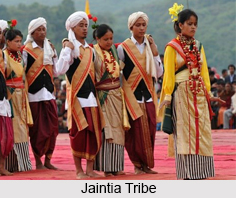
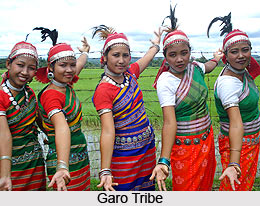
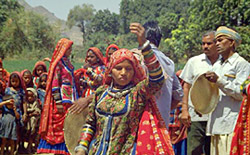
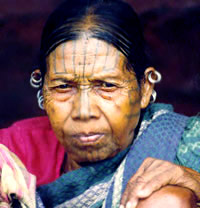
The costumes of the male Khonds include dhoti, ganji and Shirt. The costumes of the women include saree and Salwar kamiz dupatta. Ornaments play a major part in the costumes of the Khond women. They prefer to wear ornaments in neck, ear, finger, hair, nose, wrist and feet. The ornaments are basically made of bronze, shell, gold, brass, steel, nickel, seeds, thread, and gold and brass imitation.
The Khonds follow animistic religion and they worship almost eighty-three gods. Some are also followers of Hinduism and Christianity. The name of their main deity is Sing Bonga. Their local deities are Thakur Dei, Thakur Deo, Burha Dei, Burha Deo, Borang Buru, Bhagbonga, Tila bonga. Apart from worshipping their local deities, the Khonds worship goddess Durga, Bhagwati, goddess Lakshmi, Lord Shiva
They live with other tribal people and they don`t have their separate villages. Similar to any other tribes of the Indian subcontinent, the Khond tribes too have developed the practice of adopting the occupations of hunting as well as cultivation. Those who are the farmers, they usually take up the shifting cultivation. They celebrate festivals and occasions with great enthusiasm and pleasure. Festivals like Sohraj, Dussehra, Diwali, Sarhul, Jitia, Phagu Karma, Nawakhani and Ramnavami are celebrated with great pomp. Tribal dances and music are performed in these festivals with beating dhol, kartal, thali, Nagara and flute. They also celebrate Christian festivals with equal merriment.
These Khond tribes are also very pious as reflected in their practices and rituals that they used to revere with enthusiasm. In the ancient times, in commemoration of their `Earth Goddess`, `Tara pennu`, they carried old practice of giving human lives. The way the whole ceremony of sacrifice was done was also very significant. First, the sacrificial victim Khond Tribe, Biharwas devoted, bought or captivated. He was then `anointed` with oil and turmeric and then connected to the crosspiece of the pillar, which constituted an elephant. This crosspiece was then spanned and then taken round the erected post. Males and females danced and sang around the victim who was then narcotized and `intoxicated`. He was then beaten up to death and chopped into pieces.
Every Khond tribes used to take these pieces and buried it in his field in order to ensure beneficial crops and debar evil. Ultimately this gruesome practice was prohibited in the year 1845. Today, these Khond tribes go for giving goats and buffaloes as offerings. The Khond tribes also have plethora of traditional objects. These include broad range of brass images of animals and also human figures, which are revered and also taken during any of the marriage progressions.