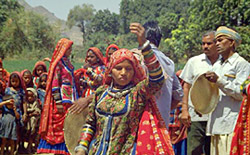
Angami tribe belongs to the extreme north eastern part of the country. The Angami is a small scheduled tribe of Manipur. Angamis are quite popular for their woodcraft and artwork.
Origin of Angami Tribe
Though there is really no proof to identify the real origin of this society, there are beliefs and theories. The Angami people are the first tribal society to have settled in Northeast India. According to a legend, it is believed that Maikel Stone was the place where ancestors of the Angamis emerged from the earth. Many festivals are also observed by the community according to their culture and tradition.
Language of Angami Tribe
The mother tongue of Angami tribes is Angami language, which many people also identify in various names like Gnamei, Ngami, Angamis, Tsoghami, Tsugumi, Monr, Tsanglo, and Tendydie. Enriched literary works too have been produced. Quite a handful of dialects, namely, Kohima, Dzuna, Kehena, Khonoma, Chakroma (Western Angami), Mima, Nali, Mozome, Tengima, Tenyidie (Tenyidye), have been produced. Tenyidye is the most standard dialect and each and every Angami tribe can decipher it quite well.
Society of Angami Tribe
The life style of Angami tribes is simple, typical of any other agrarian society of Indian tribal communities. Their sense of artistry is also being reflected in the décor of Angami house. They maintain a conventional house style with all the paraphernalia that highlight their ennobled status.
Occupation of Angami Tribes
 The chief occupation of Angami tribe is agriculture. They can produce near about 20 varieties of paddy every year. Another unique feature of their cultivation activities is that these Angami tribes carry on cultivation of wet rice on the hilly terrains. Due to this, the intricate irrigational system has transformed the steep barren hills into picturesque paddy and rice fields.
The culture of Angami tribal communities is enriched by exquisite woodcrafts and artworks. In fact woodcarving also is very popular as an occupational activity.
Religion of Angami Tribe
Maximum of Angami tribes follow Christianity as their religion. Just like any other Christian tribes, including Nagas, the Angami tribes too have similar cultural elements. Rituals, customs are quite similar, especially their custom of giving burial to the deceased family members at their home grounds.
Festivals of Angami Tribe
Festivity is part of their life. "Sekrenyi" is the most feted festival, held in the month of February. This 10-day festival is popularized amongst Angami tribes as "Phousanyi". When Angami tribes organize community feats to commemorate any festival of local origin, the entire region swoops in to lodes of colour and jubilance.