
Asvamedha Yajnya was a Hindu Vedic ritual of horse sacrifice .The Asvamedha Yajnya has been described in detail in various Vedic writings like the Yajurveda and particularly in the Satapatha Brahmana . Asvamedha Yajnya ritual was performed by kings as a symbolic representation of their supreme power and authority and prove his influence over all other kings in the vicinity of the kingdom .In the early spring a stallion was selected and allowed to roam freely for a year under the protection of four hundred chosen young guards and one hundred other horses . The stallion to be sacrificed had to be more than 24 but less than 100 years old .The horse was sprinkled with water, and the Adhvaryu (one who is in charge of the physical details of the sacrifice) and the sacrificer whispered mantras into its ear. The horse was then released towards the North -East to wander around whereever it chose for one year.The horse was associated with the Sun and it`s yearly course. If he trespassed into another kingdom, the local rulers were summoned to pay homage and tribute, if they refused to do so, the warriors following the horse gave battle .If that king was defeated then the king had to appear at the final ceremony and accept the overlordship of the victor.
During the absence of the horse ,an uninterrupted series of ceremonies was performed at the sacrificer`s home.If it was not captured during the year ,it was brought back to the capital and more ceremonies were performed .The horse is given a bath and after that his body is anointed with ghee by the chief queen and two other royal consorts .The horse is also embellished with gold ornaments . After this, the horse, a hornless he-goat, a wild ox are bound to the sacrificial stakes near the fire, and seventeen other animals are attached to the horse. A great number of animals, both tame and wild, are tied to other stakes, Then the horse is slaughtered .The chief queen ritually calls the king`s fellow wives for pity .The queens walk around the dead horse reciting mantras .The queen had to spent a night with the horse . with hundred golden, silver and copper needles the queens indicate the lines on the horse`s body along which it will be dissected. The horse is dissected, and its flesh roasted. Various parts are offered to a host of deities and personified concepts with cries of svaha "all-hail". The priests performing the sacrifice were recompensed with a part of the booty won during the wandering of the horse.
Performances of the Asvamedha Yajnya are mentioned in the epics Ramayana and Mahabharata. In the Mahabharata, the sacrifice is performed by Yudhisthir ,his brothers guarded the horse as it roamed into neighbouring kingdoms. Arjuna defeated all the challengers. Draupadi laid beside the slain horse . The Ramayana says that Rama`s father Dasarath performed the Asvamedha which has been described in the bala kanda .Dasarath`s chief wife Kaushalaya walked around the horse and ritually pierced its flesh.It has been documented that Asvamedha was performed during the reign of Samudragupta I the father of Chandra gupta II .Gautam Buddha condemned the practice but it was revived in the 2nd century B.C.and may hve continued as late as 11th centurybA.D. The last known instance seems to be in 1716 by Jai Singh II of Amber, a prince of Jaipur.The emphasis of the Asvamedha was on political power which did not encourage the building of solid centralized empires ;rather ,it visualized a loose federation of kingdoms under a single overlord ,all virtually independent of their internal affairs .
Asvamedha Yajnya
It was the most magnificent of all Vedic Yajnas,& was a symbolic representation of the King`s power and authority
Recently updated articles in Indian Festivals
Festivals of Daman and Diu
Festivals of Daman and Diu reflect the traditional culture of this region through its manifold festive occasions which include Folk Dance Fesrival, Ga...
Festivals of Dadra and Nagar Haveli
Festivals of Dadra and Nagar Haveli reflect the vibrant tribal culture and traditions of the region. Celebrations such as Tarna Festival and Divasol F...
Teething Ceremony in Indian Customs
In India, teething is observed with deep cultural significance, blending health and tradition. Families often use age-old remedies like rubbing honey,...
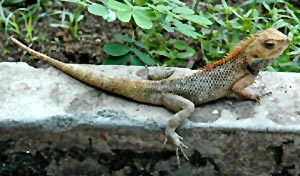
Lizard Chirping - Indian Belief
In Hinduism, lizard chirping is often regarded as a sign of divine communication and is considered auspicious in many traditions. The sound, such as h...
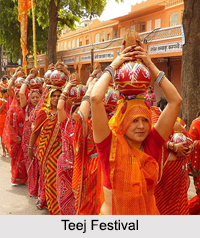
Festivals of Haryana
The festivals of Haryana reflect the state's rich cultural heritage and religious fervor. Celebrations like Gugga Naumi, Teej and Gangore are marked b...
Related articles in Indian Festivals
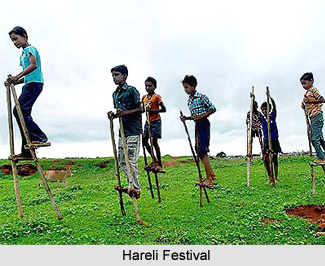
Hareli Festival
Hareli Festival is a popular festival of Chhattisgarh. It is celebrated in the month of Shravan by the farmers who worship cows and other equipments u...
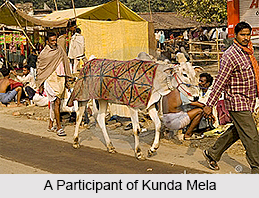
Kunda Mela
Kunda Mela is one of the famous and largest festivals of Jharkhand. The biggest attraction of this fair is the cattle trade.
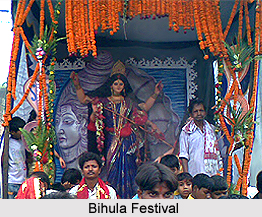
Bihula Festival
Bihula Festival is one of the popular festivals in Bhagalpur, Bihar.
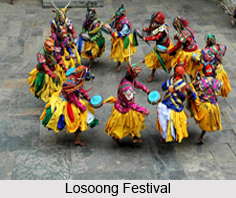
Losoong Festival
Losoong Festival is the Sikkimese New Year, of the Bhutia tribe, celebrated every year in the month of December. This festival is very famous in easte...
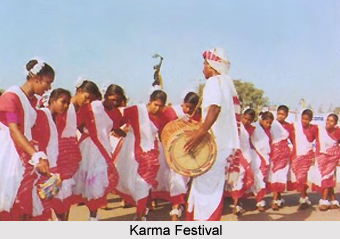
Karma Festival
Karma Festival is a tribal festival celebrated in Madhya Pradesh, Bihar, Jharkhand and Chhattisgarh.