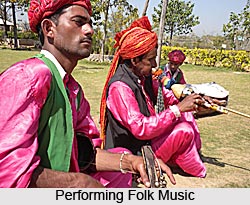
Jikir songs are certain religion-based folk songs popular in the Assam state of India. Zikir songs embody the teaching of Islam and were prevalent among the Muslims of Assam. The Jikir songs are in a sense an Islamic counterpart of Dehbicarar Geets.
Meaning of Zikir
The word Zikir, derived from Arabic "Ziqr", literary means singing or remembering Allah`s name or "spiritual chants".
History of Jikir Songs
These songs were mainly composed and popularized during the reign of Gadadhar Singha (1681-96) by the 17th century Sufi saint and poet Hazrat Shah Miran, popularly known as Ajan Fakir. Ajan Fakir came to Assam from Bagdad and settled in Suwaguri Sapori, near present Sibsagar town of Assam in the north-eastern part of India. In this journey, he was accompanied by his brother Shah Navi. As per legend, the poet received the name "Ajan Fakir" or "Ajan Pir" because he was the one who taught the Assamese Muslim to recite "Azan" as its part of Muslim ritual. Although, Islam does not promote music and dance for entertainment, from the religious perspective there is no restriction as such. Ajan Pir and his disciples, known as "Bhakat" in Assamese, practiced Zikir, dancing and singing with hand clapping like folk performance.
Content of Jikir Songs
The central idea of the futility of life and man-made institutions forms the content of all the Jikir compositions. Except a few words of Arabic and Persian origin interspersed in the texture of the songs, their diction, syntax and language are almost of a similar nature. Even the Vaishnava concept of Nama appears to be the spiritual inspiration of these Jikir songs to a certain extent:
`nama is the charioteer that goes with life. I have read Him and Kalma too, Everything slips, and slips by; What is written in one`s destiny, There is no escape from it. `
Through most of these Jikirs, the idea of illusion, resignation to Allah and an overpowering desire to lose one`s identity with Him runs in the way of the doctrines of Sufism. It must be noted here that Sufism and Vaishnavism have many common features. Thus, the Jikirs reflect the idea of Sufism.