
History of English Education in India can be traced back to the advent of British colonial rule in India. English education was introduced into India because the British East India Company needed clerks and translators. From 1813 the Company set aside some money for education of the Indians in English. After the Charter Act of 1833 English became the official language. In 1844 Lord Hardinge announced that English-educated Indians would be given preference for government appointments. Free-traders voiced their support for this policy believing it would help develop an Indian population loyal to the British. The missionaries joined in this and expressed their approval for English education as well. Eager to convert Indians from influential families, missionaries recognized how much easier it would be with English as the language of that would facilitate advancement in the professional field. Liberals believed in the civilizing influence of Western philosophy and literature. It was only at the end of the century that these men saw the dangerous side of education, that is, its tendency to promote nationalism and political unrest. At this point of time, the government made attempts to control and even curtail education.
It is of importance to note here that even before the British Government decided to sponsor English education, the Hindu College was set up in India by some Indian gentlemen. Opened in 1816, Hindu College was designed to prepare young Indian men for lucrative positions with the East India Company. In the first three decades of the twentieth century Hindu College and similar schools throughout British India depended on the patronage of wealthy Indians and were in direct competition with traditional schools teaching Sanskrit, Persian, and Arabic languages. As economic patterns changed, patronage for traditional schools disappeared. At about the same time, bright young men decided to study English. In contrast to support for boys` schools, there was little interest in the education of girls. The colonial government, despite pressure exerted by missionaries and liberals, was unconcerned with female education. The missionaries were interested in female education and schools for girls because, they argued, women needed to be brought into the fold to make conversions permanent. However, since men made the decisions, female education was given secondary importance.
Unmarried female missionaries arrived in India in the 1840s and were assigned to work with women and children. These missionary women, educated and eager to prove their worth, concentrated on converting adult married Indian women to Christianity. They gained entry to households as teachers where they read stories, taught needlework, and attempted to bring their charges to Christ. Rarely were they successful in gaining converts. When it became apparent that these projects were unproductive, the mission authorities substituted girls` schools. Missionary women continued to teach and it was their students, Indian women from Christian families, who became teachers in a number of the new girls` schools.
Thus the foregoing discussion on English education in India brings out the important role of the British in bringing this language within the folds of the Indian educational system and making it one of the most important languages required for future advancements in career.
History of English Education in India
History of English Education is very strongly connected to British presence in the country. English was introduced as a medium of education in schools and colleges by the British with the motive of establishing clerks and translators who would be able to handle the British commercial and administrative functions in the country. The language went on to become one of the most important requirements for a secure and high-paying job in British India.
Recently updated articles in Education in India
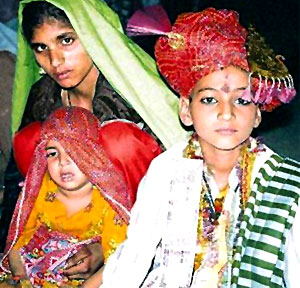
Women Education in India
Woman education in Ancient, Medieval, Colonial & Modern India
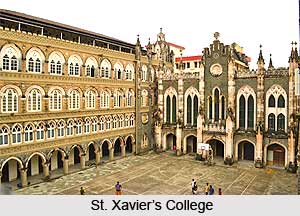
St. Xavier’s College in Mumbai
St. Xavier’s College, Mumbai offers graduation and post-graduation courses. It ranks the highest position in Arts and Second highest position in Scien...
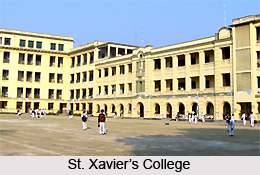
St. Xavier’s College in Kolkata
St. Xavier’s College is named after St. Francis Xavier, a Jesuit saint of the 16th century, who travelled to India.
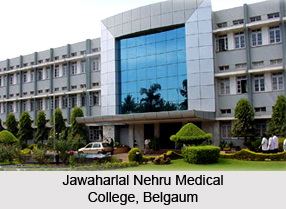
Jawaharlal Nehru Medical College in Belgaum
Jawaharlal Nehru Medical College in Belgaum, Karnataka is a constituent college of KLE University and a big medical ins.
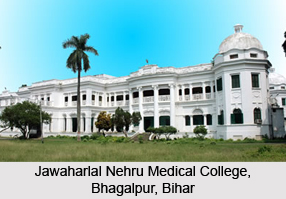
Jawaharlal Nehru Medical College in Bhagalpur, Bihar
Jawaharlal Nehru Medical College is a renowned medical institution located in Bhagalpur, Bihar.
Related articles in Education in India
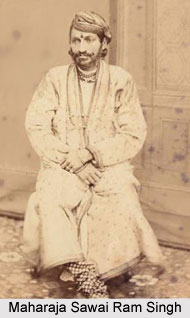
Education Policy of Sawai Ram Singh
Education Policy of Sawai Ram Singh gave Jaipur a new name and a distinct place in India. Sawai Ram Singh established the Maharaja`s College, Sanskrit...
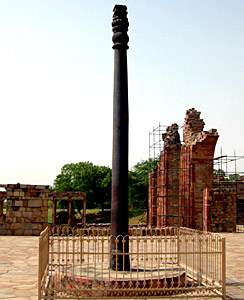
Education During Gupta Age
Education during Gupta Age was provided by the Brahmanical agraharas and in Buddhist monasteries. The Guptas established and patronized several univer...
Army Education Corps
Army Education Corps came into existence on 1st June 1947. Army Educational Corps supervises and directs all the education in the army. It also provid...
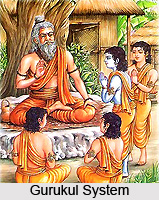
Education in Ancient India
Education in Ancient India was considered important by the society and was given to the 3 upper classes, namely Brahmins, Kshatriyas and Vaishya.
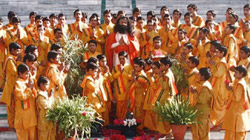
Gurukul
Gurukul is a system of education in India. It is one kind of residential school. In ancient India this system was very popular.