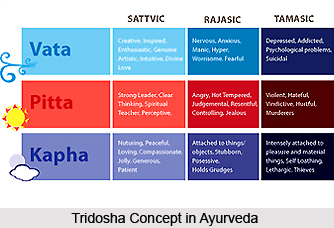
 Vata Dosha, the first of the Tridoshas is made up of the elements earth and air. It controls every body movement and mind activities including blood circulation, sensation, respiration, speech, hearing, touch, natural urges, excretion, formation of foetus, sexual act, retention and feelings like fear, anxiety, grief and enthusiasm. In short, most of the physical phenomena associated with the nervous system of human beings are under the dominance of vata. As long as Vata Dosha is in balance, one will be lively and enthusiastic, with a lean body.
Vata is said to exist below the naval and the lower part of the body. Ashtanga Ayurveda considers the human body to be composed of five elements - space, air, fire, water and earth, which are collectively termed as the Pancha Mahabhutas. From these elements originate the three bodily humours or doshas - Vata, pitta and kapha. These three administer all the physical and mental functions of the body and thus are necessary for good health, vitality and immunity.
Characteristics of Vata Dosha
People who have vata type of constitution are usually physically active and thin. Their skin and hair are dry and joints are prominent. Under stressful conditions, they tend to lose their decision-making power and become insecure, fearful and anxious. They are light sleepers and prefer warm climate. The vata people are characterised by immense creativity and enthusiasm. Their digestive system, particularly the colon is vulnerable and often gives rise to problems. The renowned Ayurvedic text, the Charaka Samhita, precisely lays down the characteristics of Vata Dosha: dry and rough (rookshaha), light or lacking weight (laghuhu), cool (sheetoha), always moving (chalota), unbounded (vishadaha) and rough (kharaha).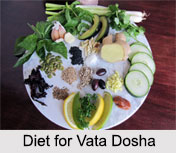
Types of Vata Dosha
Vata Doshas are of five types, namely; pran vata dosha, apan vata dosha, saman vata dosha, vyan vata dosha and udan vata dosha.
•Pran Vata Dosha: In this vata dosha, the air exists in the oral cavity, head, throat, ear, tongue, chest and heart. It helps in intake of food and water, swallowing, sneezing, spitting, respiration and other related activities.
•Apan Vata Dosha: Apan vata exists in sigmoid colon, rectum, testicles, scrotum, urinary bladder, vagina, uterus, navel, loins and groins. This type of vata is concerned with the excretion of the stool, urine, semen, menstrual discharges and with child birth.
•Saman Vata Dosha: Saman vata resides in stomach and duodenum thus helping in the digestion of food and proper formation of rasa dhatu, stool and urine. It regulates the assimilation of the food contents and finally helps to supply the assimilated matter to blood stream and heart.
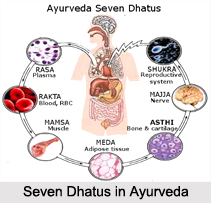
•Vyan Vata Dosha: Vyan vata is scattered throughout the body. It is concerned with the transmission of the seven dhatus to the vital parts of the body.
•Udan Vata Dosha: Udan vata invests the navel, thoracic cavity and chest. This vata controls the act of speech, act of talking, act of singing, enthusiasm and mental strength.
Remedies for Vata Dosha
Vata Dosha is stimulated by pungent, bitter and acidic food products and weakened by sweet, sour and salty tasting foods. Ashtanga Ayurveda recommends sweet, sour or salty food to a person with Vata personality. These people should refrain from watching too much television or from rushing around doing many things at the same time because these activities stimulate vata. Deficiency of vata in the body leads to uneasiness, languor and loss of consciousness while vata excess is responsible for thinness of the body, dark complexion, roughness of the voice, desire for heat, hard stool, insomnia, throbbing sensation and weakness. Apart from these, the vitiation of vata can cause swelling in the abdomen and rumbling sound in the intestines.
Thus people in whom vata dosha dominates, Ashtanga Ayurveda suggests proper diet and various Yoga therapies.