Indology is the study of the history, archaeology, cultures, languages, and literature of ancient, medieval and modern India and Asia as well.
Indology is a term used to denote educational study of Indian languages, culture and tradition and historical development. Indology is a part of Asian studies. It is also called Indic studies or Indian studies. Some scholars and academicians also refer it as South Asian Studies. The term indology not only means the economy, political scenario and the contemporary social condition of South Asia, however, it also includes the rich saga of Asian history.
Indology nicely incorporates various areas of academic disciplines and analyze in the context of South Asian countries. These include `cultural studies`, `cultural or social anthropology`, `historical linguistics`, `philology`, `textual criticism`, `literary history`, `history`, `philosophies` . The study of the religions of South Asian regions , namely the `Vedic religion`, `Hinduism`, `Jainism`, `Buddhism`, `Shaivism`, `Vaishnavism`, `Sikhism`, etc. Moreover, the local forms of Judaism, Christianity and Islam in South Asia also are an integral part of Indology. South Asian sciences, arts and architecture are studied in great enthusiasm.
The historical development of Indology is significant. In the beginning of eighteenth century Indology developed under the initiative of its profounder namely Henry Thomas Colebrooke or August Wilhelm Schlegel. Indology as an educational subject comes forth in the nineteenth century during the rule of British colonial Imperialism in the global area. Along with the Asian studies, Indology too was influenced by the idealistic "Orientalism". The Royal Asiatic Society is founded in 1824, and the American Oriental Society in 1842.
Publication of major Hindu texts in the Sacred Books of the East begins in 1879 that is during the inception of the colonial rule in India. At that time there was another revolution began was Bengal Renaissance. The Renaissance of Bengal refers to a socio-cultural and religious reform movement during the nineteenth and early twentieth century in Bengal. Otto von Bohtlingk`s edition of Panini`s grammar appears in 1887. Max Muller`s edition of the Rigveda appears in 1890-92. In 1897, Sergey Oldenburg launched a systematic edition of key Sanskrit texts, "Bibliotheca Buddhica".

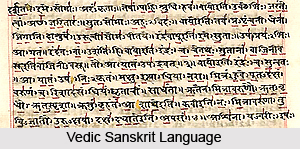
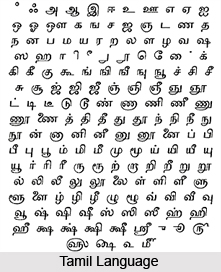
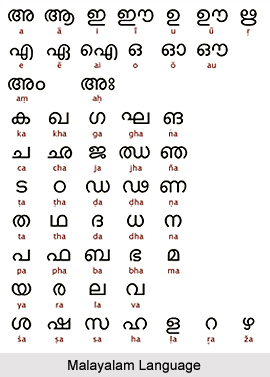
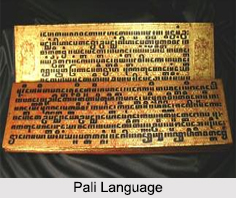
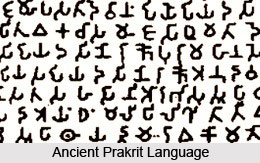
The academicians who pursuit the study of Indology in diligence are called indologists. Time and again they consign an exceptional importance to gather a comprehensive understanding of the languages of Indian subcontinent . Particularly, the classical languages of India such as Sanskrit language, Pali language, Prakrit language, or classical Tamil language, or Persian language are being studied. They supplement their rigorous learning of one or more of these Indian languages along with an acquaintance of the various methodology of philology. These are considered to be a precondition for adding meanings to the indological research and also are an important attribute to indology as an academic study.
Indology is the academic quest of all things Indo-Aryan origin, with a due emphasis on the elucidation of the history. Some scholars demarcates between the trends of classical indology and the indology of the contemporary period. While the former focuses on the Sanskrit and other ancient language origins, the modern indology makes further study of existing language sources and `sociological` advances.
Indologists attend conferences such as the American Association of Asian Studies, the American Oriental Society annual conference, the World Sanskrit Conference, and national-level meetings in the UK, Germany, India, France and elsewhere. Some of the institutions in India engaged in fostering Indology study in India are Asiatic Society, Kolkata, Asiatic Society, Mumbai, Adyar Library and Research Centre, Chennai, French Institute of Pondicherry, American Institute of Indian Studies, Oriental Research Institute and Manuscripts Library, Thiruvananthapuram, Oriental Research Institute at Mysore, Bhandarkar Oriental Research Institute, Pune.
They have taken membership in some proficient organizations like the American Oriental Society, the Royal Asiatic Society of Great Britain and Ireland, the Socit asiatique, the Deutsche Morgenlaendische Gesellschaft and others.
Famous Indologists include Romila Thapar, Pandurang Vaman Kane, Nirad C. Chaudhuri and Satyabrata Rai Chowdhuri. Indology highlights the vast treasure of literary and cultural elements, thus throwing a glimpse of its enriched heritage and tradition. Other indologists who dedicated their life in transforming the rich cultural heritage of India in modern life are: Albrecht Weber (1825-1901), James Darmesteter (1849-1894), Moriz Winternitz (1863-1937), Anncharlott Eschmann (1941-1977), F B J Kuiper (1907-2003), Arthur Berriedale Keith (1879-1944),Fyodor Shcherbatskoy (1866-1942), Ramakrishna Gopal Bhandarkar (1837-1925), Ram Sharan Sharma, George L. Hart, Michael D. Willis, Sita Ram Goel, Bannanje Govindacharya, Alexis Sanderson, Bhadriraju Krishnamurti and many others.