Indian National Parks - Informative & researched article on Indian National Parks
 Indianetzone: Largest Free Encyclopedia of India with thousand of articlesFlora & Fauna


in  
 Art & Culture|Entertainment|Health|Reference|Sports|Society|Travel
Forum  | Free E-magazine  | RSS Feeds  
Flora & Fauna : Indian Birds |Indian Animals |Indian Flowers |Indian Reptiles |Indian National Parks |Indian Shrubs |Indian Trees |Bird Sanctuaries in India |Indian Herbs |Indian Plants |Indian Medicinal Plants |Indian Flora and Fauna |Indian Biosphere Reserves |Indian Wildlife Sanctuaries |Indian Fruits |Indian Wildlife
Home > Reference > Flora & Fauna > Indian National Parks
Indian National Parks
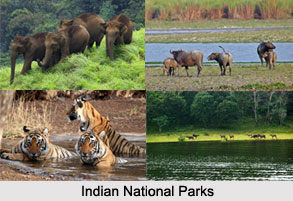
Indian national parks are famous worldwide for preserving the rich Indian wildlife.

 Manas Tiger ReserveIndia is counted among the largest countries of the world by geographical area and it also has one of the richest wildlife. India`s richness in wildlife can be found in almost all the parts of the country. A large number of national parks have been established so far to preserve this rich variety of wildlife in India. A national park is actually a reserve of land, usually declared and owned by a national government. The national parks are also protected from human development and pollution and are declared protected areas of IUCN category II. The numerous Indian national parks provide natural habitat to several flora and fauna and preserve them. They also provide ample scope for the overall development of the adventure tourism.

The need of preserving and protecting the Indian wildlife from extinction was felt several years back and some wildlife sanctuaries and preservers were also established in India. However, it was during the 1930s when the government organisations also felt the need of preserving the wildlife and started associating the wildlife preservers in India. The first national park in India, Corbett National Park was established in Uttaranchal, in the year 1935. It was established as Hailey National Park, mainly due to the efforts made by famous hunter, Jim Corbett and later was renamed after him. After that, quite a handful of Indian national parks have been built over the years. India has a large number of 97 national parks at the moment and they are preserving the country`s finest wildlife species, under the supervision of forest departments. Most of these present day Indian national parks were once hunting grounds of the Indian kings and emperors.

Kaziranga National park The Indian national parks are located at diverse geographical locations and have different climatic conditions. While some of them are located in the hilly areas or in the desert areas, there are a few that are situated in the plain lands or mangrove regions. The natural vegetation and wildlife diversity of the national parks also varies . The Indian national parks have also taken marvellous efforts to conserve the rare, critically endangered wildlife species. The Indian national parks provide habitat to several threatened species like Langur, Monkeys, Asiatic Lion, Asian Elephants, Tiger, One-Horned Rhinoceroses, Wild Buffalo, etc.

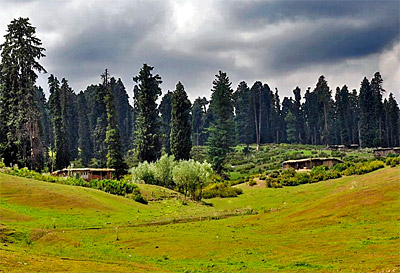
The Indian national parks can be classified according to the regions they are located, like the Northern region national parks, the Western region national parks, the Central region national parks, the Eastern region national parks and the Southern region national parks.. The Northern region houses some popular national parks in India like the Dachigam National Park, Great Himalayan National Park, Valley of Flowers, Sariska Tiger Reserve, Wild Ass Wildlife Sanctuary, etc.

The rich diversity of Indian national parks located in the Western region attracts several nature lovers. The important national parks in this region include the Desert National Park, Marine National Park, Blackbuck (Velavadar) National Park, Gir National Park, etc. On the other hand, the Central region of India also has several national parks that are serving different purposes. Some of the important ones include the Ranthambore Tiger Reserve, Bandhavgarh Tiger Reserve, Kanha Tiger Reserve, Pench Tiger Reserve, Bori Wildlife Sanctuary, etc.

The natural diversity or difference in climate conditions is also quite rich in the Indian national parks that are located in the Eastern region of India. The Kaziranga National park, Manas Tiger Reserve, Buxa Tiger Reserve, Jaldapara Wildlife Sanctuary, Sundarbans Tiger Reserve, Simlipal Tiger Reserve, Bhitar Kanika Wildlife Sanctuary, etc. Most of these national parks have earned recognition and reputation around the world, as well. The Southern region of India is also home to a large number of national parks with rich diversity. Some of the most notable parks in this region include the Ranganathittu Wildlife Sanctuary, Nagarhole National Park, Bandipur Tiger Reserve, Mudumalai Wildlife Sanctuary, Silent Valley National Park, Eravikulam National Park, Periyar Tiger Reserve, etc.

The rich biodiversity in the Indian national parks and their wonderful maintenance have contributed hugely to the development of eco-tourism in India.

(Last Updated on : 18/10/2010)
 
More on Indian National Parks
Dachigam National Park Hemis National Park Great Himalayan National Park
Valley Of Flowers National Park Rajaji National Park Corbett National Park
Sanjay Gandhi National Park Dandeli Wild life Sanctuary Ranthambore Tiger Reserve
Keoladeo Ghana National Park Desert National Park Wild Ass Wildlife Sanctuary
Marine National Park Blackbuck National Park Gir National Park
Kaziranga National Park Khibul Lamjao National Park Manas Tiger Reserve
Gahirmatha Marine Wild life Sanctuary Chilka Wildlife Sanctuary Ranganathittu Wildlife Sanctuary
Nagarhole National Park Mudumalai Wildlife Sanctuary Silent Valley National Park
Indira Gandhi Wildlife Sanctuary Eravikulam National Park Point Calimere Sanctuary
Guindy National Park Crocodile Bank Arignar Anna Zoological Park
Bori Wildlife Sanctuary Kutch Wildlife Santuary Anshi National Park
Indira Gandhi National Park Mount Abu Wildlife Sanctuary Kutch Bustard Sanctuary
Mandagadde Bird Sanctuary Bannerghatta National Park Kumbhalgarh Wildlife Sanctuary
Madhav National Park Tiger Reserves in India National Parks in Rajasthan
Jawaharlal Nehru Botanical Garden Panna National Park Pench National Park and Tiger Reserve
Mahim Nature Park Kanchenjunga National Park Dibru-Saikhowa National Park and Biosphere Reserve
Nameri National Park Gardens of Jaipur Vidyadhar Gardens
Government Botanical Gardens Gardens and Parks of Tamil Nadu Brindavan Gardens
Botanical Gardens of India Botanical Gardens Agro-Horticultural Gardens
Ranthambore National Park Tadoba National Park Kukrail Reserve Forest
Kalesar National Park Orang National Park Pabitora Wildlife Sanctuary
Central Khonghampat Orchidarium Keibul Lamjao National Park Central Khongampat Orchidarium
Neora Valley National Park Varsey Rhododendron Sanctuary Shingba Rhododendron Sanctuary
Anamudi National Park Navegaon National Park in Madhya Pradesh Vellode Bird Sanctuary
Gulf of Mannar Marine National Park Narsinghgarh Wildlife Sanctuary Mouling National Park
Mehao Wildlife Sanctuary Joypur Forest Gorumara National Park
Chapramari Forest Kaimur Wildlife Sanctuary Bakhira Bird Sanctuary
Kachhua Sanctuary    
Recently Updated Articles in Flora & Fauna
Kachhua Sanctuary
Kachhua Sanctuary is a tortoise sanctuary in Varanasi. This sanctuary has rare species of tortoise and other aquatic animals.
Bakhira Bird Sanctuary
Bakhira Bird Sanctuary is one of the prominent tourist attraction sites of Uttar Pradesh.
Talley Valley Wildlife Sanctuary
Talley Valley Wildlife Sanctuary is one of the prominent tourist attraction sites in Ziro of Arunachal Pradesh
Kaimur Wildlife Sanctuary
Kaimur Wildlife Sanctuary houses not only the wild life but also there is hill known as Dalma Hills and the tourist can sees the mural paintings of pre historic times.
Bhimbandh Wildlife Sanctuary
Bhimbandh Wildlife Sanctuary is one of the tourist attraction sites in Munger District covers 681.99 square kilometers of undulating tracts of Kharagpur Hills.
E-mail this Article | Post a Comment
Forum
Forum on Flora & Fauna
Free E-magazine
Subscribe to Free E-Magazine on Reference
 
 
Indian National Parks - Informative & researched article on Indian National Parks
Sitemap
Contact Us   |   RSS Feeds
Copyright © 2008 Jupiter Infomedia Ltd. All rights reserved including the right to reproduce the contents in whole or in part in any form or medium without the express written permission of
Jupiter Infomedia Ltd.