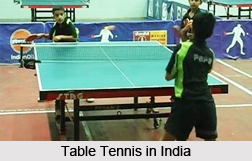
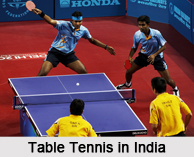
 The game of table tennis has a long and rich history in India. Its popularity is increasing day by day. The game was brought into India by the British Army and Civilian Officers during 1880s. From that time it got immense popularity among the Indians. Several Tennis tournaments organised during the later half of the 19th century and some of the major tournaments were the Punjab Lawn Tennis Championship at Lahore in 1885; the Bengal Lawn Tennis Championship at Kolkata in 1887.
Table tennis in India is a popular indoor recreation sport. It has caught the attention among the people in the states like West Bengal and Tamil Nadu. The Table Tennis Federation of India (TTFI) is the official sports body of the table tennis. It is currently ranked 30th in the world.
The beginning of the table tennis can be traced back to a game popular in the late 19th century in England. This is a most simple game. It consists of largely a hitting a champagne cork with a book, back and forth across a large table (usually a dinner table) separated into two halves by a row of books (the `net`). At first the game was called "whiff-whaff" due to the sound the books made as the players exerted them.
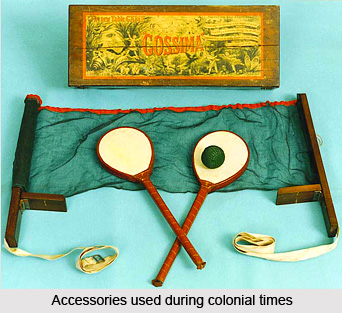
The popularity of this game is increasing day by day. It caused manufacturers to cash in and produce specialised paraphernalia like tables, ball and rackets. The rackets consisted of a roll of thick parchment stretched across a wooden frame. The sound made by these early rackets on hitting the ball denoted its name - `Ping Pong` - and thus, modern table tennis was born.
 After gaining popularity and to foster the table tennis among the young Indians, as there were thousands of amateur players throughout Europe and India, there was a need to build up an organisation who will give platform to those players in the national and international spectrum. Thus, in 1926, the International Table Tennis Federation (ITTF) was formed, which regulates the sport to this day. The same year, the first World Championship was held in London, thus giving birth to professional table tennis. After that in 1937, Table Tennis Federation in India was firmly established in Kolkata with the recognition from All India Table Tennis Association. T. D Ranga Ramanujan; famously known as `T.D.R` played an important role to strengthen the TTFI
It is the most important to mind it that in 1952, the World championship of Table Tennis was held at Mumbaiand that was for the first time in Asia.
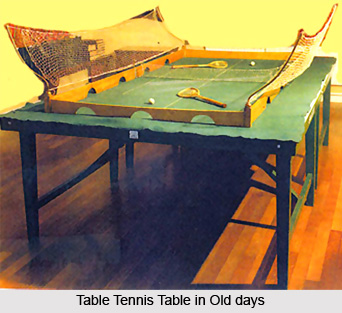
At the very beginning the table tennis was played on the tennis table which was a hard table. It was approximately 9 feet long and 5 feet wide. Now there are many different types are manufacturing to accommodate more than just two players. It adds the player a different feel when competing with each other. There are many type of table for gaming the Table tennis in India. Such as a triangular table to allow 3 players to play, an octagonal table that allows 4 players to play, and even a hexagonal table designed to allow 6 players to compete at once.
In school, colleges and the universities in India, a lion`s proportion of young adults have even aimed their own version of this multi-faceted game called beer pong. The universal idea is to get your ping pong ball into your opponent`s beer cup, which in turn has them consume the entire glass of beer. The first person to give up is considered the loser, while the remaining opponent in crowned champion.