 The General rules of Billiards are a point of reference in all billiard games. There are different types of games that are being played in the game of billiards, and though all of them have some different rules and regulations, there are some General Rules of Billiards that have been followed in all the games of Billiards.
These rules are as follows:
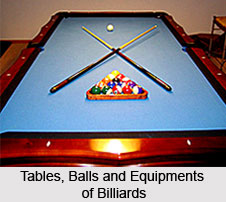
1. Tables, Balls, Equipments: All the games of Billiards are designed for the tables, balls and the equipments that meet the international standards.
2. Racking The Balls: A triangle must be used when the balls are being racked on the table. The apex ball should be spotted on the foot spot. The referee should line up all the balls behind the apex ball and press them together so that all the balls have contact with each other.
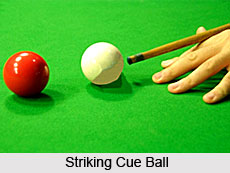
3. Striking Cue Ball: The player is required to strike the cue ball only with the cue tip in order to make a legal shot. If he fails to meet this requirement, he will commit a foul.
4. Calling Shots: In the games where call-shots are used, a player can shoot any ball according to his choice, but he must indicate the called ball and called pocket before he shoots. He does not need to indicate in details such as kisses, caroms, combinations, or cushions.
5. Failure To Pocket A Ball: When a player fails to pocket a ball on a legal shot, the referee can announce the player`s inning as over. After that his opponent gets his turn at the table.
6. Lag For Break: Special break shot before the commencement of the game to determine who will start the match.
7. Opening Break Shot: The referee determines the opening break shot by implementing either lag or lot rule. The player who wins the lag or lot are allowed to choose whether he will perform the opening break shot or assign it to his opponent.
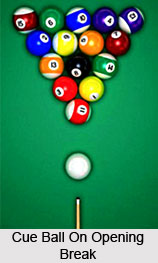
8. Cue Ball On Opening Break: The player takes the opening break shot with cue ball in hand behind the head string. The referee positions the object balls according to specific game rules. Once the player strikes the cue ball by the cue tip on the opening break, the game is considered to have commenced.
 9. Deflecting The Cue Ball On The Game`s Opening Break: If any player stops or deflects the cue ball after it has crossed the head string and is yet to hit the racked balls on the break shot, he will commit a foul and lose his turn. Then, his opponent will have the option to receive the cue ball in hand behind the head string or pass it back to the offending player. In this case, the referee must give a warning that states that a second violation of this rule during the match will result in the loss of the match.
10. Cue Ball In Hand Behind The Head String: Here, the incoming player can place the cue ball anywhere behind the head string. The player who is shooting can shoot at any object ball till the ball is on or below the head string. He cannot shoot at any ball that is based above the head string. He can shoot such balls after he shoots the cue ball below the head string and then hit a rail that causes the cue ball to come back above the head string and hit the object ball. The base is the point of the ball touching the table. This base determines whether it is above or below the head string.
11. Pocketed Balls: A ball will be considered as pocketed if it drops off the bed of the table into the pocket and remains there as a result of a legal shot. If a ball rebounds from a pocket back onto the table bed, it will not be considered as a pocketed ball.
12. Position Of Balls: The player judges the position of a ball by the base or center where it rests.
13. Foot On Floor: This rule is very much mandatory for the player to keep at least one foot in contact with the floor at the moment he contacts the cue ball with the cue tip. If he does not do so, he will commit a foul.
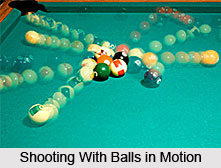 14. Shooting With Balls In Motion: The referee will consider it as a foul if a player shoots while the cue ball or any object ball is in motion.
15. Completion Of Stroke: When all the balls on the table become motionless after a stroke, the stroke is completed and counted.
16. Head String Defined: The head string does not include the area behind it. That means if an object ball is dead center on the head string, it is playable. However, in some specific games, it is required that a player must shoot at a ball past the head string.