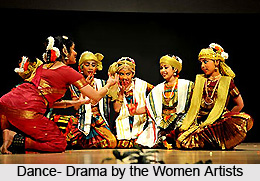
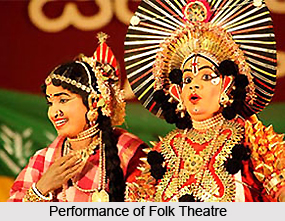
Indian drama which began in the ancient days, as a form of humanizing the mass gradually became a rational way of expressing ideas amidst the artistry of "kala", "rupaka", "natya" and "mudraa". Theater bit by bit became an art form to reflect the realities of life. Although Sanskrit theater remained to be popular, yet it is during the medieval period Indian drama gained a whole new facet with the introduction of the style of classical Indian dance drama. It is an authoritative genre of Indian theater and is regarded as one of the most venerated artistic expression of the Hindu classical temple culture. Music, "ragas", "mudraas" coupled with the verve of the "taala" offered a whole new facet in Indian theater which later not only influenced the Indian theater but also added a dimension to Indian classical dance forms. Quite ideally therefore Classical Indian Dance Drama or the "Natya Yoga" as it has been termed, gradually became an effort of depicting the beauties of life and exemplifying the divine celestial elements of the universe amidst the artistry of raga and music. The elegant embodiement and the graceful personification of the "unedited realisms of life, death, law and love" is therefore the very crux of the classical Indian dance drama.
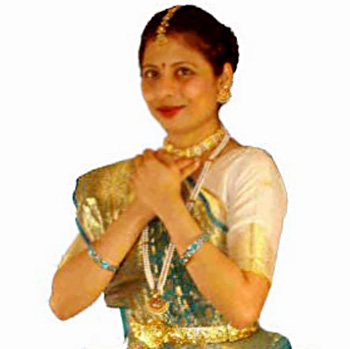
The vibrations of the sanskrit plays gains an articulation with the introduction of the Classical Indian Dance drama. The verve of the different classical dance forms like the Odissi, Kathak, Bharatnatyyam, Manipuri, Kuchipudi, Kathakali, Mohiniattam, Yakshagna, Sattriya further structured the very contour of the Classical Indian dance drama as an elegant way of thanking and revering the Divine. Dance forms here started ruling the theater form.
 While Bharatnatyyam, Odissi and Kuchipudi prefers to maintain the very orthodox style of the Indian classical dance form, it is the typical saltation form of Kathak that developed as a rather contemporary style in worshipping the elysian. Movement of the legs and the mudraas coupled with the gentle rhythm of the Sura and Raga, aided in weaving that magic in the dance form of Kathak.
The Classical Indian dance drama further gained that overemotional aspect with the introduction of the melodramatic form of the Kathakali dance. Quite ideally therefore Lasya, Natya and Rasas all gained a distinct facet in the Indian classical dance drama amidst the classic accession of the various Indian dance form.
In the recent era Classical Indian dance drama is just not the harmonization of the dance form but is a lot more. It has become a tuneful union of dance, music, songs, dialogues, soliloques and monologues. Although the "catharsis" of the modern dance drama is portrayed amidst the dance forms and music, yet words, orchestra and string music definitely plays an important role. In the modern days Classical Indian dance drama in the larger sense is therefore an effort of communing the emotional content through song, dance, timber, words and music.