Ashoka Tree, Indian Medicinal Plant - Informative & researched article on Ashoka Tree, Indian Medicinal Plant
  Indianetzone: Largest Free Encyclopedia of India with thousand of articles Flora & Fauna


in  
Art & Culture | Entertainment | Health | Reference | Sports | Society | Travel
Forum  | RSS Feeds  | Free E-magazine
Flora & Fauna : Indian Birds l Indian Animals l Indian Flowers l Indian Reptiles l Indian National Parks l Indian Shrubs l Indian Trees l Bird Sanctuaries in India l Indian Herbs l Indian Plants l Indian Medicinal Plants l Indian Flora & Fauna l Indian Biosphere Reserves l Indian Wildlife Sanctuaries l Indian Fruits l Indian Wildlife
Home > Reference > Flora & Fauna > Indian Medicinal Plants > Ashoka Tree
Ashoka Tree, Indian Medicinal Plant
Ashoka tree is a popular Indian medicinal plant which is used to treat a number of physical problems.

Ashoka Tree, Indian Medicinal PlantKnown as the Ashoka tree in English has several other indigenous names which have been assigned to the tree by various regions and states. For instance it is known as asok or devdaru in Bengali, ashopalava in Gujrati and aksath in Kannada. The various other names of the tree are as follows anagam in Tamil, asoka in Telegu, asok in Punjabi, asoc in Konkani, asoko in Oriya, asokam in Malayalam and ashokam in Sanskrit. Apart from the various regional names it has a scientific name of Saraca asoca. India, Sri Lanka, Bangladesh and Myanmar have been home to the Ashoka plant. Interestingly the plant does not require any specific natural conditions for its growth; it grows in places like central and eastern Himalayan foothills and in the western peninsular India. Ashoka plant also forms a major part of the evergreen forest in the southern part of India. More than being a part of the natural forest, the plant is more a part of the planted trees.

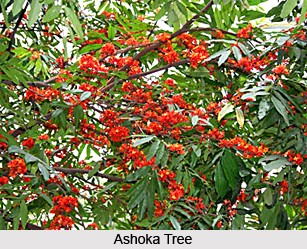
It is a small evergreen tree with glabrous branches and a dark brown bark. It has small, wrinkled, stout deciduous leaves. The flowers of this plant are generally fragrant and are orange or orange-yellow in colour which in the later stages turns vermillion. The pods are flat and leathery in structure. As per as the season is concerned the flowers of the plant generally bloom during March-April and the fruits grow during the months of August-September.

The Ashoka tree is one of the sacred trees of the Hindus as well as the Buddhists. The astringent bark is reported to have a stimulating effect on the endometrial and ovarian tissue, and is useful for treating menstrual pain and menorrhagia due to uterine fibroids, leucorrhoea, and internal bleeding, hemorrhoids and hemorrhagic dysentery. In Ayurveda ashoka tree is used for treating dyspepsia, other diseases of the blood, biliousness, tumours, abdominal enlargement, colic, piles, ulcers and bone fractures. The tree is also used in the Siddha system to treat diseases like menorrhagia, diarrhoea and bleeding piles. The leaves of the plant has a special blood purifying property and its juice mixed with cumin seeds works wonder in case of stomach ache. The flowers of the ashoka tree become very effective for hemorrhagic dysentery when mixed with water. It also serves as an excellent uterine tonic and is very useful to treat syphilis and biliousness. The edible seeds of the plants have a diuretic property. The flowers of the plants are used for various religious ceremonies and for decorating temples.

Hence, it can be concluded saying that the Ashoka plant is not only a sacred plant for the Hindus but it serves an end number of medicinal purposes and provides relieve to people from several complex physical ailments.

(Last Updated on : 18/01/2010)
  More on Indian Medicinal Plants...
 
Hastyaluka Plant Varahikanda Plant Mustaka Plant
Cyperaceae Plant Trikosaki Plant Shankrapushpi Plant
Gabdi Plant Tamala Plant Bhadrabala Plant
Ajantri Plant Purple Convolvulus Plant Baghanulla Plant
Kanchata Plant Kharboj Plant Canda Plant
Triputa Plants Akhukarni Plant Michai Plant
Kamalata Plant Vyaghranakhi Plant Ipomoea coccinea L Plant
Railway Creeper Plant Akasavalli Plant Sankhapushpi Plants
Bahupraja Plant Danti Plant Sala Plant
Karela Plant Dhamargava Plant Jhingaka Plant
Sarahattika Plant Spilanthes Calva Plant Mundi Plant
Sigesbeckia Oriental Plant Senecio tenuifolius Plant Cottonweed Plant
Pentanema Indicum Plant Asvakarnah Plant Haritaki Plant
Badam Plant Bahira Plant Kakubha Plants
Amlavetasa Plant Vrksamlah Plant Nagakesar Plant
Swetachilli Plant Thorny staff tree Plant Jyotismati Plant
Ksharadala Plant Arjuna Asana Plant Rangoonkibel Plant
Combretum decandrum Roxb Plant Dhavah Plant Commiphora caudata Plant
Indian Cadaba Plant Kanthari Plant Acanthospermum hispidum Plant
Adhakpuspi Plant Aditya Plant Ajashrangi Plant
Akola Plant Alarka Plant Antrapachaka Plant
Arkamula Plant Ashvaghna Plant Australian pine Plant
Avighna Plant Barachandrika Plant Bhadra Plants
Bhringaraja plant Bhukharjuri Plant Bhut phal Plant
Biskandri Plant Bulb plants in India Campanilla Plant
Chakrani Plant Chironji plant Cordia macleodii Plant
Cyathocline purpurea Plant Dhania Plant Candrasura Plant
Chaskaman Hydro Power Plant Dhoajavriksha Plant Dhumapatra Plant
Ehretia laevis Roxb Plant Ervatamia heyneana Plants Glossogyne bidens Plant
Yugaphala Plant Golika Plant White Champa Plant
Gulsham Plant Harachampaka Plant Visamustih Plant
Heracleum rigens Wallichis Plant Iksvakuh Plant Trikantaka Plant
Tecoma stans Plants Indian Cherry Plants Indrayava Plant
Syamalata Plant Suryamukhi Plant Jingini Plant
Supari Plants Sugandhi Plant Kajutaka plant
Sudrabilo plant Kakadani Plant Spanish needle plant
Kaliziri Plant Soumya Plant Sinduri Plants
Silkweed Plant Kandali Plant Kantaphala Plant
Karabi Plant Seetaphal plant Karamardika Plant
Secamone emetica Plant Karambha Plant Satamuli Plant
Sasasruti Plant Kath-Semul Plants Sarvabajin Plant
Sarpagandha Plant Kharjuri Plants Sariba Plant
Krishnasariva Plant Sangkhaphuli Plant Kunduru Plants
Laghukacchu Plant Safed Sarson Plant Lingini Plant
Rugtoora Plants Manjirika Plant Raladhupa Plant
Moca Plants Musali plant Prickly Pear Plant
Pothos scandens Plants Pithari Plant Nityakalyani Plant
Parpatakah Plant Parthenium hysterophorus Plant Patoli Plants
Patala Plants Oriental Cashew Tree Matchstick Tree
Jasmine Tree Malayan Custard Apple Amrataka Plant
Vitunna Plant Sabu Plant Khetki Plant
Jungli Anarash Plant Hamsapadi Plant Pindi Plant
Amaranthus spinosus L Plant Alternanthera Sessilis Plant Alternanthera pungens H.B.K Plant
Aerva lanata Plant Amaranthaceae Plant Aloe Barbadensis Mill or Indian Aloe
Ganderi Plant Dra-Vanti Plant Bhumyamalaki Plant
Bherenda Bhadradanti Plant Krishna-Kamboji Plant
Macaranga indica Weight Plant Kampilla Plant Svetakanchana
Orchid Tree Kandla Mahul
Kuberakshi Dividivi Plant Karanjika Plant
Guletura Plant Nelaponna Plant Sarmal Plant
Amaltas Plant Tarwar Plant Chaksu Plant
Gabur Plant Brahmani Khair Plant White Babul Plant
Babla Plant Biswul Plant Shami Plant
Aila Plant Kunchandana Plant Krishnasirish Plant
East India Walnut Plant Chakavat Plant Gulmohur Plant
Yellow Goldmohur Plant Ashoka Tree Balapatra Plant
Red Kutch Plant    
Recently Updated Articles in Flora & Fauna
  • Soft Shelled Turtle
    Soft Shelled Turtle is found in various parts of India. This turtle is also worshipped by the Hindus as an incarnation of Lord Vishnu.
  •  
  • Sundarbans Tiger Reserve
    Nestled at the southeastern province of Kolkata, Sundabans Tiger Reserve deserves special mentioning.
  •  
  • Nawabganj Bird Sanctuary
    Nawabganj Bird Sanctuary, located in the Unnao District of Uttar Pradesh, was established in the year 1984.
  •  
  • Stork
    Stork is a long-legged, large, long-necked wading bird possessing long stout bills and eats dead animals, snails, fish, etc. It belongs to the Ciconiidae family.
  •  
E-mail this Article | Post a Comment
Free E-magazine
Subscribe to Free
E-Magazine on Flora & Fauna

 
Ashoka Tree, Indian Medicinal Plant - Informative & researched article on Ashoka Tree, Indian Medicinal Plant
Sitemap
Contact Us   |   RSS Feeds
Copyright © 2008 Jupiter Infomedia Pvt. Ltd. All rights reserved including the right to reproduce the contents in whole or in part in any form or medium without the express written permission of Jupiter Infomedia Pvt. Ltd.