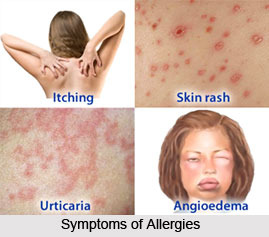
 Symptoms of allergies range at a great variety and vary according to the cause of allergy. Many allergens such as dust or pollen are airborne particles. Allergy symptoms depend on the substance involved and can involve the airways, sinuses and nasal passages, skin, and digestive system. Allergic reactions can range from mild to severe. In some severe cases, allergies can trigger a life-threatening reaction known as anaphylaxis. In such cases, symptoms arise in areas in contact with air, such as eyes, nose and lungs.
Respiratory Allergy
The signs and symptoms of respiratory allergy are:
•Feeling of tightness in the chest
•Breathlessness
•Coughing
•Difficulty inhaling and exhaling
•Noisy breathing ("wheezing")
However the symptoms of allergy in case of eczema, contact dermatitis and urticaria include red, itchy skin, inflamed skin and welts (in hives).
Hay Fever
Hay fever is an immune disorder characterized by an allergic response to pollen grains and other substances. Also known as allergic rhinitis, there are two types: seasonal, which occurs only during the time of year in which certain plants pollinate, and perennial, which occurs all year round. Allergic rhinitis may cause:
•Sneezing
•Itching of the nose, eyes or roof of the mouth
•Runny, stuffy nose
•Watery, red or swollen eyes (conjunctivitis)
•Coughing and postnasal drip
Inhaled allergens can also lead to asthmatic symptoms that are caused by narrowing of the airways like broncho-constriction and increased production of mucus in the lungs, shortness of breath called dyspnoea, coughing and wheezing.
Food Allergies
Food allergies or food intolerances affect nearly everyone at some point. People often have an unpleasant reaction to something they ate and wonder if they have a food allergy.
Symptoms of allergy from food include:
•Abdominal pain
•Bloating
•Vomiting
•Diarrhoea
•Itchy skin
•Tingling mouth
•Swelling of the skin during hives
Food allergies do not usually cause respiratory or asthmatic reactions, or rhinitis. Different food allergies are like milk, egg, wheat, nut (peanut), fish, shellfish, Sulphite, soy and casein allergies.
Insect Sting Allergy
Insect stings, antibiotics, and certain medicines produce a systemic allergic response that is also called anaphylaxis; multiple organ systems can also be affected, including the digestive system, the respiratory system, and the circulatory system. An insect sting allergy may cause:
•A large area of swelling at the sting site
•Itching or hives all over the body
•Cough, chest tightness, wheezing or shortness of breath
Drug Allergy
Many drugs can cause adverse side effects, and certain medicines can trigger allergic reactions. In an allergic reaction, the immune system mistakenly responds to a drug by creating an immune response against it. A drug allergy may cause:
•Hives
•Itchy skin
•Rash
•Facial swelling
•Wheezing
Sensitization
The symptoms of an allergic reaction do not happen the first time one comes into contact with an allergen, but at a later point of contact. This is because the body"s immune system has to develop sensitivity to the allergen before one can become allergic to it. This process is known as sensitization. The time taken to become sensitized to an allergen varies from days to years. Some people stop in the sensitization phase, as they experience symptoms, but never fully develop an allergy.
Anaphylaxis
In very rare cases, an allergy can lead to a severe allergic reaction, called anaphylactic shock, which can be fatal. Anaphylactic shock is a medical emergency which is an acute systemic, affecting the whole body because of the allergic reaction. It occurs after exposure to an allergen to which a person was previously sensitized.
The signs and symptoms of anaphylactic shock include the general symptoms of a common allergic reaction rapidly worsens the situation. The symptoms of anaphylactic shock can include any or all of the following:
•Swelling and itching of the throat and mouth
•Difficulty swallowing or speaking
•Difficulty breathing
•A rash anywhere on the body
•Flushing and itching of the skin
•Stomach cramps, nausea and vomiting
•A sudden feeling of weakness, due to a fall in blood pressure
•Collapsing and becoming unconscious
•Anxiety and headache
•Diarrhoea
•Convulsion
•Chest pain and tightness, sweating
•Cramping of the uterus
Depending of the rate of severity of allergy, the symptoms of allergies can lead to severe reactions like broncho constriction, edema, hypotension, coma and even death. This type of reaction can be triggered suddenly or the onset can be delayed. The severity of this type of allergic response often requires injections of epinephrine.
Allergens that are more commonly associated with anaphylactic shock are certain insect venoms; drugs such as penicillin; and foods like fish, peanuts, nuts, eggs and seeds. Treatment of anaphylactic shock is first to inject adrenaline (epinephrine) to contract the small blood vessels, raising the blood pressure and expands the airway. This may be followed by vaccination of antihistamines and/or steroids, plus the use of life-support systems.