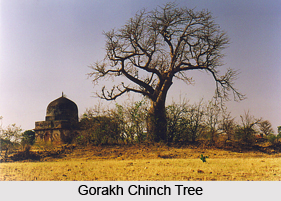
 Gorakh Chinch, also known as Baobab, is credited as one of the most extraordinarily shaped trees of the world. The tree is not that much common in India. The name Gorakh Chinch is in memory of the monk Corak. There is a myth that he has taught his devotees under the shade of one of these trees. This is a native of Madagascar. It came to the people initially from Central Africa; but at present it has been naturalized and flourishes well in parts of the world and also in dry and desert areas. The tree grows very quickly indeed and also lives longer than most of the other trees in this world.
Etymology of Gorakh Chinch
The scientific name of the tree is Adansonia Suarezensis. This is a member of Malvaceae family. People do call it in various different names. In Hindi, the people call it either Gorak Amli or Goram Lichora. In Gujarati, they call it as Gorak chinch. The Tamil people named it as Paparapulia and Perruka and in Sinhalese it is called as Aliha gaha. The tree is well known to the English people as in both the names of Baobab and Monkey-Bread Tree.
Morphology of Gorakh Chinch
Though the height of the Gorakh Chinch tree is medium; but the belt at the base that is strengthening it, is recorded as huge as 33 metres. This huge and enlarged trunk suddenly gets thinner and sends out thick, horizontal branches. When the tree is in its full flora in summer it looks like a giant mushroom. The leaves of the tree are smooth and big in size and portrayed like fingers as five leaflets radiate from one central point. When the year starts, the leaves fall down and leave a thin, grey skeleton. The new leaves appear in the season of spring, just before the blossoms start making an appearance. The leaves are large and they normally hang before the soft white petals. The flower is a huge one in size. The petals of the flowers are curvy on the backside. During the month of July, these flowers appear at midnight and wilt by mid-morning. Coming to the fruits of the Gorakh Chinch tree, the fruits are white in colour and also contain a soft and sharp pulp. There are a lot of blackish, kidney-shaped seeds in those pulps and they remain surrounded by strong fibres.
Uses of Gorakh Chinch
The pulps are quite safe to eat and a cooling drink made from them, can relieve fever. The 18th century French botanist Adamson described this fruit as a great preservative against epidemic fever as it can temper the heat of the blood. These pulps have great medicinal qualities and are used to relieve stomach complaints. In addition to this, the Gujarati fishermen use the gourds of this tree to float their nets. People can eat the leaves and the bark of the tree can produce some exceptionally strong ropes.
The tree has another extraordinary feature. An ancient Gorakh Chinch tree can store up to a huge capacity of around 450 litres of water in its hollowed-out trunk. This exceptional feature also helps the tree to survive drought. The timber of the tree can be used only to make rafts. Otherwise, they are of no use at all. The poor people often use the trunks of the tree to build their homes. Though nobody thought of cultivating this tree commercially yet, but because of its rapid growth and assets like valuable fruits and fibres, the tree has the potential to become very much profitable indeed.