 Local Names: Marathi Gargar; Tamil Pul viriyan; Telugu (Vizag Dt.) Sanka.
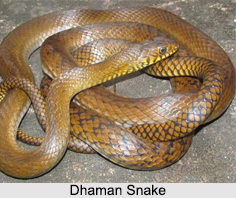
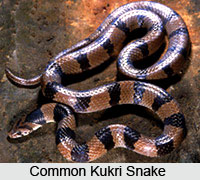
The species name of the common kukri snake is arnensis. The name `Kukri Snakes` for members of the genus Oligodon is because of its broad blade-like character and peculiar shape of the posterior maxillary teeth. Its body is cylindrical, short, smooth and even sized. Its head is depressed, snout short and blunt. Its tail is short and compressed and is one-sixth to one-seventh of the total length. It is brown in color but is lighter on the flank seldom with a ruddy or purplish tint. On its back are black bars, narrow but distinctly outlined with whitish or pale yellow. The number of bars on its body varies.
The Kukri snakes usually dwell in the plains. It`s a diurnal snake and is often seen during the rainy season. It lives in the crevices of buildings and old walls. It can climb very skillfully. When irritated the snake inflates its body to a remarkable degree and flattens the posterior part of the head making the head more apparent.
The Kukri snakes feeds on reptile eggs, mice and other mammals. The male and the female variety of these snakes stay together after mating. The females lay four or five eggs, which measure 36 x 10 mm.