Classical languages are those, which are ancient, of an independent tradition, not a derivative of any other tradition, and its rise was on its own. Classical languages have a vast and rich reserve of ancient literature. A language that has a broad influence over an extended period of time, even after it is no longer a conversational mother tongue in its original form is reckoned as the classical language. As the spoken forms of the language deviate away from the classical written language over centuries, classical language appear to be a kind of language that no one learns as a native language. Classical languages have supplied prototypes for the languages that depend on them. These languages dependent for styles of verse and prose, grammatical descriptions, literary genres, pronouncements on usage, and philosophical and other texts. Classical languages have a body of literature, preserved in manuscript form and organized into a norm that may be scriptural. There are just five languages that have had overpowering significance as carriers of culture. They are classical Chinese, Sanskrit, Arabic, Greek, and Latin.
Usage of Sanskrit in modern times:
Sanskrit being a classical language is intertwined with India and its various religious and cultural issues. Sanskrit has a legacy that is many centuries old and therefore it is highly esteemed and acknowledged in India and abroad. Religious scriptures, prayers, rituals and ceremonies are written in this particular language. Sanskrit in modern times is very much connected with us in a larger way may be not very explicitly but in a much more subtler manner. Many Vernacular Indian languages like Konkani, Bengali and Marathi still retain that flavor, and we can find many such vocabularies in these languages which is Sanskrit based. Sanskritization of vernaculars have taken place since ages, like the National anthem of India , national song which is Vande Mataram all containing Bengali as the language but sanskritized.
 Form this the usage of Sanskrit is very apparent even today. Areas of science and technology have also included nuances of Sanskrit. Like the names of the scientific discoveries, for example, the missiles, aircraft etc being named as Prithvi, Akash, Agni, Trishul, Tejas etc. Sanskrit though a classical language is not just limited in India but also has acquired recognition in the western scenario. In music, cinema and other artistic ventures. Sanskrit shlokas have emerged out to be very much in vogue in media and televiosion and the entertainment industry is somewhat instrumental in its revival. The language which was very ornamental and of high literary merit is not inaccessible in modern times. Though teaching is no longer imparted in this language but in a regional level we still find its incorporation in the syllabus at the school level. It has acquired an urbane status among today`s youth.
Classical language in India:
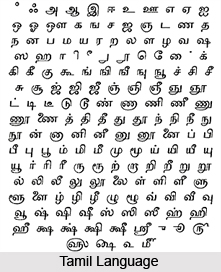
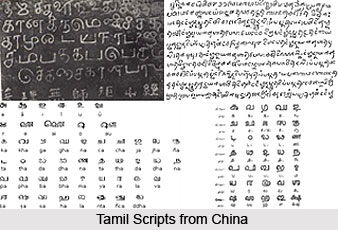
A provision to confer status of classical languages in India was made by constitutional decree in the 2004. There are few criterias which should be met in order to receive this status. These generally constitute antiquity in leadership, qualities as a base for other languages, rich literature, a language theory and so on. In this context among the classical languages of India we include Tamil and Sanskrit. Classical Tamil is the language of the Sangam the Sangam literature.
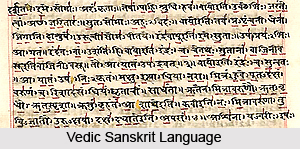
As a part of the classical languages in India Sanskrit is the oldest spoken language, and Sanskrit literature contains a very rich dramatic and poetic tradition that is not only connected with religious texts of Hinduism, Buddhism and Jainism but also astronomy, dance medicine, music which have more technical aspects. Famous works like Kautilya`s Arthashastra is important in this context as an institutional base. Tamil on the other hand is Dravidian in characteristic and based in south India but is widely spoken all over the world. This also has an ancient history and has literary work dating to over 2000 years. Therefore classical languages are like parent bodies which are responsible for the development of literature and languages in a wider sense. These languages have various associations in the contemporary scenario and will remain an integral part of this whole linguistic system.