Stone Art is one of the most exclusive and unique arts of India. In spite of the huge use of metals and other materials, the use of stone in utility items and decorative articles is still in demand. In India, Stone Art has gained immense prominence as an expressive form of architecture. In Indian sculpture, several figures are exemplary of the tradition and the deft of Stone Art. Permanence of this material has provided numerous evidences for the existence of this art since ages.
Origin of Stone Art
Historical evidences unfolds that Stone Art in India came during the Maurya dynasty. Being the centre of Maurya dynasty, Bihar was the state where Stone Art was introduced for the first time. Stone Art in India was the preferred mode of giving form to the deities in the early centuries of Christian era. At that time Vedic beliefs gave rise to Hinduism. The initiation of the Gupta era gave rise to the classical era of Indian sculpture. Umpteen number of deities carved out from stones have been found in archaeological excavations. During thirteenth century, the Cholas initiated the era for sculpture in the South India. In the ninth to fourteenth century, temples in India were built keeping in mind the sculptural advancement. Excellent union of Stone Art and marble work was also prevalent in that time. The temples of Khajuraho (Madhya Pradesh), the temple at Konark (Orissa) and Dilwara temples at Mount Abu (Rajasthan) are the testaments of mastery in stone work which have always remained legendary for their fabulous sculptural deft.
 Types of Stones for Stone Art
The variety of stones available in nature presents numerous choices to the craftsmen for carving different objects varying in colour, hardness and quality. Soft stones include pumice, chalk, tufa and soapstone which can be very easily shaped up in different forms. Metamorphic stones such as basalt and granite are however hard and difficult to shape up and require either tools having tips of tungsten carbide or abrasives. Simple iron tools and abrasives work well with marbles and limestone. Apart from these, the precious gemstones are also carved out into magnificent figures and shapes.
Soapstone Art
A more contemporary approach in Stone Art can be seen with the introduction of the soapstone art. Soapstone, also known as soaprock or steatite, is a kind of metamorphic rock which also serves as a material for the creation of sculptures and other artefacts. It is largely used for making tourist souvenirs, small items of decoration, fireplaces, and many more. Soapstone sculptures are found in different parts of India especially in Varanasi and in Gukulpura, the suburbs of Agra.
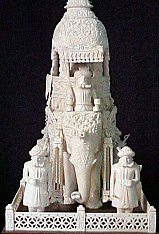
Stone sculptures are enlisted among the most complicated yet beautiful arts of India. Carving out structures from stones and fine engravings on them require appreciable dexterity. India has numerous specimens of ancient and contemporary Stone Arts. Various new and advanced techniques have been developed over years to craft exquisite artefacts. Amalgamation of modern and traditional styles can be witnessed in different Stone Arts throughout the country