
Bhanja Kishore Patnaik was a dramatist of earlier time. This dramatist had to compete with Kali Charan Patnaik and Ramchandra Mishra to get an entry into professional Oriya theatre. During his schooldays he wrote his first play, Jhada-rati i.e. `Stormy Night` but unfortunately this is still unpublished. However, his first script for Annapurna Theatre was Devi in 1945. This one established him as a dramatist. Its commercial success encouraged him to write plays like Jahar in 1946, Benami i.e. `Anonymous` in 1946, and Tofan i.e. `Typhoon` in 1949. Manik-Jodi in 1951 brought him fame as a mature author, for artistically portraying the conflict between two feudal families over a piece of land. It was made into a popular film. Again, in Jaya Malya i.e. `Victory Garland` in 1952, this Oriya theatre personality examined a new field competently. This was with the difficulties of a creative writer. In Agni-pariksha i.e. `Fiery Test` in 1956, his message was that some scientific inventions meant for human welfare could cause further hazards.
During the 1940s the trio of Patnaik, Mishra, and Gopal Chhotray built a healthy tradition in the emerging category of domestic drama. Patnaik believed in variety and explored fresh areas for his works. Bhanja Kishore Patnaik effectively dealt with subjects like national integration, communal harmony, political issues, sexual equality, superstitions, dowry, the joint-family system and its problems.
A strong belief in ancient heritage influenced his philosophy of life as well. So he suitably and vividly inserted three aspects of Indian tradition i.e. truth, non-violence, renunciation, etc. in nearly all his plays. Like his contemporaries, he followed the principles of stagecraft established by Kali Charan Patnaik. Bhanja Kishore Patnaik`s analysis of human relations and behaviour appears realistic. In conceiving a well-knit plot, contemporary characters, and simple, straightforward dialogue he was no less than his peers. But above all he was a traditionalist.
Bhanja Kishore Patnaik died in 1999.
This article is a stub. You can enrich by adding more information to it. Send your Write Up to content@indianetzone.com
Bhanja Kishore Patnaik
Bhanja Kishore Patnaik was a renowned dramatist of earlier time who started writing dramas from his school days.
Recently updated articles in Indian Drama & Theatre
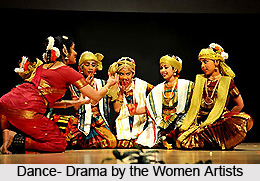
Amateur Theatre
Development of Amateur Theatre has been responsible for useful innovations in theatre culture of Karnataka.
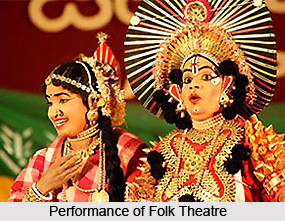
Surendranath Ghosh
Surendranath Ghosh or Dani Babu was a Bengali thespian active during the mid-20th century. He was mostly known for his contributions to Bengal’s moder...
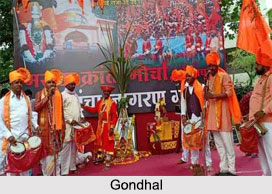
Gondhal Dance
Gondhal is a religious folk dance of Maharashtra. It is performed on special days like when there is a newborn in a family or marriage. Dedicated to g...

Pravritti in Natyashastra
Pravritti in Natyashastra refers to specific human behaviour varying from region to region. There are four types of Pravritti namely, dakshinatya, ava...
Padma Bhushan Awardees (2010-2019)
Padma Bhushan Awardees (2010-2019)
Related articles in Indian Drama & Theatre
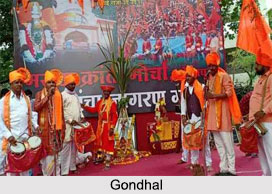
Gondhal Dance
Gondhal is a religious folk dance of Maharashtra. It is performed on special days like when there is a newborn in a family or marriage. Dedicated to g...
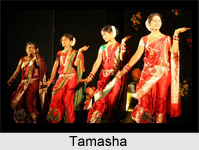
Tamasha Folk Dance
Tamasha is a folk art, which includes the love songs, which are traditional lavanis and dance along with the music.

Sringara Rasa
Sringara Rasa is mentioned in Natyashastra as one of the important rasas. The Sthayi bhava in Sringara rasa is Rati or love.
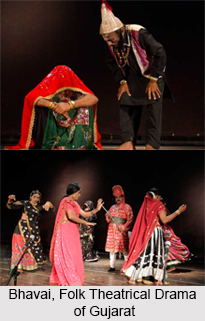
Bhavai - Folk Theatre of Gujarat
Bhavai is a popular folk theatre form of Gujarat that belongs to the tradition of theatre of entertainment.
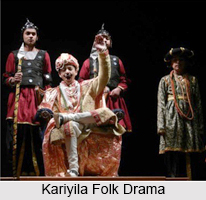
Kariyila Folk Dance
Kariyila is one of the most appealing and popular folk drama forms of Himachal Pradesh, portraying social satire with the accompaniment of folk dance...