Baishnab Pani, Indian Theatre Personality - Informative & researched article on Baishnab Pani, Indian Theatre Personality
  Indianetzone: Largest Free Encyclopedia of India with thousand of articles Indian Drama & Theatre


in  
Art & Culture | Entertainment | Health | Reference | Sports | Society | Travel
Forum  | RSS Feeds  | Free E-magazine
Indian Drama & Theatre : Indian Drama l Indian Theatre l Personalities In Indian Theater l Forms of Indian theatre l Indian Theatre Companies l Regional theatre in India l Indian Theatre Stages l Indian Theatre Schools l Indian Comedy and Humor l Indian Theatre Characters l Famous Plays in Indian theatre l History Of Indian Theatre l Mukhachhadanam l Abhinaya l Alkap l Bandi Pethir l Ankiya Nat l Bhaoriya l Kurattiyattam l Shadow Theatre l Shumang Lila l Swang
Home > Movies & Entertainment > Indian Drama & Theatre > Personalities In Indian Theater > Theatre Personalities of Orissa > Baishnab Pani
Baishnab Pani, Indian Theatre Personality
Baishnab Pani was the first major personality in Oriya Yatra.

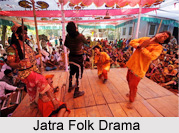
Baishnab Pani was very much popular in Oriya Yatra. He was born in 1882. He reformed and modernized this powerful traditional form of Orissa. Because of him Yatra was elevated to a respectable position. Baishnab Pani was born in a poor family. Pani had little formal education. From early childhood he had to struggle for his existence, doing menial jobs here and there. Fortunately for him, the Mahant or monastic head of Kothpada in Cuttack district employed him in his theatre troupe. There he learnt the first lessons of acting, taking minor roles on stage. Yatra was then in the doldrums with very few leaders, like Jagannath Pani and Gopal Das.

Baishnab Pani was not interested in proscenium theatre because of its huge financial involvement. Hence he decided to try his hand at Yatra. But there was a dearth of scripts. Once he went to Gopal Das for a play but returned empty-handed. Then he decided to write a script himself. This first literary endeavour, Meghanad vadh or Meghanad`s Killing` in 1903 became an instant success. After that he never looked back. He composed about 150 Yatras, nineteen farces, and sixty-five anthologies of lyrics, poems, stories, and other pieces. Some of his popular Yatras can be mentioned as Dronacharya vadh or `Dronacharya`s Killing` in 1928, Karnarjun or `Karna and Arjun` in 1929, Rangasabha or `Celebration` in 1930, Daksha yajna or `Daksha`s Sacrifice` in 1932, Karnadana pariksha or `Test of Kama`s Piety` in 1951, and Bana parajay or `Bana`s Defeat` in 1953.

Baishnab Pani innovated a novel folk style that endeared him to rural viewers. He was an Ashu kavi or instant poet. He used to improvise short lyrics or poems about day-to-day problems on demand. He was an expert musician credited with inventing over 100 ragas, suitable for situations and bhava or emotions. These were not only accepted by his contemporaries but are still played. Gradually, he changed his technique and added more prose dialogue. After serious scenes he inserted small comical episodes with a messenger, a quarrelling couple, or a grandmother and grandson, which were highly appreciated. The police harassed him many times for including nationalistic sequences and speeches, as he was a great patriot and reformist. He always tried to educate his audiences on health, schooling, and unemployment, besides making them conscious about their culture and heritage. Sonorous music, simple yet lyrical dialogue, and true pictures of rural scenes made him the darling of Yatra-goers. Baishnab Pani died in 1956.
(Last Updated on : 27/01/2009)
  More on Theatre Personalities of Orissa...
 
Banamali Pati Ramchandra Mishra Jaga Mohan Lala
Manoranjan Das Biswajeet Das Gopal Chhotray
Godavarish Mishra Kampal Mishra Baishnab Pani
Ramesh Panigrahi Baidyanath Sharma Bhikari Charan Patnaik
Kali Charan Patnaik Simanchal Patro Ramshankar Ray
Ananta Charan Sai Raghu Nath Satapathy Aswini Kumar Ghose
Bhanja Kishore Patnaik    
Recently Updated Articles in Indian Drama & Theatre
  • Element of Dance
    Dancing is an integral part of Indian theatre. Dancing is a traditional art and the position of hands, feet, waist, thighs, back, abdomen and chest are very important in dance.
  •  
  • Angikabhinaya
    Angikabhinaya or Art of Histrionics deals with the gestures or action with limbs. It is expressed in three ways, anga, pratyanga and upanga. The mention about Angikabhinaya can be found in the Natyashastra.
  •  
  • Pusta
    Pusta signifies the model work in Indian theatre. In Pusta it is described how items are prepared for representing different scenes.
  •  
  • Sanjiva
    Sanjiva or living creature is an aspect of aharyabhinaya in Indian theatre. It signifies the appearance of animals on the stage and deals with the preparation of artificial animal forms for the stage.
  •  
E-mail this Article | Post a Comment
Free E-magazine
Subscribe to Free
E-Magazine on Indian Drama & Theatre

 
Baishnab Pani, Indian Theatre Personality - Informative & researched article on Baishnab Pani, Indian Theatre Personality
Sitemap
Contact Us   |   RSS Feeds
Copyright © 2008 Jupiter Infomedia Pvt. Ltd. All rights reserved including the right to reproduce the contents in whole or in part in any form or medium without the express written permission of Jupiter Infomedia Pvt. Ltd.