
 Jawaharlal Nehru, undisputed leader of the country who helped shape the growth and advancement of India, was born on November 14, 1889 and died on May 27, 1964. He was a political leader of the Indian National Congress, and became the first Prime Minister of independent India. Nehru was an important person during the Indian independence movement, and popularly referred to as Panditji. Nehru was a writer, scholar, an amateur historian and the patriarch of India`s most influential political family.
Jawaharlal Nehru
Jawaharlal Nehru, the first Prime Minister of free India, was an important personality and a leader of the Indian National Congress during the Indian freedom struggle.
Introduction
Jawaharlal Nehru, undisputed leader of the country who helped shape the growth and advancement of India, was born on November 14, 1889 and died on May 27, 1964. He was a political leader of the Indian National Congress, and became the first Prime Minister of independent India. Nehru was an important person during the Indian independence movement, and popularly referred to as Panditji. Nehru was a writer, scholar, an amateur historian and the patriarch of India`s most influential political family.Early life of Jawaharlal Nehru
Jawaharlal Nehru, fondly known as Panditji, was born on 14th November 1889. He was a statesman and Indian politician, a prominent leader in the India`s struggle for Independence and the first Prime Minister of independent India.
Family and Childhood of Jawaharlal Nehru
Jawaharlal Nehru was born in a well-known family of Kashmiri pandits. He was born to Motilal Nehru (his father) and Swaruparani Nehru (his mother). He also had two younger sisters who were also named Vijaya Lakshmi and Krishna. He was brought up in his birthplace in Allahabad. His father also owned a rich estate in Allahabad which was also known as Anand Bhavan. He spent his childhood in the company of many well-known and respectable people, who visited the estate to call upon his father who was a rich lawyer and influential industrialist, and politician with the Indian National Congress.
Education of Jawaharlal Nehru
Until he was sixteen, Nehru was educated by a host of British tutors and governesses. He, at the age of thirteen, joined the Theosophical Society in India. He also had Indian tutors who taught him Hindi language and Sanskrit language and grew up to be an atheist.
Jawaharlal Nehru attended the Harrow in England (1905-07), and later on went on to earn an honours degree in natural science from the Trinity College in Cambridge University (1907-10). Nehru qualified as a barrister after two years (1910-12) at the Inns of Court School of Law in London.
Marriage and Children of Jawaharlal Nehru
After completing his education he returned to India in the year 1912. Soon after his return, his mother arranged his marriage with Kamala Kaul, a girl from a conservative middle-class Kashmiri Brahman family in 1912. Kaul was the grand-daughter of Kishanlal Atal, who had been prime minister of Jaipur, so the match was acceptable to the aristocratic Motilal Nehru. The ceremony of marriage finally took place in the year 1916, when Kamala had attained the age of seventeen years. Nehru and Kaul had a daughter in 1917, who was named Indira Priyadarshini.
Family and Childhood of Jawaharlal Nehru
Jawaharlal Nehru was born in a well-known family of Kashmiri pandits. He was born to Motilal Nehru (his father) and Swaruparani Nehru (his mother). He also had two younger sisters who were also named Vijaya Lakshmi and Krishna. He was brought up in his birthplace in Allahabad. His father also owned a rich estate in Allahabad which was also known as Anand Bhavan. He spent his childhood in the company of many well-known and respectable people, who visited the estate to call upon his father who was a rich lawyer and influential industrialist, and politician with the Indian National Congress.
Education of Jawaharlal Nehru
Until he was sixteen, Nehru was educated by a host of British tutors and governesses. He, at the age of thirteen, joined the Theosophical Society in India. He also had Indian tutors who taught him Hindi language and Sanskrit language and grew up to be an atheist.
Jawaharlal Nehru attended the Harrow in England (1905-07), and later on went on to earn an honours degree in natural science from the Trinity College in Cambridge University (1907-10). Nehru qualified as a barrister after two years (1910-12) at the Inns of Court School of Law in London.
Marriage and Children of Jawaharlal Nehru
After completing his education he returned to India in the year 1912. Soon after his return, his mother arranged his marriage with Kamala Kaul, a girl from a conservative middle-class Kashmiri Brahman family in 1912. Kaul was the grand-daughter of Kishanlal Atal, who had been prime minister of Jaipur, so the match was acceptable to the aristocratic Motilal Nehru. The ceremony of marriage finally took place in the year 1916, when Kamala had attained the age of seventeen years. Nehru and Kaul had a daughter in 1917, who was named Indira Priyadarshini.
Achievements of Jawaharlal Nehru
 Nehru had become one of the youngest leaders of the Indian National Congress. Rising under the mentorship of Mahatma Gandhi, Nehru became a charismatic, radical leader, advocating complete independence from the British Empire. An icon for Indian youth, Nehru was also an exponent of socialism as a means to address long-standing national challenges. On December 31, 1929 serving as President of Indian National Congress, Nehru raised the flag of independent India in Lahore. A forceful and charismatic orator, Nehru was a major influence in organising nationalist rebellions and spreading the popularity of the nationalist cause to India`s minorities. He was imprisoned nine times between 1921 and 1945 for his political activity.
As India`s Prime Minister, Nehru introduced major national programmes of industrialisation, agrarian and land reforms, infrastructure and energy development. He enthusiastically worked for women`s rights, secularism and advancement of education and social welfare. Nehru introduced the policy of non-alignment and developed India`s foreign policy under the ideals of Pancasila. However, he was criticised for his failure of leadership during the Sino-Indian War in 1962.
Later Years of Jawaharlal Nehru
Later years of Jawaharlal Nehru consisted of him being at the helm of government. He led the congress to a major victory in the 1957 elections, but his government was facing serious problem and criticism. Disenchanted by the alleged intra-party bickering and corruption, Pandit Nehru contemplated resigning but still continued to serve in the government.
The election of his daughter Indira as President of Indian National Congress in the year 1959 aroused criticism for alleged nepotism, although in reality Nehru had condemned her election, partly because he considered it smacked of "dynastism" and refused her a position in his cabinet. Indira Gandhi herself was at loggerheads with her father over policy; most notably, she used his oft-stated personal deference to the Congress Working Committee to push through the dismissal of the Communist Party of Government of India in the Indian state of Kerala, over his own objections. Jawaharlal Nehru actually began to be frequently mortified by her ruthlessness and disregard for parliamentary convention, and was "hurt" by what he saw as assertiveness with no purpose other than to stake out an identity independent of her father. In the 1962 elections, Nehru led the Congress to victory yet with a diminished majority. Communist of India and other socialist parties were the main beneficiaries although some right wing groups like Bharatiya Jana Sangh also did well.
Nehru`s health, after 1962, steadily started to decline and he spent months recovering in Jammu and Kashmir through 1963. Some historians attribute this dramatic decline to his surprise and chagrin over the Sino-Indian War, which he perceived as a betrayal of trust. Upon his return from Kashmir in May 1964, Nehru suffered a stroke and later a heart attack. He was "taken ill in early hours" of 27 May 1964 and died in "early afternoon" on same day, and his death was announced to Lok Sabha at 1400 local time; cause of death is believed to be heart attack. Nehru was cremated in accordance with Hindu rites at the Shantivana on the banks of the Yamuna River, witnessed by hundreds of thousands of mourners who had flocked into the streets of Delhi and the cremation grounds.
Jawaharlal Nehru, the man and politician made such a powerful imprint on India that his death on 27 May 1964, left India with no clear political heir to his leadership (although his daughter was widely expected to succeed him before she turned it down in favour of Shastri). Indian English newspapers repeated Nehru`s own words of the time of Mahatma Gandhi`s assassination: "The light has gone out of our lives and there is darkness everywhere."
The election of his daughter Indira as President of Indian National Congress in the year 1959 aroused criticism for alleged nepotism, although in reality Nehru had condemned her election, partly because he considered it smacked of "dynastism" and refused her a position in his cabinet. Indira Gandhi herself was at loggerheads with her father over policy; most notably, she used his oft-stated personal deference to the Congress Working Committee to push through the dismissal of the Communist Party of Government of India in the Indian state of Kerala, over his own objections. Jawaharlal Nehru actually began to be frequently mortified by her ruthlessness and disregard for parliamentary convention, and was "hurt" by what he saw as assertiveness with no purpose other than to stake out an identity independent of her father. In the 1962 elections, Nehru led the Congress to victory yet with a diminished majority. Communist of India and other socialist parties were the main beneficiaries although some right wing groups like Bharatiya Jana Sangh also did well.
Nehru`s health, after 1962, steadily started to decline and he spent months recovering in Jammu and Kashmir through 1963. Some historians attribute this dramatic decline to his surprise and chagrin over the Sino-Indian War, which he perceived as a betrayal of trust. Upon his return from Kashmir in May 1964, Nehru suffered a stroke and later a heart attack. He was "taken ill in early hours" of 27 May 1964 and died in "early afternoon" on same day, and his death was announced to Lok Sabha at 1400 local time; cause of death is believed to be heart attack. Nehru was cremated in accordance with Hindu rites at the Shantivana on the banks of the Yamuna River, witnessed by hundreds of thousands of mourners who had flocked into the streets of Delhi and the cremation grounds.
Jawaharlal Nehru, the man and politician made such a powerful imprint on India that his death on 27 May 1964, left India with no clear political heir to his leadership (although his daughter was widely expected to succeed him before she turned it down in favour of Shastri). Indian English newspapers repeated Nehru`s own words of the time of Mahatma Gandhi`s assassination: "The light has gone out of our lives and there is darkness everywhere."
Economic Policies by Jawaharlal Nehru
Economic policies of Jawaharlal Nehru helped India in a many ways by showing the way towards economic policies. Nehru chaired over the foreword of a customized, Indian version of state planning and control over the economy. Creating the Planning Commission of India, Jawaharlal Nehru drew up the first Five-Year Plan in 1951, which charted the investment of the government in agriculture and industries. Increasing income taxes and business, Nehru envisaged a mixed economy in which the government would run strategic industries like electricity, mining and heavy industries, serving public interest and a check to private enterprise. Nehru followed land redistribution and launched programmes to build irrigation canals, dams and spread the use of fertilizers to increase agricultural production. He also pioneered a series of community development programs aimed at spreading diverse cottage industries and increasing efficiency into rural India. While encouraging the construction of large dams (which Nehru called the "new temples of India"), irrigation works and the generation of hydroelectricity, Nehru also launched India`s programme to harness nuclear energy.
Jawaharlal Nehru as Prime Minister of India addressed several issues related to agriculture, economy etc. India would continue to face serious food shortages despite progress and increases in agricultural production. The industrial policies of Nehru summarised in the Industrial Policy Resolution of 1956, encouraged the growth of diverse manufacturing and heavy industries, yet state planning, controls and regulations began to impair productivity, quality and profitability. Although the economy of India had a steady growth rate of 2.5 % per annum, chronic unemployment amidst widespread poverty continued to plague the population.
Jawaharlal Nehru as Prime Minister of India addressed several issues related to agriculture, economy etc. India would continue to face serious food shortages despite progress and increases in agricultural production. The industrial policies of Nehru summarised in the Industrial Policy Resolution of 1956, encouraged the growth of diverse manufacturing and heavy industries, yet state planning, controls and regulations began to impair productivity, quality and profitability. Although the economy of India had a steady growth rate of 2.5 % per annum, chronic unemployment amidst widespread poverty continued to plague the population.
Jawaharlal Nehru in Indian Freedom Struggle
Jawaharlal Nehru greatly contributed towards the Indian Freedom Struggle as an active member of the Indian National Congress. After he returned to India in the year 1912 he started to work as a barrister in Allahabad while moving up the ranks of Congress during World War I. He first met Gandhi in the year 1916 at Lucknow session of Congress. It was to be the lifelong partnership between the two that lasted until the death of Gandhi. Under the mentorship of Mahatma Gandhi, Nehru quickly rose to fame and prominence, and by the year 1921 he was already one of the important leaders of Congress party.
As and when the British colonial administration outlawed the Congress party, Nehru, for the first time, went to the prison. And over the next eight years he served eight periods of detentions. Overall he spent over nine years in jail.
Non-Cooperation Movement by Jawaharlal Nehru
Major national movement of Nehru came with the start of non-cooperation movement in 1920. He also led the movement in the Uttar Pradesh. He, in the year 1921, was arrested on severe charges of anti-governmental activities, and was released a few months later. In the crack that formed within the fractions of Congress following the closure of non-cooperation movement after the Chauri Chaura incident, Nehru remained loyal to Gandhi and did not join the Swaraj Party formed by his father Motilal Nehru and Chittaranjan Das.
Nehru, along with other freedom fighters, played a major role in the development of the internationalist outlook of the Indian freedom struggle. He also sought foreign allies for India and forged links with movements for democracy and freedom all over the world.
Civil Disobedience by Jawaharlal Nehru
Though in the beginning Nehru was sceptical about the Civil Disobedience led by Gandhi but soon joined the movement. He was arrested on 14th April 1930 while going to Raipur from Allahabad. Nehru nominated Gandhi to succeed him as Congress President while he was detained in jail, but Gandhi declined, and Nehru then nominated his father as his successor. With Nehru`s arrest the civil disobedience acquired a new tempo, and arrests, firing on crowds and lathi charges grew to be ordinary occurrences.
Jawaharlal Nehru Architect of India
Nehru was a pivotal force towards making of modern India. He also declared that main aims of congress were freedom of religion, right to form associations, freedom of expression of thought, equality before law for every individual without distinction of caste, colour, creed or religion, protection to regional languages and cultures, safeguarding the interests of the peasants and labour, abolition of untouchability, introduction of adult franchise, imposition of prohibition, nationalisation of industries, socialism, and establishment of a secular India. During his tenure as the president of the Indian National Congress he brought forth several reforms measures concerning both the national and foreign policies. Nehru, during his term as the Prime Minister, developed good relations with governments all over the globe. He, during a time when the world was under the threat of fascism, placed India strongly on the side of freedom and democracy. Jawaharlal Nehru was also given the accountability of planning the economy of a future India. He appointed the National Planning Commission in 1938 to help in framing such policies. However, many of the plans framed by Nehru and his colleagues would come undone with the unexpected partition of India in 1947.
As and when the British colonial administration outlawed the Congress party, Nehru, for the first time, went to the prison. And over the next eight years he served eight periods of detentions. Overall he spent over nine years in jail.
Non-Cooperation Movement by Jawaharlal Nehru
Major national movement of Nehru came with the start of non-cooperation movement in 1920. He also led the movement in the Uttar Pradesh. He, in the year 1921, was arrested on severe charges of anti-governmental activities, and was released a few months later. In the crack that formed within the fractions of Congress following the closure of non-cooperation movement after the Chauri Chaura incident, Nehru remained loyal to Gandhi and did not join the Swaraj Party formed by his father Motilal Nehru and Chittaranjan Das.
Nehru, along with other freedom fighters, played a major role in the development of the internationalist outlook of the Indian freedom struggle. He also sought foreign allies for India and forged links with movements for democracy and freedom all over the world.
Civil Disobedience by Jawaharlal Nehru
Though in the beginning Nehru was sceptical about the Civil Disobedience led by Gandhi but soon joined the movement. He was arrested on 14th April 1930 while going to Raipur from Allahabad. Nehru nominated Gandhi to succeed him as Congress President while he was detained in jail, but Gandhi declined, and Nehru then nominated his father as his successor. With Nehru`s arrest the civil disobedience acquired a new tempo, and arrests, firing on crowds and lathi charges grew to be ordinary occurrences.
Jawaharlal Nehru Architect of India
Nehru was a pivotal force towards making of modern India. He also declared that main aims of congress were freedom of religion, right to form associations, freedom of expression of thought, equality before law for every individual without distinction of caste, colour, creed or religion, protection to regional languages and cultures, safeguarding the interests of the peasants and labour, abolition of untouchability, introduction of adult franchise, imposition of prohibition, nationalisation of industries, socialism, and establishment of a secular India. During his tenure as the president of the Indian National Congress he brought forth several reforms measures concerning both the national and foreign policies. Nehru, during his term as the Prime Minister, developed good relations with governments all over the globe. He, during a time when the world was under the threat of fascism, placed India strongly on the side of freedom and democracy. Jawaharlal Nehru was also given the accountability of planning the economy of a future India. He appointed the National Planning Commission in 1938 to help in framing such policies. However, many of the plans framed by Nehru and his colleagues would come undone with the unexpected partition of India in 1947.
Indian Politics under Jawaharlal Nehru
 Indian politics under Jawaharlal Nehru is an imperative part in the political history of India. Jawaharlal Nehru, the first Prime Minister of India, was not officially selected either by the Congress party organisation or by the Congress party in Parliament. He was basically the natural choice as the acknowledged leader of the Congress and the nominated political heir of Mahatma Gandhi. Nonetheless, the party organisation in the early years after Independence was dominated by Sardar Vallabhbhai Patel, who was also the most influential minister in the Cabinet after Nehru and recognised as Nehru`s equal in all other respects. After the awe inspiring victory of the Indian National Congress under Nehru`s leadership in the 1952 elections, there was no longer any doubt about Nehru`s pre-eminence in the party and the government and he remained the unchallenged leader of both until his death in 1964.
Nehru`s individuality, attitudes, and style of leadership influenced strongly all aspects of the functioning of the Indian political system during the period of his governance. Nehru asserted proficiently and decisively the primacy of the office of Prime Minister against challenges from the President and from the Congress organisation. He was resolute also that the Indian National Congress should rule the country and achieve power not only in Delhi but in all the Indian states.
 In a few cases, the achievement of that goal involved substantial political manipulation and the use of the power of the central government to challenge the positions of opposition parties and dissident Congress factions in states such as Punjab and Kerala. However, from the position of strength which Nehru established for the Congress, he then acted liberally toward most opposition parties and their leaders.
During the Nehru period, state and central politics were for the most part autonomous, though the central leadership of the Congress, known as the High Command, often played arbitrating and intervening roles between competing sections in the state Congress parties. Moreover, under Nehru, a strong central government coexisted with strong states and dominant state leaders in a mutual bargaining situation in which ultimate authority existed in Delhi. Nehru and his Cabinet also exercised firm control over both the civilian and military bureaucracies. Although the influential civil service established by the British was maintained, Nehru and his principal ministers provided clear and rigid policy guidance. In the same way, the domination of civilian control over the military also was strongly asserted.
Finally, Nehru articulated a clear set of ideological and policy goals, which included a commitment to a non dogmatic form of socialism, to secularism, economic development through state-directed planning, and non alignment in international affairs. Success in achieving definite policies included under these broad goals was often restricted, but they provided always a lucid social and economic orientation, direction, and unity in state policies. Toward the end of Nehru`s life, the central party organisation, with Nehru`s acquiescence, re emerged as a powerful force, primarily in support of Nehru`s own aspiration to gain firmer control of both party organisation and government in all the states of the Union.
Land and Agrarian Reform by Jawaharlal Nehru
Land and Agrarian Reform by Jawaharlal Nehru have helped to shape Indian agriculture reform in many ways. As a Prime Minister of India, Nehru attempted to quickly develop the nation by bringing on agrarian reform and rapid industrialization. A victorious land reform was brought in that eliminated huge landholdings, but efforts to reallocate land by placing limits on landownership failed.
Efforts to initiate large-scale cooperative farming were aggravated by landowning rural elites, who formed the heart of the powerful right-wing of the Indian National Congress and had considerable political support in opposing the efforts of Jawaharlal Nehru. Agricultural production expanded until the early 1960s, as additional land was brought under cultivation and some irrigation projects began to have an effect. The establishment of agricultural universities, modelled after land-grant colleges in the United States, contributed to the development of the economy. These universities worked with high-yielding varieties of wheat and rice, initially developed in Mexico and the Philippines that in the 1960s began the Green Revolution, an effort to diversify and increase crop production. At the same time a series of failed monsoons would cause serious food shortages despite the steady progress and increase in agricultural production.
Efforts to initiate large-scale cooperative farming were aggravated by landowning rural elites, who formed the heart of the powerful right-wing of the Indian National Congress and had considerable political support in opposing the efforts of Jawaharlal Nehru. Agricultural production expanded until the early 1960s, as additional land was brought under cultivation and some irrigation projects began to have an effect. The establishment of agricultural universities, modelled after land-grant colleges in the United States, contributed to the development of the economy. These universities worked with high-yielding varieties of wheat and rice, initially developed in Mexico and the Philippines that in the 1960s began the Green Revolution, an effort to diversify and increase crop production. At the same time a series of failed monsoons would cause serious food shortages despite the steady progress and increase in agricultural production.
Jawaharlal Nehru as Prime Minister of India
Jawaharlal Nehru was the first Prime Minister of India after nation gained independence. Nehru and his colleagues had been released as the British Cabinet Mission arrived to propose plans for transfer of power. Swearing in of Pandit Jawaharlal Nehru as the first Prime Minister of free India by Lord Mountbatten was held on 15 August 1947.
Once he was elected, Nehru headed a provisional government which was impaired by outbreaks of communal violence and political disorder, and the opposition of the Muslim League led by Muhammad Ali Jinnah, who was demanding a separate Muslim state of Pakistan. After several failed bids to form the coalitions, Nehru reluctantly supported the partition of India, according to a plan released by the British on 3 June 1947. He took office as the Prime Minister of India on 15 August.
On 30th January 1948, Mahatma Gandhi - Father of the Nation was shot while he was walking to a platform from which he was to address a prayer meeting. Nathuram Godse - the assassin was a Hindu nationalist with links to the extremist Hindu Mahasabha, who held Gandhi responsible for weakening India by insisting upon a payment to Pakistan. After the assassination, Prime Minister Nehru addressed the nation via radio where he said;
"Friends and comrades, the light has gone out of our lives, and there is darkness everywhere, and I do not quite know what to tell you or how to say it. Our beloved leader, Bapu as we called him, the father of the nation, is no more. Perhaps I am wrong to say that; nevertheless, we will not see him again, as we have seen him for these many years, we will not run to him for advice or seek solace from him, and that is a terrible blow, not only for me, but for millions and millions in this country."
With the death of Mahatma Gandhi, the entire authority of India came under Nehru and Patel. After the death of Gandhi Indian National Congress controlled the epic public display of emotion and grief over two week period - the funeral, mortuary rituals and distribution of the martyr`s ashes-as millions participated and hundreds of millions watched. The primary goal was to assert the power of the governance, legitimize the Congress party`s control and suppress all religious para-military groups. Sardar Vallabhbhai Patel and Nehru suppressed the RSS the Muslim National Guards, and Khaksars, with some 200,000 arrests. Death of Gandhi and funeral linked the distant state with the Indian people and made more understand the need to suppress religious parties during the transition to independence for the Indian people.
In the later years there also emerged a revisionist school of history which sought to blame Nehru for the partition of India, mostly referring to his highly centralised policies for an independent India in 1947, which Mohammad Ali Jinnah opposed in favour of a more decentralised India. Such views have been promoted by Hindu nationalist Bharatiya Janata Party (BJP), which favours a decentralized central Government of India.
In the years following independence, Jawaharlal Nehru frequently turned to his daughter Indira Gandhi to look after him and manage his personal affairs. Under his leadership, the Congress won an overwhelming majority in the elections of 1952. Indira Gandhi moved into Nehru`s official residence to attend to him and became his constant companion in his travels across India and the world. Indira would virtually become Nehru`s chief of staff.
Once he was elected, Nehru headed a provisional government which was impaired by outbreaks of communal violence and political disorder, and the opposition of the Muslim League led by Muhammad Ali Jinnah, who was demanding a separate Muslim state of Pakistan. After several failed bids to form the coalitions, Nehru reluctantly supported the partition of India, according to a plan released by the British on 3 June 1947. He took office as the Prime Minister of India on 15 August.
On 30th January 1948, Mahatma Gandhi - Father of the Nation was shot while he was walking to a platform from which he was to address a prayer meeting. Nathuram Godse - the assassin was a Hindu nationalist with links to the extremist Hindu Mahasabha, who held Gandhi responsible for weakening India by insisting upon a payment to Pakistan. After the assassination, Prime Minister Nehru addressed the nation via radio where he said;
"Friends and comrades, the light has gone out of our lives, and there is darkness everywhere, and I do not quite know what to tell you or how to say it. Our beloved leader, Bapu as we called him, the father of the nation, is no more. Perhaps I am wrong to say that; nevertheless, we will not see him again, as we have seen him for these many years, we will not run to him for advice or seek solace from him, and that is a terrible blow, not only for me, but for millions and millions in this country."
With the death of Mahatma Gandhi, the entire authority of India came under Nehru and Patel. After the death of Gandhi Indian National Congress controlled the epic public display of emotion and grief over two week period - the funeral, mortuary rituals and distribution of the martyr`s ashes-as millions participated and hundreds of millions watched. The primary goal was to assert the power of the governance, legitimize the Congress party`s control and suppress all religious para-military groups. Sardar Vallabhbhai Patel and Nehru suppressed the RSS the Muslim National Guards, and Khaksars, with some 200,000 arrests. Death of Gandhi and funeral linked the distant state with the Indian people and made more understand the need to suppress religious parties during the transition to independence for the Indian people.
In the later years there also emerged a revisionist school of history which sought to blame Nehru for the partition of India, mostly referring to his highly centralised policies for an independent India in 1947, which Mohammad Ali Jinnah opposed in favour of a more decentralised India. Such views have been promoted by Hindu nationalist Bharatiya Janata Party (BJP), which favours a decentralized central Government of India.
In the years following independence, Jawaharlal Nehru frequently turned to his daughter Indira Gandhi to look after him and manage his personal affairs. Under his leadership, the Congress won an overwhelming majority in the elections of 1952. Indira Gandhi moved into Nehru`s official residence to attend to him and became his constant companion in his travels across India and the world. Indira would virtually become Nehru`s chief of staff.
Political Career of Jawaharlal Nehru
Political career of Jawaharlal Nehru began after his return from England in the year 1912. On his return he joined the Allahabad High Court as a barrister, but soon he lost interest in legal career. Instead he was attracted towards the national movements for home rule. In the year 1912 he made his first appearance at the Indian National Congress as a delegate to the Bankipore Session. During World War I, Nehru volunteered for St. John Ambulance and spoke out against the censorship acts passed by the British government in India. He also took active interest in All India Home Rule League under Bal Gangadhar Tilak and Annie Beasant. Nehru campaigned on behalf of Indian National Congress against the bonded labour system forced upon Indian workers in Fiji as well as the prejudice faced by Indians in South Africa.
In the year 1916, the leaders of India met at the Anand Bhavan to hammer out the Lucknow Pact, which united the reunified Congress with the Muslim League. The Lucknow Session in the year 1916 first brought together the three men who would shape the fortune of subcontinent, Jawaharlal Nehru, Mohammad Ali Jinnah, and Mahatma Gandhi.
Meanwhile, his father - Motilal Nehru has become the president of Congress in Allahabad branch and had also rallied the moderates in support of Annie Beasant, who had been arrested by the British in June 1917. Nehru who had been working to provide military training for Indian middle class in cooperation with the British through the Indian Defence Forces (modelled on the European defence forces in India), managed to convince the committee members of the project (led by his father, Tej Bahadur Sapru, and C. Y. Chintamani) - to call it off as a protest against the arrest of Beasant. In the year 1915, Nehru became an active member in the functioning of Kisan Sabha (farmers association) of Indian state of Uttar Pradesh and became its deputy president in 1918. Nehru`s contacts with peasants changed his life style. Soon he became one of the most well-known leaders of India due to his common people appeal. His work for the farmers and labourers endeared him to the lower middle class and peasant classes of India. These were the qualities that moved Gandhi (who was looking to broaden the support base of the Congress and who had met him in the 1916 Lucknow session of the party) to include Nehru in the inner circles of the Congress.
In the year 1916, the leaders of India met at the Anand Bhavan to hammer out the Lucknow Pact, which united the reunified Congress with the Muslim League. The Lucknow Session in the year 1916 first brought together the three men who would shape the fortune of subcontinent, Jawaharlal Nehru, Mohammad Ali Jinnah, and Mahatma Gandhi.
Meanwhile, his father - Motilal Nehru has become the president of Congress in Allahabad branch and had also rallied the moderates in support of Annie Beasant, who had been arrested by the British in June 1917. Nehru who had been working to provide military training for Indian middle class in cooperation with the British through the Indian Defence Forces (modelled on the European defence forces in India), managed to convince the committee members of the project (led by his father, Tej Bahadur Sapru, and C. Y. Chintamani) - to call it off as a protest against the arrest of Beasant. In the year 1915, Nehru became an active member in the functioning of Kisan Sabha (farmers association) of Indian state of Uttar Pradesh and became its deputy president in 1918. Nehru`s contacts with peasants changed his life style. Soon he became one of the most well-known leaders of India due to his common people appeal. His work for the farmers and labourers endeared him to the lower middle class and peasant classes of India. These were the qualities that moved Gandhi (who was looking to broaden the support base of the Congress and who had met him in the 1916 Lucknow session of the party) to include Nehru in the inner circles of the Congress.
Legacy of Jawaharlal Nehru
Legacy of Jawaharlal Nehru, India`s first Prime minister and external affairs minister is immense, as he played a major role in shaping modern India`s government and political society along with sound foreign policy. He is also credited for creating a system providing widespread effort to enhance primary education, and reaching out to children in the farthest corners of India, the villages. The education policy of Jawaharlal Nehru is also credited for the development of world-class educational institutions such as the All India Institute of Medical Sciences, Indian Institutes of Technology, and the Indian Institutes of Management (IIM in India).
In addition, Nehru`s stance as an unfailing nationalist led him to also implement policies which stressed commonality among Indians while still appreciating regional diversities. This proved particularly important as post-Independence differences surfaced since British withdrawal from the subcontinent prompted regional leaders to no longer relate to one another as allies against a common adversary. While differences of culture and, especially, language threatened the unity of the new nation, Nehru established programs such as the National Book Trust and the National Literary Academy which promoted the translation of regional literatures between languages and also organized the transfer of materials between regions. In pursuit of a single, unified India, Nehru warned, "Integrate or perish.
In addition, Nehru`s stance as an unfailing nationalist led him to also implement policies which stressed commonality among Indians while still appreciating regional diversities. This proved particularly important as post-Independence differences surfaced since British withdrawal from the subcontinent prompted regional leaders to no longer relate to one another as allies against a common adversary. While differences of culture and, especially, language threatened the unity of the new nation, Nehru established programs such as the National Book Trust and the National Literary Academy which promoted the translation of regional literatures between languages and also organized the transfer of materials between regions. In pursuit of a single, unified India, Nehru warned, "Integrate or perish.
Recently updated articles in Personalities in India

Governors of Mizoram
The Governor of Mizoram is the constitutional head of the state and is appointed by the President of India. The Governor performs various constitution...
Governors of Jharkhand
Governors of Jharkhand have served as the constitutional heads of the state since its formation on 15 November 2000. Appointed by the President of Ind...

Agnimitra Paul
Agnimitra Paul is an Indian fashion designer and politician serving as a Member of the West Bengal Legislative Assembly from Asansol Dakshin. A senior...
Governors of Uttarakhand
Governor of Uttarakhand is the nominal head of the state. The Governor is also the representative of the President of India in the state of Uttarakhan...
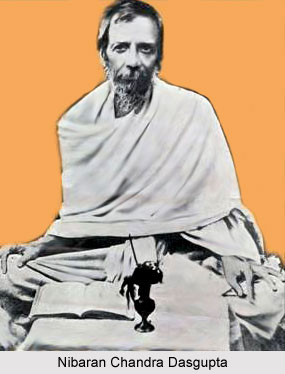
Nibaran Chandra Dasgupta
Nibaran Chandra Dasgupta was a distinct personality of Bengal who became famous for the establishment of ‘Shilpashram,’ a rural industry within the ma...
Related articles in Personalities in India

Sanskrit Theatre Personalities
Sanskrit Theatre Personalities was the main elements of Indian theatre with culture, customs and ethnicity.
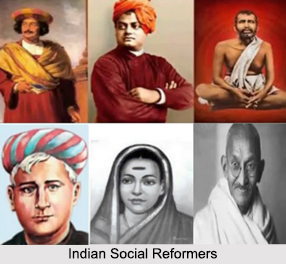
Indian Social Reformers
The Indian Social Reformers are responsible for liberating the nation of several social and religious evils.
Raja Ram Mohan Roy
Raja Ram Mohan Roy is a great Indian social reformer who is celebrated all over the country. He has done many operations for the liberation of women....