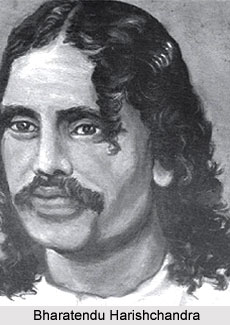
 Bharatendu Harishchandra is popularly known as the father of modern Hindi theatre. He was the author of a vast body of poetry, essays, letters, and reportage. Born in an aristocratic merchant family of Varanasi, in 1850, he became interested in cultural matters very early in life. Apart from formal education in Hindi and English, he studied Persian, Sanskrit language, Bengali language, and travelled widely to catch the pulse of the people. Because of all these qualities he imbibed a variety of experiences and influences. He began his career as a journalist at the age of 16, editing the paper `Kavivachan sudha` and writing socially and politically motivated essays. Deeply interested in his countrymen`s emancipation, he started Chaukhamba School in 1867 and endowed scholarships to schools and colleges to promote academics.
Life in Theatre for Bharatendu Harishchandra
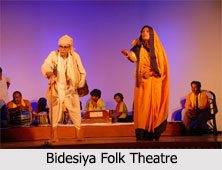
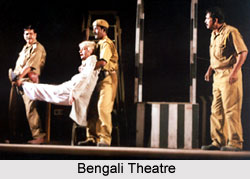
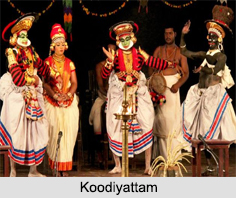
Bharatendu Harishchandra entered theatre as an actor and soon made a mark, as a director, manager, and playwright as well. He took theatre because he strongly believed that it could transform society in a great manner. The society thus formed needed such awareness. As an ardent nationalist, he also wanted to show the English-studying elite who made fun of Indian drama that good playwriting could emanate from within the country. With this aim he formed a theatre group himself, assisted and encouraged other troupes actively, and inaugurated a vibrant and serious Hindi theatre virtually single-handed. His significance as a dramatist lies in his close understanding of the art of theatre, experiments with structure. He did the introduction of Khariboli Hindi as a valid literary and dramatic language, bringing a poetic sensibility into playwriting. Most importantly he worked as an unflinching patriot, communicating strong socio-political comment. He assimilated poetry, exalted emotion, and stage conventions from Sanskrit theatre. Bharatendu Harishchandra also does the sense of abandon, fun, satire, popular music, simplicity, and improvisation from folk theatre. He did the latest technology, colloquial language, and versification from Parsi theatre. He was a veteran member in the modernism and impetus for experimentation from the West-influenced Bengali theatre. Thus, with a keen desire to innovate, to reach out to the people, to amalgamate the old and the new without losing sight of essential Indian aesthetics, he worked freely with different forms.
Plays by Bharatendu Harishchandra
Some of his plays still produced for their meaningful themes and dramatic quality are Vaidiki himsa hitnsa na bhavati i.e. `Vedic Violence Is Not Violence` in 1873, Bharat durdasha i.e. `India`s Plight` in 1875, the mythological classic Satya Harishchandra i.e. `Truthful Harishchandra` in 1876, the romantic Chandravali in 1876, the political Andher nagari i.e. `City of Darkness` in 1881, and the historical Nildevi in 1881. Most of them scathingly satirized prevailing hypocritical attitudes, the ignorance and lethargy of Indians, the corruption and mismanagement of rulers, laced with colourful idiomatic vocabulary and a sharp sense of humour. Besides original drama, he also translated creatively a large number of Sanskrit, Bengali, and English plays to introduce Hindi audiences to the diversity and richness of various traditions. These remain some of the best translations of those works, often staged by contemporary directors, and include, from Sanskrit, Harsha`s Ratnavali and Visakhadattas Mudra-Rakshasa, Vidya-Sundar from Bengali, and Shakespeare`s Merchant of Venice as Durlabh bandhu i.e. `Invaluable Friend` incomplete.
Inspiring a whole generation of essayists into playwriting such as Lala Shriniwas Das during the days 1851-97, Pratapnarayan Mishra in 1856-94, Radhakrishna Das in 1865-1907, Balkrishna Bhatt during the days 1856-1914, Radhacharan Goswami in 1858-1925. Bharatendu Harishchandra generated a movement, which, despite the inroads made by commercial Parsi theatre, continued for almost forty years after his death owing to the momentum created by him.