
Ahankara is a consciousness or egotism. It is the perception by an individual like the notions, `I think, I feel, I am`. It can be expressed by the proposition of Descartes reversed.
There are three types of Ahankara in the Sankhya Karika. The sense proceeds from the first type of Ahankara. The unconscious elements proceed from the third type of Ahankara. Both types of Ahankara being equally inert, are rendered productive by the co-operation of the second, the energetic modification of Ahankara, Therefore, the second type is said to be the origin of both of the senses and the elements. Colloquially `Ahankara` is still in common use throughout India in the sense of pride, or great conceit.
Ahankara
Ahankara is a consciousness or egotism and it is divided into three types.
Recently updated articles in Indian Philosophy
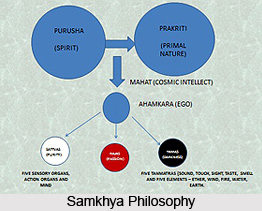
Samkhya Philosophy
Samkhya philosophy is one of India’s oldest intellectual traditions, explaining reality through the interplay of Puruṣha (pure consciousness) and Prak...
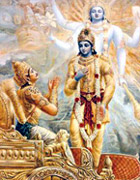
Maya, Prakriti in Hinduism
Maya or illusion is a very potent instrument of the Divine Prakriti, the Primal nature. In Hinduism one must be able to come out of Maya in order to a...

Samadhi in Hinduism
Samadhi is the result of meditation or that state of mind when there is an absence of all idea of individuality.
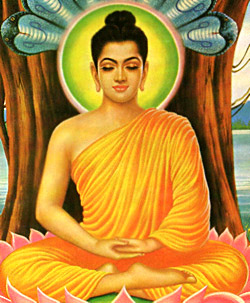
Samadhi in Buddhism
According to Buddhism, oen can only achieve samadhi through strict meditation and right concentration.

Abdul Rehman Jilani Dehlvi
Syed Abdul Rehman Jilani Dehlvi was a renowned Sufi saint of the Qadri Order in India.
Related articles in Indian Philosophy

Ajivika Philosophy
Ajivika philosophy is different from the mainstream religion
Indian Philosophy In The Vedic Period
Indian Philosophy in the Vedic Period was primarily based on the concepts of nature worship.
Achintya Bheda Abheda Philosophy
Achintya-Bheda-Abheda is a School of Vedanta that represents the philosophy of unimaginable one-ness and difference in relation to the power creation...
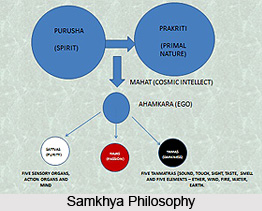
Samkhya Philosophy
Samkhya philosophy is one of India’s oldest intellectual traditions, explaining reality through the interplay of Puruṣha (pure consciousness) and Prak...
Charvaka Philosophy
The Charvaka Philosophy believes that only those things that can be perceived is the ultimate reality.