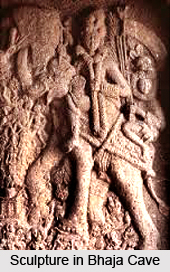
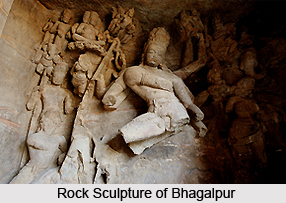
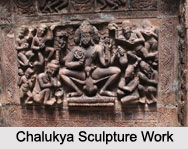
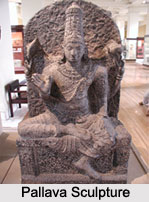
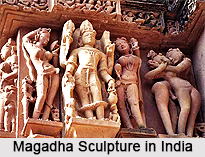
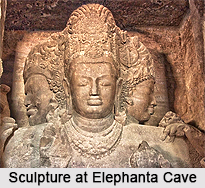
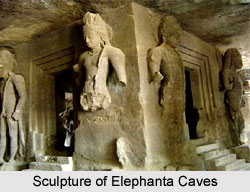
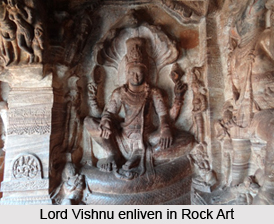
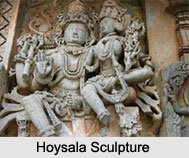
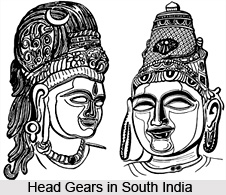
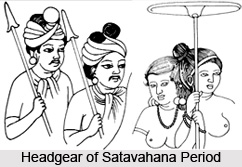
 Hairstyles and headgear in South Indian sculptures are almost synonymous with only the male figures. These motifs highlight mainly the trends that were predominant in ancient India. In the earlier period, the men kept long hair like the women. They used to wear different kinds of headgears as well. These headgears used to be very simple but later it became more elaborate and decorative.
Some of the coronets and hairstyles can be found only in images of South India. These include:
Kirita Mukuta
It is a conical cap covered by an ornamental top. The front side of it has a jewel or a central motif. The rest of the Kirita Mukuta is covered with small designs. It is odd to Vaishnavite images.
Karanda Mukuta
Karanda Mukuta is a small coronet and its shape is like an inverted bowl or a flowerpot. It does not have much decoration and is shallower and simpler than the others. Some minor deities and most of the goddesses wear it when they have their spouse with them.
Jata Mukuta
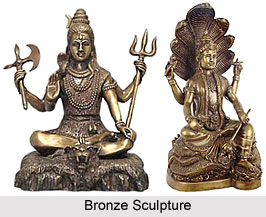
It is a kind of hairstyle which is decorated like a coronet. The entangled locks of the hair are intertwined to form a tall crown on the top of the head. Then lots of jewels are put on it. Lord Shiva wears it with a crescent moon, skull and cobra coiled on the left side. Lord Brahma also wears it but without the crescent moon, skull or cobra.
Kesa Bandha
In this type of hairstyle, the hair is neatly combed and tied in a knot at the back. Many varieties of the knot are applied and sometimes floral garlands are fixed around it. This is the usual hairstyle of Goddess Saraswati. One variety of this Kesa Bandha is adopted by the Goddess Lakshmi.
Jata-Bandha
Jata-Bandha, again, is a kind of hairstyle in which the matted hair is tied together. The saints and the ascetics usually follow this type of hairstyle. One type of this hairstyle gives the look like a basket tied round the head. This hairstyle can be seen in the images of devotees and also in one form of Shiva where he wanders around with a begging bowl.
Jwala Mukuta
In case of Goddess Kali, sometimes a flame itself becomes the headgear and it is known as the Jwala Mukuta.
The ends of the matted locks spread out in a fanlike fashion, when they are let loose. This can be seen in the dancing postures of Lord Shiva.