About Vedic Period
 Vedic Period is the age of new culture, several developments occurred during that period in the society. In India, a completely new culture and civilisation emerged during the 1500 BC-600 BC. The country had been an observer of the several developments of culture and society since the early Bronze Age.
The popularly known urban civilisation of Indus Valley collapsed due to several features including various foreign invasions. Historians view that with the coming of the Aryans, the Indus and Harappan culture ruined. The age of the Aryans are termed as the Vedic Period. The Aryans entered India from Central Asia through the Khyber Pass between B.C. 2000 and B.C. 1500. It is a period during which the Vedas were being constructed.
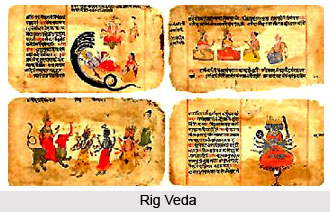
The epoch was also identified as the Vedic Period because the four Vedas formed the very essence of the age. There are four Vedas- Rig Veda, Sama Veda, Yajur Veda and Atharva Veda which form the main literary sources for this Vedic era.
Vedic Period saw the upsurge of monolithic religion. The Vedic Religion is the predecessor to modern Hinduism. The religious practice of the early Vedic period was in the form of nature worship. The approach of worship in the Vedic age incorporated performance of sacrifices and the chanting of Rigvedic verses, singing of Samans and offering of mantras (Yajus).
 A method of Ashram system prevailed in the Vedic Period. Four Ashrams of Vedic Life were included and it was done with a view to offer individual ideas on both Karma and Dharma. Social Life in Rig Vedic civilization was characterised by a nomadic lifestyle. Agriculture and cattle rearing were the main occupation of the society. The grama (wagon train), vish and jana were political divisions of the early Vedic Aryans. A vish was a subdivision of a jana or "krishti", and a grama was a smaller unit than the other two. The leader of a grama was called gramani and that of a vish was called vishpati.
Vedic Literature which was mainly the Vedic Samhitas or the Mantras and the metric texts emerged during the Vedic period. These samhitas include Rig Veda, Sama Veda, Yajur Veda and Atharva Veda. The Samhitas are the oldest layer of Vedic texts. Vedic civilisation can be identified as an associated culture. This culture mainly inhabited the northern and northwestern parts of the Indian subcontinent. The Vedic age saw the rise of various civilizations and cultures. This period also saw the rise of the Sixteen Mahajanapadas.
However, the Later Vedic Civilization was quite different and developed. The later Vedic Period came to be known as the Epic Age. It was the age when the great epics- the Ramayana and Mahabharata as well as the Upanishads were written. These epics even idealized social, political, and religious aspects of life and contain within them the broad principles of Hindu religion. Social Life during Later Vedic civilization incorporated large self-sustained settlements, fortified and protected by warriors. The period is distinguished by evolution of hereditary form of kingship. The division of the society was based on the work performed. The concept of varna was introduced at this period. The status of the Brahmins and Kshatriyas was higher than that of the Vaishyas and Shudras. The Brahmins or the priestly class led the society in conducting religious duties and educating people.
Indian Philosophy In The Vedic Period
 The Vedas constitute an important element of Indian Philosophy. The teachings of the Vedas have been quite instrumental in shaping the core of Indian Philosophy. There are four Vedas: Rig, Yajur, Sama and Atharva. Each Veda consists of three parts known as Mantras, Brahmanas and Upanishads. A chief principle of the Vedic Philosophy is that self-knowledge and the true knowledge of the gods is the ultimate knowledge for an individual.
The hymns are philosophical to the extent that they attempt to explain the mysteries of the world not by means of any superhuman insight or extraordinary revelation, but by the light of unaided reason. A striking aspect of the Vedic hymns is their polytheistic character. A great many gods are named and worshipped. It believes that God is deva because He gives the whole world. The learned man who imparts knowledge to fellow man is also a deva. The sun, the moon and the sky are devas because they give light to all creation. Father and mother and spiritual guides are also devas.
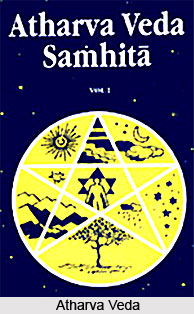
Monotheism is an important tendency that has been derived from the Atharva Veda. It believes that the Supreme can only be one. There cannot be two supreme and unlimited beings. Some of the hymns of Rig Veda had brought in the concept of the Supreme as He or It. The apparent vacillation between monotheism and monism, a striking feature of Eastern as well of Western philosophy, revealed itself here for the first time in the history of thought through the Vedas.
There is no basis for any conception of unreality of the world in the hymns of the Rig-Veda. The world is not a purposeless phantasm, but is just the evolution of God. Wherever the word Maya occurs, it is used only to signify the might or the power. Yet sometimes Maya and its derivatives like mayin are employed to signify the will of the demons, and we also find the word used in the sense of illusion or show. The main tendency of the Rig-Veda is a naive realism. Later Indian thinkers distinguished five elements, ether or akasa, air, fire, water and earth. But the Rig-Veda postulates only one, water. It is the primeval matter from which others slowly develop.
The Vedic Religion does not seem to be an idolatrous one. There were then no temples for gods. Men had direct communion with gods without any mediation. Gods were looked upon as friends of their worshippers. "Father Heaven", "Mother Earth", "Brother Agni" these were no idle phrases. There was a very intimate personal relationship between men and gods. Religion seemed to have dominated whole of their life. The dependence on God was complete. People prayed for even the ordinary necessities of life. "Give us this day our daily bread" was true to the spirit of the Vedic Aryan. It is the sign of a truly devout nature to depend on God for even the creature comforts of existence. As it has been already said, it has the essentials of the highest theism in the worship of Lord Varuna. It has been said that if bhakti means faith in a personal God, love for Him, and dedication of everything to His service and the attainment of Moksha or freedom by personal devotion, surely will be present in Varuna worship.
Sin according to the Vedic philosophy is alienation from God. The will of God is the standard of morality. Human guilt is short-coming. Individuals sin when they transgress the commands of God. The gods are the upholders of the Rita, the moral order of the world. They protect the good and punish the wicked. Sin is not merely the omission of the external duties. There are moral sins as well as ritual sins.
The ascetic tendency of the Indian Philosophy has also been incorporated by the Vedic teachings. It can be concluded saying that the Indian Philosophy during the Vedic period was closely associated with some important tenets like nature worship, monotheism and even polytheism sometimes.
Administration in Rig Vedic Period
The state in the Vedic period was small. It was not more extensive than a modern district. Most of the states were tribal in origin. In most cases it was also tribal in origin. Its residents were considered to be the descendants of traditional ancestors like Yadu, puru or Turvasu. The governing class comprised of the patriarchs of different families. In the Aryan society kingship evolved from the institution of the joint family and it was hereditary.
In Rig-Veda king is not associated with any divinity. The king is also not seen performing any public sacrifices for the state. It seems that the Vedic King was the hereditary head of a council of vitpatis and originally he owed his position to his qualities as a military leader. King is described as the protector of the people. Adjudication is not considered as his function. The sabha and the samiti were more concerned with the settlement of disputes. The principle of self-help had a great scope in civil and criminal cases. Women also attended the sabha in Rig Vedic times.
The main source of income was the income of the crown-lands and gifts from the people, which were voluntary. During war, the king used to get a large share of the booty as also of the land that was conquered from the enemy. Very few government officers have been mentioned: senani or general, gramani or the village headman and purohita or the royal priest. Senani was the deputy commander of the military forces. Purohita was mainly concerned with the sacrifices to be offered to gods. He would accompany the king in the battlefield to help the army with the help of mystic powers. The king was originally a president of the council of peers or elders. He had as such no extensive powers. Sabha and samiti were two popular bodies that exercised considerable control over the king.
Education in Later Vedic Period
There was a well-planned system of education in later Vedic period. The student was initiated by the ceremony of Upanayana. Student enters a new life which is described as a second birth. In the life of a Brahmachari the student leads a life of simple living and high thinking. Life is regulated. The aims of learning are faith, retention of knowledge, progeny, wealth, longevity and immortality.
The essence of the Education system was that the student had to take up residence in the home of his teacher. The student wore the skin of antelope, the girdle of Kusa grass and collected fuel for worshipping Lord Agni. His main duties were to beg for his teacher, to look after the sacrificial fires and tend the house and his cattle. Day time sleeping was forbidden. The teacher then initiates him into the various aspects of knowledge. The student as a rule studied with his preceptor for twelve years.
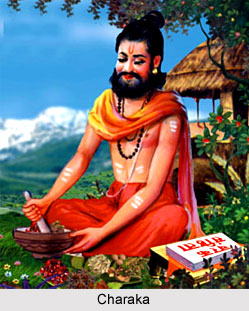
There were also associations for advanced study and research. One such association was Panchala-parisad. Kings also organized conferences where philosophers participated in discussions. King Janaka of Videha organized one such Conference that was presided over by sage Yajnavalkya. The ultimate aim of education in later Vedic period was the attainment of highest knowledge, the knowledge of Brahman or Atman as the supreme reality. Other than the domestic schools, there were specialized agencies to impart fruitful education. There were the wandering scholars, charakas who spread education in the country. Women participated in these conferences. Women even addressed a congress of philosophers. In the Rig Veda women have also composed hymns. The Kshatriya caste had encouraged learning.
Education in the later Vedic period was strategically limited to the main three upper castes. The guru shishya tradition as one of the most sacred traditions of India was accepted in the sphere of education in later Vedic period. The subjects of study during that time included the four Vedas, Grammar, Mathematics, Mineralogy, Logic, Ethics, Brahma-Vidya, Biology, Military Science, Astronomy, and Medicine. Dhanur Vidya or war tactics was also a part of education in later Vedic period. Education was aimed at the knowledge of the Atman (soul) or the absolute or self-realization. The story of Nachiketas in the Katha Upanishad can be sited as an example.
Religion and Philosophy in Later Vedic Period
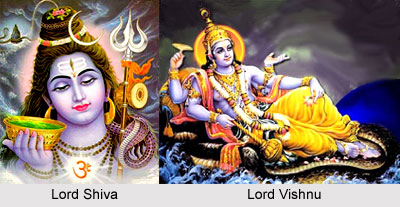 There was a great growth of ceremonial religion which consequently resulted in the growth of priesthood. Idol-worship finds no mention here. There is only the building of the altar for sacrifice and for the sacred fire. Hindu gods like Lord Shiva and Lord Vishnu begin to emerge. The period was most remarkable for the development of philosophy as expressed in the Upanishads.
Philosophy in Later Vedic Period
The central theme of the Upanishads is to seek unity in the midst of diversity. The Atman is co-existent with God. Soul, Nature and God form the principal themes of the Upanishads. In addition to the body, there is a soul distinct from all the organs, from the mind, from the vital force. It is indestructible. After death it goes to different worlds according to its past work and knowledge, and may return to this world. As long as we are in the state of Avidya Atman cannot be discovered. When by self-control and restraint we have purified ourselves, then by concentration and meditation we may realize the Atman which is identical with God.
Truth is the dominating characteristic of the Upanishads. The Upanishads also show the acquisition of wealth and worldly goods is no comparison with the growth of spirituality in the concerned person. Harmony is emphasized as a basic necessity in life. The base of harmony is the spirit. The Upanishad held that the world is a manifestation of the Eternal, of Brahman and all here is Brahman. The contributions of Ajatashatru of Kashi, Janak of Videha and Asvapati of Xaikeya have made extraordinary contributions to philosophy of the time. The significance of `Karma` or duty was wholly recognised during this period. It was advocated that `Karma` of this life influences the life after, i.e., rebirth. By doing good `Karmas` a man becomes free from the cycle of birth and rebirth, i.e., he can achieve `Moksha` or redemption.
Religion in Later Vedic Period
Religion of the later Vedic Age was pretty complex. Vedic religion evolved into the Hindu paths of Yoga and Vedanta. These post-Vedic systems of thought, along with later texts like Upanishads, epics, have been fully preserved and form the basis of modern Hinduism. The ritualistic traditions of Vedic religion are preserved in the conservative Shruti tradition. The significance of Yajnas had increased substantially. As compared to simple yajnas of the Rig Vedic period, very complex and enormous yajnas had begun. The number of priests participating in a yajna had increased from 7 in the Rig Vedic times to 17 in the later Vedic Period. The priests had their helpers too. Thus it had become unmanageable for common man to perform yajnas. During later Vedic Period yajnas were performed to accomplish individual wants.
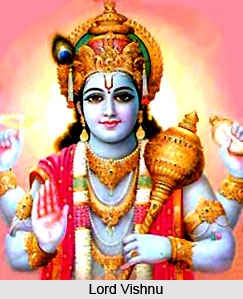
Changes also had taken place in the status of the Gods. `Rudra` of Rig Vedic Period was now worshipped in the form of Lord Shiva, Pashupati, and Mahadeva. Vishnu was worshipped in the five manifestations of Sun. Great significance was attached to `Tapa`, which was considered a means to sanctify the mind and soul.
Therefore it can be seen that great many alterations had taken place in the religion of the Aryans during the later Vedic Period. Religious faiths and philosophical principles sought-after and developed in this period formed the source of religion and philosophy for the following ages.