
The recommendations of the Hunter Commission for the proper system of education in India however did not meet with success. The education procedure in India was not carried on in accordance with the recommendations of the Commission. Hence Lord Curzon after becoming the governor general of India sought to introduce the reforms in all fields of administration and also in education. In September 1901, Curzon summoned the highest educational officers of the Government throughout India and representatives of universities at a round table Conference at Simla. The Conference opened with a speech by the Viceroy in which he surveyed the whole field of education in India. "We have not met here" he said, "to devise a brand new plan of educational reform which is to spring fully armed from the head of the Home Department and to be imposed nolens volens upon the Indian public". Later developments were to prove the hypocrisy behind this assertion. The Conference adopted 150 resolutions which touched almost every conceivable branch of education. This was followed by the appointment of a Commission under the presidency of Sir Thomas Raleigh on 27 January 1902 to enquire into the condition and prospects of universities in India and to recommend proposals for improving their constitution and working. Evidently, the Commission was precluded from reporting on primary or secondary education. As a result of the report of the recommendations of the Commission the Indian Universities Act was passed in 1904. The main objective of the Act was to improve the condition of education in India and upgrade the system to a better level. The main changes proposed were as under:
(i) The universities were desired to make provision for promotion of study and research, to appoint university professors and lecturers, set up university laboratories and libraries and undertake direct instruction of students.
(2) The Act lay down that the number of Fellows of a university shall not be less than fifty or more than a hundred and a Fellow should normally hold office for a period of six years instead of for life.
(3) Most of the Fellows of a university were to be nominated by the Government. The elective element at University of Calcutta, Madras (Chennai) and Bombay (Mumbai) was to be twenty each and in case of other universities fifteen only.
(4) The Governor control over the universities was further increased by vesting the Government with powers to veto the regulations passed by the Senate of a university. The Government could also make additions or alterations in the regulations framed by the Senate and even frame regulations itself over and above the head of the Senate.
(5) This particular Act increased university control over private colleges by laying down stricter conditions of affiliation and periodical inspection by the Syndicate. The private colleges were required to keep a proper standard of efficiency. The Government approval was necessary for grant of affiliation or disaffiliation of colleges.
(6) The Governor-General-in-Council was empowered to define the territorial limits of a university or decide the affiliation of colleges to universities.
The Nationalist opinion both inside and outside the Legislative Council opposed the measure.
Gopal Krishna Gokhale described the bill `a retrograde measure` which cast unmerited aspersion on the educated classes of the country and was designed to perpetuate "the narrow, bigoted and inexpensive rule of experts." The Sadler Commission of 1917 commented that the Act of 1904 made `the Indian universities among the most completely governmental universities in the world`.
Indian opinion believed that Curzon sought to reduce the universities to the position of departments of the State and sabotage development of private enterprise in the field of education. Ronaldshay, Curzon`s biographer, admits that "the changes actually brought about were small and out of all proportion either to the time and thought which the Viceroy had devoted to them or to the violence of the opposition with which they had been assailed. In its broad outline the system of higher education remained much as it has been before."
However, a good outcome of Curzon`s policy was the sanction in 1902 of a grant of Rs. 5 lakhs per annum for five years for improvement of higher education and universities. The Government grants have become a permanent feature ever since then.
Indian Universities Act
The Indian Universities Act, 1904, was formulated to act into account the ways and means of improving the education facilities and infra structures in the country.
Recently updated articles in Education in India
Women Education in India
Woman education in Ancient, Medieval, Colonial & Modern India
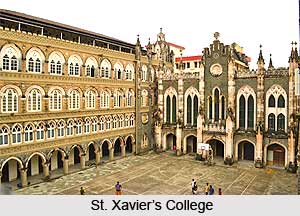
St. Xavier’s College in Mumbai
St. Xavier’s College, Mumbai offers graduation and post-graduation courses. It ranks the highest position in Arts and Second highest position in Scien...
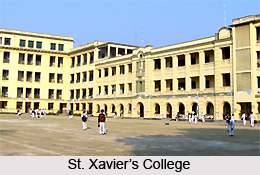
St. Xavier’s College in Kolkata
St. Xavier’s College is named after St. Francis Xavier, a Jesuit saint of the 16th century, who travelled to India.
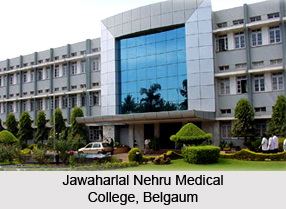
Jawaharlal Nehru Medical College in Belgaum
Jawaharlal Nehru Medical College in Belgaum, Karnataka is a constituent college of KLE University and a big medical ins.
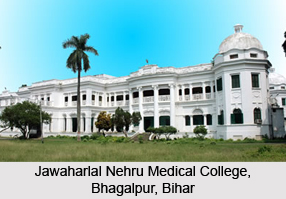
Jawaharlal Nehru Medical College in Bhagalpur, Bihar
Jawaharlal Nehru Medical College is a renowned medical institution located in Bhagalpur, Bihar.
Related articles in Education in India
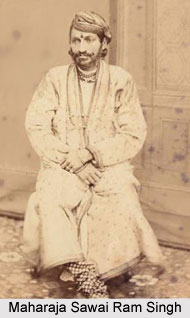
Education Policy of Sawai Ram Singh
Education Policy of Sawai Ram Singh gave Jaipur a new name and a distinct place in India. Sawai Ram Singh established the Maharaja`s College, Sanskrit...
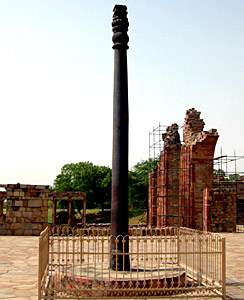
Education During Gupta Age
Education during Gupta Age was provided by the Brahmanical agraharas and in Buddhist monasteries. The Guptas established and patronized several univer...
Army Education Corps
Army Education Corps came into existence on 1st June 1947. Army Educational Corps supervises and directs all the education in the army. It also provid...
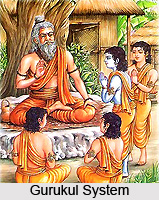
Education in Ancient India
Education in Ancient India was considered important by the society and was given to the 3 upper classes, namely Brahmins, Kshatriyas and Vaishya.
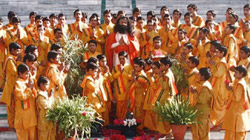
Gurukul
Gurukul is a system of education in India. It is one kind of residential school. In ancient India this system was very popular.