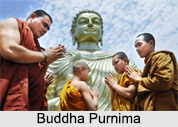
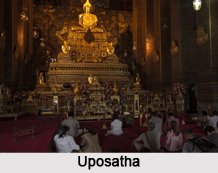
 Uposatha is the day of the rest in Buddhism. This day was formulated by Buddha on request of King Bimbisara. According to Gautama Buddha on this day the polluted minds will be purified and this would lead to the tranquility and happiness of mind. He asked the monks to teach the lay followers and recite Patimokkha during Uposatha Day.
The term Uposatha owes its beginning in the Sanskrit word `upavastha` which means the pre Buddhist fast day that start Vedic sacrifices. The weekly uposatha is observed on the basis of four phases of the moon - the full moon, the new moon and two quarter moon in involving.
According to traditional Buddhism there are five important Uposatha days. These are:-
Vesak or Buddha Day: This single day marks the three most important stages of Buddha`s life---His birth, enlightenment and Parinirvana.
Asalha Puja or Dhamma Day: This day celebrates the first preaching of Buddha. It is also significant as the process of ordination started from this day.
Pavarana Day: On this day the rain retreat comes to an end.
Magha Puja: One of the foremost festivals of Buddhism, it marks the assembling of 1250 arahants to meet Buddha.
Anapanasati Day: As the Rain Retreats came to an end Buddha was quite pleased with the progress of the monks. He asked them to stay for another month. At the end of the fourth month he delivered the sermon on the mindfulness of breathing.
Celebration of Uposatha Festival
The Buddhist people spent their time reading Dhamma books, listening to Dhamma sermons, meditating and discussing the Dhamma. Occasionally a lay Upasaka or Upasika who is well versed in the Dhamma will give lecture on Dhamma to the rest of the people if a monk or nun is not available and all the principles are meant to discipline the mind and focus on the attention of following the Dhamma. They are not prepared for imitating, but for placing into action. When the precepts are put into act they bring a very good discipline necessary for the practice of meditation, calming the mind, deepening the understanding of Dhamma and liberating minds from plentiful psychic annoyances.
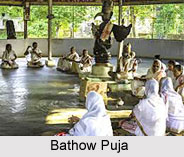
Another ceremony that is part of the uposatha day is the Observance Practice. This day is meant for a lay follower who is required to observe the Eight Precepts. On this day they have to reaffirm their faith and belief in Buddha and his marga. The Buddhist followers visit a nearby monastery and hand over their offerings to the Sangha. Talks on Dhamma, chanting of Suttas and practice of meditation takes place on this day.
As far as the Sangha is concerned the practices differ for them. The monks are expected to undertake meditation and intensive reflection; recite Bhikku Patimokkha on full and new moon days and the recitation is preceded by confessions.