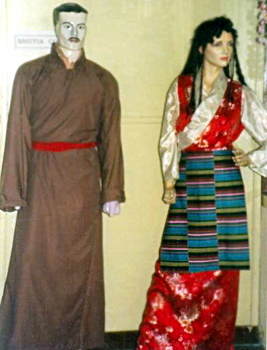
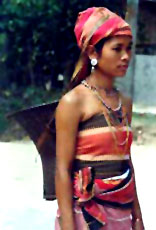
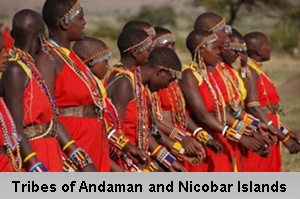
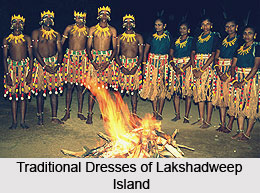
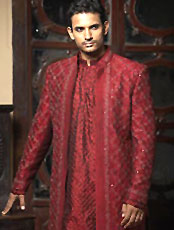
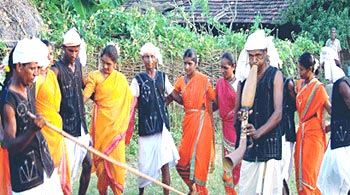
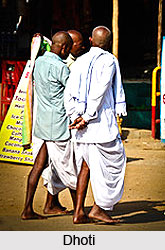
 The deccan is bounded by the Arabian sea, Indian ocean and the Bay of Bengal. The hot climate of Deccan did not necessitate much clothing. A dhoti and a piece of cloth to cover the upper part of the body was the usual dress of Hindus. Chappal was the common footwear, though many people went barefoot. The ordinary women had a piece of cloth wrapped round their waist and an upper garment while the rich used saris. Silk, brocade and other expensive materials were used on special occasions. The Muslims followed the pattern of dress in the North, which consisted of tight trousers and shirts, and long coats or sherwani. Their shoes were pointed in front and open at the top. Muslim women wore trousers, over which was worn a long skirt as petticoat, their bodice was made of very fine material. Doppatta or orhani was used to cover the head as well as the upper part of the body. Women were very fond of ornaments, which were either made of gold or silver depending on the economic condition of the person.
Many great scholars observed that all inhabitants, high or low, down to the artificers of the bazaar wore jewels (and gift ornaments) in their ears and around their necks, arms, wrists and fingers". The male costume consisted of clothes with girdles along with short shirts of cotton (or silk or coarse brocade) and small turbans (or silk or brocade caps).
They anointed themselves after bath with "white sandal wood, aloes, camphor, musk and saffron all ground fine and kneaded with rosewater". Women wore nose-screws made of fine gold ware, sapphire or ruby pendant, earrings, gold and precious stone bracelets and necklaces of gold and jewels of very fine coral beads.