Basti , Ardha Chikitsa , Ayurveda - Informative & researched article on Basti , Ardha Chikitsa , Ayurveda
  Indianetzone: Largest Free Encyclopedia of India with thousand of articles Ayurveda


in  
Art & Culture | Entertainment | Health | Reference | Sports | Society | Travel
Forum  | Free E-magazine
Ayurveda : Ayurved in India l Ayurveda l Ayurvedic Pharmas in India l Ayurvedic Herbs l Kerala Ayurveda l History of Ayurveda l Development of Ayurveda l Diseases in Ayurveda l Ayurvedic Hospitals & Practitioners l Physiology of Ayurved l Panchakarma l Keraliya Pancha Karma l Ayurvedic Tastes l Malas in Ayurveda l Elements of Ayurveda l Branches of Ayurveda l Ayurveda Medication l Seven dhatus in Ayurveda l Concepts of Ayurveda l Treatment in Ayurveda l Ayurvedic Diet l Indian Ayurvedic Spas l Tridosha System in Ayurveda l Origin of Ayurveda l Astrogenetics l Panchagavya l Tastes in Ayurveda l Ayurvedic Massage l Ayurvedic Skin Care l Asthanga Ayurveda l Panchabhuta in Ayurveda l Ayurvedic Recipes l Gurukul System of Ayurveda l Ayurvedic Practitioners in India l Ayurvedic Hospitals in India l Principles Of Ayurveda
Home > Health > Ayurveda > Treatment in Ayurveda > Basti
Basti , Ardha Chikitsa , Ayurveda
Basti, which is also termed as `Ardha Chikitsa` in Ayurveda, is specifically framed to cure the major diseases of the body. Basti therapy treats the entire length of the colon and eliminates the accumulated faecal from the dhatus as well as the aama from the dhatus.

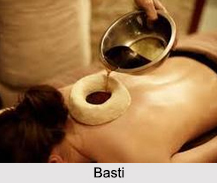
Kati Basti , Ardha Chikitsa , AyurvedaBasti therapy is defined as the most powerful and effective procedures of Panchakarma. It is stated in Ayurveda that most of the diseases are caused by imbalance of vata dosha and basti is called `Ardha Chikitsa`, because of the concept that it cures half of the diseases of the body. This treatment is mainly performed in the rainy season as it is believed that the gravity of the disease because of vata dosha increases naturally in this season. Basti is the introduction of medicated liquids into the colon through the rectum. It is not a localized treatment although it directly affects the colon. Basti has a wide ranging influence in the body that affects the doshas and the dhatus.

Basti treatments balance and nurture the vata dosha. When the functioning of the vata is normal, it helps in bringing the toxins and waste products out of the dhatus and in removing them permanently. Vata actually plays the central role in the entire disease process that carries the aama from the site of origin to the deeper tissues and causes disease. When basti is used in conjunction with the pre-procedures of Panchakarma, it cleans far more than just the colon. This therapy helps in purifying the toxins from all over the body. The nutritive and the palliative qualities of basti therapy address all the functional factors of colon.

Basti therapy introduces the usage of medicated and oily substances into the colon to be absorbed and retained by the body. In adition to getting rid of the toxins, it also helps in restoring the healthy functions to the colon and through the colon it nurtures and rebuilds the tissues and organs. Basti therapy is actually the most effective treatment for disorders that are arising from abnormal vata. It includes chronic constipation, arthritis, low back pain and various neuromuscular disorders. It also relieves sensory dysfunction and mental retardation. This therapy in Ayurveda also helps with disorders of asthi dhatu or bone tissue. When vamana and virechana can not be used due to emaciation and weakness, patients are given a combination of cleansing and nutritive bastis. Basti treatment is however, contraindicated for infants as well as those people who are suffering from colon cancer, diarrhoea, fever or some types of diabetes.

Types of Basti used in Panchakarma
Basti is mainly of two types - Nirooha Basti and Anuvasana Basti.

Nirooha Basti - It is also known as cleansing basti. This mainly contains extraction of medicinal herbs and a little amount of fat in it. It is indicated in gout, diabetes, hyperacidity, dysuria, meterrohagia, heart diseases. It is not recommended for weak person or for persons who are suffering from abdominal distension, piles, dysentery, diarrhoea, vomiting, cough, asthma etc. This particular basti is given in a series of treatments over a period of several days. It along with the preparatory procedures allows the cleansing process to reach deeper tissues. Its main purpose is to pull out the toxins from the kapha zone of the body.

Anuvasana Basti - It is the major type of basti therapy and it means nourishing basti. It mainly contains fat and a small amount of extracted herbs. This has been indicated in the following ailments-Anaha (distended abdomen), Vatarakta (gout), Pleeha (Splenomegaly), Atisaara (diarrhoea), Pratishaya (cold), Malavrodha (constipation), ashmari, Rajoonasha (Amenorrhea) and Vata rogas (various diseases caused by the Vata dosha). Anuvasana Basti is never recommended in anaemia, jaundice, pyrexia (fever), piles, common cold and helmenthic infections. These bastis are prepared in a variety of ways that depends on the specific nutritive requirement. This type is particularly successful in the treatment of vata disorders. It is administered after a cleansing course of Nirooha basti is administered. Its main purpose is to nourish the body.

Basti is the most effective therapy in the entire procedure of Panchakarma. This therapy effectively removes aama from the spine, corrects vata dysfunction and ultimately re-establishes pain-free mobility in the body.
(Last Updated on : 6/12/2010)
  More Articles in Treatment in Ayurveda
 
Dwividh Chikitsa Triwidh Chikitsha Chaturwidh Chikitsha
Panchwidh Chikitsha Shadwidh Chikitsha Saptwidh Chikitsha
Daswidh Chikitsha Shodhana Therapy Parinama in Ayurveda
Nidanam Purva Roopam Roopam
Upashya Samprapti Virechana
Shirovirechana Basti Rakta Mokshana
Dosha Gati in Shodhana Therapy Vamana Nasya
Recently Updated Articles in Ayurveda
  • Types of Vata Dosha
    Types of Vata dosha can be categorized into five. The five centres of operation and the syatematic manner through which Vata influences on the entire organism is considered as the five airs of Vata.
  •  
  • Types of Pitta Dosha
    Types of Pitta Dosha are five in number. These centres are required for smooth operation of the body.
  •  
     
  • Types of Kapha Dosha
    The Types of Kapha dosha are formed from the elements of earth and water. There are five types of Kapha dosha.
  •  
  • Gunas in Ayurveda
    Gunas in Ayurveda constitute three types:; Sattva, Rajas and Tamas. These principles interweave to create five elements.
  •  
  • Strotas
    There are several channels of body circulation through which the dhatus, doshas and malas circulate, known as strotas in Ayurveda.
  •  
    E-mail this Article | Post a Comment
    RSS Feeds
    Forum
    Forum on Ayurveda

    Free E-magazine
    Subscribe to Free
    E-Magazine on Indian Crafts
     
     
    Basti , Ardha Chikitsa , Ayurveda - Informative & researched article on Basti , Ardha Chikitsa , Ayurveda
    Sitemap
    Contact Us   |   RSS Feeds
    Copyright © 2008 Jupiter Infomedia Pvt. Ltd. All rights reserved including the right to reproduce the contents in whole or in part in any form or medium without the express written permission of Jupiter Infomedia Pvt. Ltd.