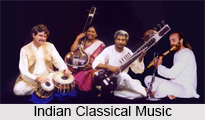
 Indian Classical music is rooted in the Vedas, the oldest of the Hindu scriptures. The term `Classical` is indicative of the fact that the art was mainly patronised by the elite in society and performed for their benefit. Initially these elites were the Hindu Kings who maintained and supported the temples where such performances took place. Later this Classical tradition formed a chief source of courtly entertainment of the Muslim rulers with an Emperor`s prestige often defined in terms of the quality of the court musicians. A highly complex and refined art, Indian classical music rests on two things-the raag(main melody)and the taal(rhythmic structure).Through time, Classical music has gone through a constant process of improvisation and has been subject to various influences.
Origin of Indian Classical Music
Indian classical music has developed through centuries of complex interactions between various cultures and people. Its earliest known instance can be traced back to the Samaveda which defined and developed hymns that had to be sung in prayer. Thus the earliest performance of music was for the purpose of worship as it was felt that the purest manifestation of divinity was the Naadbrahma or Om, and it is this divine purity that musicians strive to attain. Apart from the Vedas, the earliest mention of music was made in a Sanskrit treatise, Bharat`s Natyashastra, which defined the role of music among other art forms. Classical music gradually developed through a combination between traditional ritualistic music and folk music. The 14th and 15th centuries were the periods of greatest development as it now came into contact with Persian music and the Mughal influence in the North and the outcome of this influence was the emergence of the two main schools of Indian Classical music-Carnatic and Hindustani. 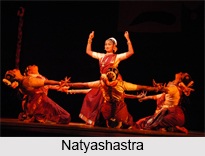
Schools of Indian Classical Music
Indian classical music split into two branches: the northern Hindustani tradition, influenced by the musical traditions of the Mughals, and the southern Carnatic tradition which remained more or less culturally Hindu and devotional in nature. Both traditions differ from their ancestors and each other. Carnatic music emphasizes on the expertise of the voice rather than that of the instruments. Primary themes include Devi worship, Rama worship, descriptions of temples and patriotic songs. It developed gradually from the ancient musical traditions of South India, upon which ancient Tamil music and Sama Veda had important influences.
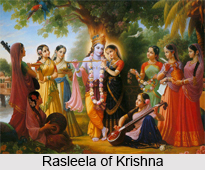 Developing a strong and diverse tradition over several centuries, Hindustani music has contemporary traditions established primarily in India, Pakistan and Bangladesh. It was not only influenced by ancient Hindu musical traditions, Vedic philosophy and native Indian sounds but also by the Persian performance practices of the Moghuls. The prime themes of Hindustani music are Rasleela of Krishna and Nature in all its splendour. Hindustani classical music is primarily vocal-centric. The major vocal forms associated with Hindustani classical music are the Khyal, Ghazal, and Thumri. Other styles include the Dhrupad, Dhamar, Tarana, Trivat, Chaiti, Kajari, Tappa, Tapkhyal, Ashtapadi and Bhajan.Both these styles use different and distinct instruments.
Instruments Used In Indian Classical Music
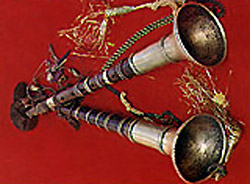
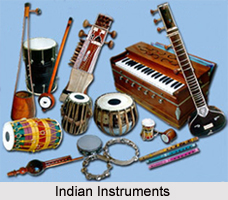
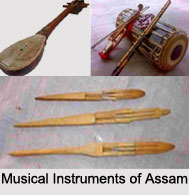
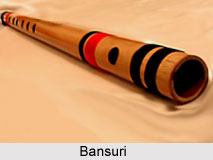
Instruments used in Classical music are typical to the school of music which employs them. A comprehensive overview of these instruments includes veena, sitar, mridangam, tanpura, sarod, flute, sarangi, shehnai, tabla, harmonium and violin. The performance of a composition, based melodically on one particular raga and rhythmically on one Taal, begins with the performers coming out in a ritualized order: drone instruments, then the soloist, then accompanists and percussionists. The musicians begin by tuning their instruments; this process often blends imperceptibly into the beginning of the music.
Indian Vocalists
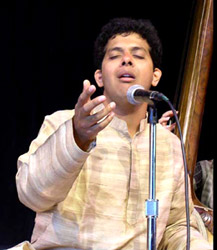
 Indian Classical Music is mainly a vocal art, and there are many ragas which are even sung unaccompanied. It must be mentioned here that one of the best-known vocalists of all time was Miyan Tansen who performed in the court of one of the greatest Mughal Emperor, Akbar .Other noted vocalists include Roshan Ara Begum, Subbalaxmi, G.N. Balasubramaniam, Jon B. Higgins, Faiyaz Khan, Bade Ghulam Ali Khan, Kumar Gandharva, Nrayanrao Vyas, Bhimsen Joshi, Ulhas Kashalkar, Amir Khan, Rashid Khan, Gundecha Brothers, Pandit Jasraj, Girija Devi, Nazakat and Salamat Ali Khan among others.
Indian Classical Instrumentalists
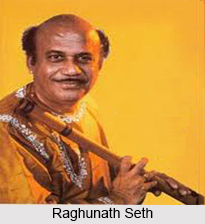
The Classical instrumentalists are known the world over for their unique and versatile style of performance.Bismillah Khan is a renowned Shehnai player. Eminent in the field of flute playing are Hariprasad Chaurasia,Vijay Raghav Rao,Pannalal Ghosh,Raghunath Seth,Nityanand Haldipur and others.Chandrakant Deshmukh, Budhadithya Mukherjee and Shahid Parvez are well known Sitar Players.In the field of percussion instruments Allah Rakha, Zakir Hussein and Ravi Shankar are much revered and many musicians have taken their art up to the international platform.
Indian Classical Music today has witnessed a steady growth of interest and finds increasing presence on the world stage. Having influenced jazz as well as western classical and pop music, fusion music has developed as a combination of the west and the east and grown into a popular global phenomenon.