Mangalsutra is an inevitable part in Indian weddings, more specifically, in Hindu marriages. According to a Hindu custom, marriage not only represents a bonding of two individuals but also the bonding of understanding, commitment, mutual love and spiritual growth between them. Marriage demands sacrifice, dedication, companionship, and yielding from both the partners.
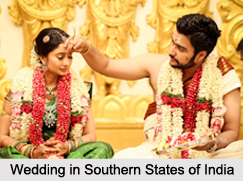
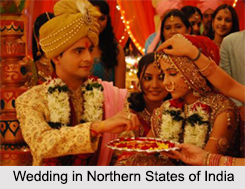
 The word mangalsutra means `sacred thread`. It is derived from two words `mangal` means holy and `sutra` means thread or cord. Mangalsutra is not just a jewellery item. To an Indian married woman it holds ample significance. It is tied by the groom around the neck of the bride thereby taking her as a life partner and giving her the status of wife. This ritual is performed on the auspicious day of their marriage signifying the union. Mangalsutra is named differently in different states of India. It is known as `Thaali` in the southern region and `Mangalsutra` in the northern region. But in most parts of the country it is called Mangalsutra. It is also known as thaali or thaaly or maangalyam in Kannada, Telugu and Tamil in South India.
Designs of Mangalsutra
Mangalsutra can be of several designs. The most popular is that of the traditional design of the thread. Ramar/Pottu Thaali, Ela thaali and Kumbha thali are well known. The design is chosenby the in law`s family of the bride.
Customs of wearing Mangalsutra
 Mangalya dharanam (literally "wearing the mangalya") is considered the most important part of a Hindu conjugal ceremony. The `mangalya` is tied onto a yellow thread, which was earlier prepared by using Turmeric paste. It is tied around the bride`s neck with three knots. In some customs, the groom ties first and his sisters tie the rest. Later the mangalya is restrung on some later propitious days. The mangalya represents an uninterrupted bond of understanding, love and sacrifices in the lives as husband and wife. After marriage the Mangalsutra is never taken off by the woman until the death of her husband.
Significance of Mangalsutra
Mangalsutra has been reckoned as `the token of dignity and love` that is given to a bride by her groom. Most commonly mangalsutras are made of two strings of small black beads tied to a locket or pendant. Sometimes small beads of gold and black are used with gold and diamond pendant. The implication of the black beads is that, they are supposed to protect the woman from evil powers that may come in the way of their married life. Alongside those black beads are believed to protect their spousal relationship and life of their husbands. It is looked as propitious for married women to wear mangalsutra even after marriage. The concept of tying the Mangalsutra is believed to have originated in south India. Thereafter it followed to the north as well. In north Indian culture, the mangalsutras are made of a `thread in which small black beads are strung along with the "Mangalya"`. In other regions the Mangal sutra is made of a gold string or chain along with the gold `Mangalya`.
But the concept of wearing a mangalsutra today has altered to a great extent. Today it has become a fashion statement rather than a symbol of marriage. The credit of which can be attributed to daily soaps and Hindi films. Even the expressive style has also changed over the passing years. Previously women use to wear simply designed mangalsutra with small pendants, but now the trend is to wear short length ones with single string and instead of gold pendants diamond pendants are given a priority. But the black beads remain eternal. Whatever may be the reason to wear, the mangalsutra symbolises the real essence and concept of marriage. Still today the `beaded thread` is reckoned as the undisputed symbol of holy matrimony` and will remain so in India.
Mangalsutra
MangalSutra is a sacred thread symbolizing the marital status of a girl in Hinduism. It is jewellery presenting love and goodwill.