Introduction
Life Line in Palmistry depicts the general characteristics of the life of a person. It is one of the three major lines in Palmistry. Life Line is also known as "Jeevan Rekha" in Hindi language. Life Line originates from the space between the Mount of Jupiter and the thumb. Palmistry suggests that the life line is actually the easiest line to recognize.
Life Line reveals about one’s health condition and reflects their physical health, physical fitness, social circle and mobility. A short life line only suggests poor health, low immunity, small social circle and inactivity.

Significance of Life Line
According to Palmistry, the Life Line originates from or nearer to the Mount of Jupiter. This line shows a life full of high ambitions and individualism. Further, a smooth and deeply carved Life Line in a palm depicts healthy constitution, and a decent quality of life. Any type of Island or break in the lifeline depicts some undesirable events or illness likely to take place in the person’s life. A strong Life Line after the break or island symbol, shows the overcoming of that bad period in life and getting back to normal stream of life. An overall study of palm must be taken into consideration for detailed conclusions associated with Life Line. Thus, Life Line is considered as one of the most significant lines on a person’s hand.
Study of Life Line
Normally, in the science of palmistry, the entire Life Line is divided (from origin to base), in a lifespan of 80 years. Calculation of time periods is made accordingly. In case the person is having a real setback, the effects will be seen in Luck Line as well as other lines at the same time period. For instance, if the Life Line is broken in the passive hand, but is joined and deep in the active hand, then it means the individual will go through some bad period, but will overcome it smoothly with his or her own conscious efforts. The branches shooting upwards from the Life Line show the positive endeavours in the life of any person.
The arc of the life line is believed to define the root of the thumb, often associated with the mount of the Sun, which symbolizes vitality and life force. A wider and larger arc is thought to indicate strong natural physical reserves, suggesting that the individual possesses abundant energy, stamina, enthusiasm, and a deep capacity to engage with the world.
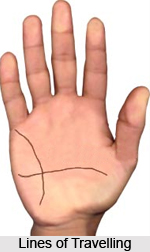
The mount where the branch from the life line travels to, denotes the quality of achievement. For example, a branch from the Life Line reaching the Mount of Sun represents creative success. Similarly, branches shooting downwards depict unsuccessful flow of life energy. Apart from these signs, the way a Life Line ends also speaks volumes about the lifetime experiences of a person. In majority of cases, the line ends up at the base of the palm, underneath the thumb. It shows the person to be quite attached with his or her roots. Further, a Life Line ending on the Mount of Moon indicates the constant urge of a person for change and travel. The person is more likely to spend majority of his life away from home.

Implications of Life Line
The position, length, and overall appearance of the life line are believed to reflect different experiences, energies, and life patterns that may influence an individual’s journey.
Short life line: A short life line may suggest that the individual lacks grounding or stability in certain aspects of life.
Long life line: A long-life line is often associated with good health, physical strength, vitality, and sustained energy throughout life.
Shallow life line: A shallow but visible life line may indicate that the person is more mentally oriented than physically driven.
Thick life line: A thick and deep life line can reflect a personality inclined toward physical activity, high energy, and athletic pursuits.
Doubled life line: Some folks have a double life line, which is a life line with a “sister” line close to it. A doubled life line runs parallel to the main line. This signifies a strong constitution, resilience, and resistance to illness. This also signals protection in times of harm.
Wavy life line: A wavy life line may point toward a weakened physical condition or recurring health-related challenges.
Broken life line: Breaks in the life line are often interpreted as periods of illness, hardship, or major life challenges.
Broken along bottom: If the break appears in the lower section of the line, it may suggest health concerns or physical decline during old age.
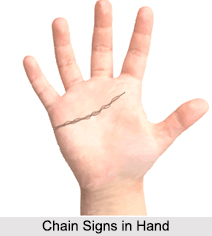
Chained life line: A chained appearance in the life line indicates that the individual is strongly guided by emotions and may experience emotionally significant events that affect life energy.
Criss-cross life line: A life line marked with crisscross patterns may represent a life filled with interruptions, uncertainty, or repeated stops and starts.
Downward branches: Branches extending downward from the life line may symbolize periods of poor physical or mental health.
Upward branches: Upward-sloping branches are generally associated with resilience, recovery, ambition, and the potential for success.
Forked life line: A fork in the life line may indicate a major change, redirection, or split in life path and personal energy.
Trident life line: A trident-shaped ending is traditionally viewed as a sign of good fortune and a strong desire for travel or exploration.
Tassel life line: Tassel-like branches at the end of the life line may suggest a gradual decline in energy and vitality.
Islands in life line: Islands appearing within the life line are often interpreted as interruptions caused by illness, emotional struggles, or difficult life phases.
Here is a more detailed interpretation of the life line based
on the variety of its appearance in individual hands.
Depth and Strength of the Life Line
·
A faint or barely visible life line may indicate
low energy levels and a predisposition toward poor health. Variations in the
line’s strength can also suggest changes in vitality over different stages of
life.
·
A long, deep, and rosy-colored life line is
commonly associated with strong stamina, good health, and abundant vitality.
·
A shallow but distinct line suggests that the
individual relies more on intellectual or mental strength than physical
endurance.
·
A thick and deep line often reflects a highly
energetic personality drawn toward physical or demanding activities.
·
A doubled life line is considered a sign of
physical toughness, strong vitality, and resistance to illness.
Life Line Travel Around the Thumb
·
A life line that sweeps widely around the base
of the thumb toward the center of the palm is believed to indicate strong
vitality, enthusiasm, and physical energy.
·
A line that stays close to the thumb may suggest
lower emotional or physical energy levels.
Wavy and Broken Life Lines
·
Wavy or repeatedly broken life lines are often
linked with recurring illnesses, difficult circumstances, or periods of
instability.
·
A wavy life line, with no other patterns, may
also symbolize weakened health due to stress, addiction, imprisonment, or
challenging life experiences.
·
A break appearing in the final part of the wavy life
line may point toward declining health in later years.
Chained Life Lines
·
A chained life line suggests that the
individual’s emotions strongly influence life experiences and overall
well-being.
·
A Chained and faint life line also indicates major
emotional events that may significantly affect health and energy levels.
Broken and Crisscross Life Lines
A life line filled with crisscrosses and repeated breaks may
symbolize a difficult or directionless life path marked by frequent
interruptions and ongoing challenges.
Life Line Branches
·
Downward branches may indicate emotional strain,
fatigue, or declining health.
·
Upward branches are generally seen as symbols of
determination, resilience, and achievement.
·
Forked branches may reflect major transitions,
divided energies, or shifts in direction.
·
Tridents, formed by multiple branches from the
life line, are often interpreted as signs of luck, prosperity, and a love of
travel.
·
Tassels may represent a gradual weakening of
vitality or energy over time.
·
The Life Line ending in constant branches
shooting downwards, forewarns the person of the diseases he or she is most likely
to get at the old age, or near their death.
Thus, usually a smooth ending of the Life Line is considered highly desirable.
Islands on the Life Line
Islands are small circular interruptions along the life line
that are believed to represent disruptions caused by illness, emotional
hardship, divorce, depression, or other challenging experiences.
Split in the Life Line
A split at the end of the Life Line represents the desire of
the person to move away from home, yet the bond with the roots remains strong.