Patanjali a legendary historian and master of yoga whose words are said to be direct, original and traditionally held to be of divine provenance has developed 196 aphorisms or sutras. He is referred to as a Savayambhu, meaning an evolved soul incarnation of his own will to help humanity. Pantanjali may have lived some time between 200 and 500 B.C, i.e. some 2000 years ago but what is known about him is drawn from mythology. We may fall short of words to speak about this great prodigy. His major areas of interest were grammar, medicine and yoga.
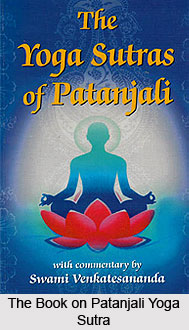
Patanjali was the author of Yoga Sutra, a major work containing pithy on the philosophical aspects of mind and consciousness. He was also the author of the major commentary on Panini`s Ashtadhyayi, though many scholars believe that the two texts are not been written by the same individual. Patanjali was a Hindu Vedantist. The yoga Sutra, his culminating work, is his distillation of human knowledge. His sutras are concise and compact. In recent times yoga Sutras have become very popular as the Yoga practice has become much more common and to learn the principles of Raja Yoga.
The birth of Patanjali arouses curiosity. It is said that Patanjali was the manifestation of Adisesa, lord of serpents, the bearer of Lord Visnu. Once, Lord Visnu was seated on Adisesa watching the captivating dance of Lord Shiva. He was so engrossed in the rhythm of the dance that his body began to vibrate. This vibration made his heavier and heavier causing Adisesa to feel uncomfortable. He began to gasp for breath. When the moment of the dance came to an end, his body became light. Adisesa was astonished at this occurrence. He asked Lord Visnu the cause of these stupendous changes. Lord Visnu explained to Adisesa about how the grandeur of Lord Shiva`s dance brought about vibration in his body making it heavy.
Following this event, Adisesa perceived a desire to learn dance so as to pay tribute to his master. Visnu became thoughtful and predicted that Lord Shiva`s grace would descent upon Adisesa and the serpent would write a commentary on grammar. He would also be able to devote himself to perfection in the art of dancing. Delighted to hear these words from lord Visnu, Adisesa began to meditate to ascertain who would be his mother on earth. During his meditation, he had a vision of a yogini by the name of Gonika who was praying for a worthy son. She wanted to impart all the knowledge she had gained to her son. At once Adisesa understood that Gonika would be the praiseworthy mother.
Gonika, assuming that her earthy life was coming to an end as her last resort looked to the sun God and prayed to him to fulfill her desire. She took a handful of water as a final oblation to him, closed her eyes and meditated. As soon as she opened her eyes she saw a small little snake moving in her palms who soon took form of a human. Gonika then named him Patanjali.
The mystic notation behind Patanjali`s name, is that, as he had fallen (Pat) from heaven into the open palms (Anjali) of a woman with the desire to teach the world the principles of Yoga, hence he is named Patanjali.
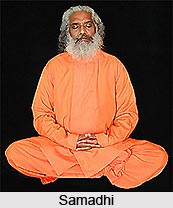
Patanjali documented the famous Yoga Sutras in a very concise manner. The sutras give us the earliest reference to the popular term Ashtanga Yoga, which translates literally as the eight limbs of yoga popularly known as the eightfold path. They are yama, niyama, asana, pranayama, pratyahara, dharana, dhyana and samadhi. The Mahabhasya, his great grammar, an archetypal work for fostering correct language was followed by his book ayurveda, the science of life and health. Patanjali`s final work on yoga was aimed at man`s psychological and devout evolution. All classical dancer in India honor Patanjali as a great dancer.
Patanjali`s sutras were the earliest and are still the most perceptive and enlightening study of human consciousness. He describes the enigma if human existence. In his sutras, Patanjali confirms that yoga practice helps us to transform ourselves, gain mastery over the mind and emotions, as well as overcome obstacles to our spiritual development. Patanjali`s works are followed by yogis to this day in their effort to develop a refined language, a cultured body and a civilized mind.
Patanjali -Author of Yoga Sutra
Patanjali, the author of Yoga Sutra has redefined the concept of Yoga in India.