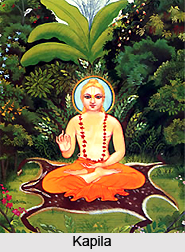
 In the Puranas, Kapila is described as an incarnation of Lord Vishnu. Kapila is a historical sage, who lived in the Indian subcontinent sometime around 500 BC. In Bhagavad Gita he is mentioned by Lord Krishna as perfect being. In Bhagavata Purana, Kardama Muni and devahuti are mentioned as his parents. After his father Kardama Muni left home, Kapila instructed her mother Devahuti in the philosophy of Yoga and the process of worshipping Lord Vishnu, enabling her to achieve both Moksha or liberation and pure love of God.
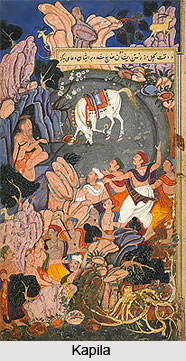
Kapila is associated with the story of Makar Sankranti and bringing down River Ganga from heaven. King Sagar of Ayodhya, who was the ancestor of Lord Rama, was also involved in that story. King Sagara had performed the sacrifice of Ashwamedha for ninety-nine times. In that sacrifice a horse is released and an army follows it. If any king arrests the horse then a fight occurs and if the battalion on the side of the sacred horse wins, the defeated king had to bow to its owner king. Finally when the horse returns to its own kingdom, it is killed and a grand Yajna is held. When king Sagara performed the Ashwamedha for the hundredth time, Indra, the king of heaven became so jealous that he kidnapped the horse and hid it in the hermitage of Kapila Muni.
The great king Sagara had sixty thousand sons who set in search of the horse and found it in the Ashram of Kapila. They believed Kapila to be the abductor and dishonored him. Kapila cursed the attacker so that they turned into ashes. Anshuman, the great grandson of king Sagara came to Kapila and prayed to him to redeem the souls of his sixty thousand ancestors. Kapila replied that if only Ganges descended from heaven and touched the ashes of the sixty thousand souls, then only they could be redeemed. As a result Bhagiratha brought Ganga to the earth.
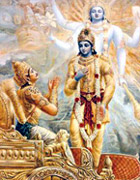
Kapila is prominent in the Bhagavata Purana. In the Bhagavad Gita Kapila is depicted as a yogi hermit with highly developed spiritual powers. Kapila is also mentioned by Lord Krishna in the Bhagavad Gita.
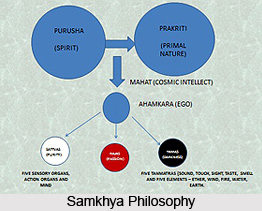
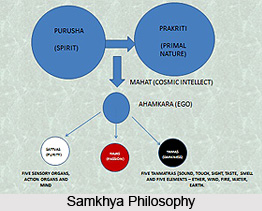
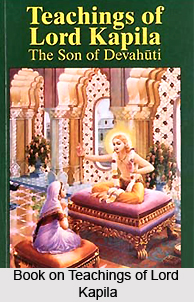 Kapila Muni was one of the great philosophers born to the great sage Kardama. His mother Princess Devahuti was a scholarly woman who had discarded all royal pleasures and dwelled in a hermitage. Kapila Muni being the notable son of his parents had published his famous philosophy, the Samkhya during 2800 BC. The chief points of his philosophy were:
 Lord Agni in the great Purana known by the name