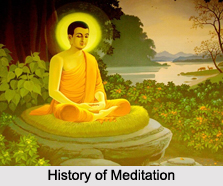
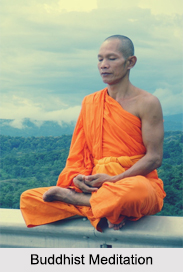
 Buddhist Meditation is a mental exercise, a form of psychological concentration that guides ultimately to enlightenment and spiritual freedom of the mind. In Buddhist religion, meditation occupies a vital place and has developed characteristic variations in different Buddhist traditions.
Aims of Buddhist Meditation
The purpose of Buddhist meditation is to learn the flow of mind, its functions and its powers and furthermore to distinguish between self-hypnosis, the development of mediumistic states and the real process of mental clarification. To identify the direct perception and the cluster of the mental perspectives are the object of Buddhist mental concentration. It admits to gain more than an intellectual understanding of the truth of life, to liberate the soul from the delusion and thereby put an end to both ignorance and craving. The Buddhist meditation is the source of a temporary retirement and the basis of the unique and authentic perseverance of the mind to free it from attachment, establish courage and discretion of soul.
Types of Buddhist Meditation
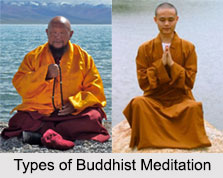
There are basically two types of Buddhist meditation; "Samatha" and "Vipassana". `Samatha` is the connotation of a pre-Buddhist Yogic form which Lord Buddha practiced extensively. This meditation is calm abiding or tranquillity supplier. It is the development of serenity that is a prerequisite to any further development. Even Lord Buddha incorporated some other forms to "Samatha" meditation. Another form of meditation in Buddhism, "Vipashyana" connotes a clear seeing or special insight which involves intuitive cognition of suffering and impermanence.
The other types of Buddhist meditation include "Anapanasati" or Mindfulness of Breathing which is one of the most universally applicable methods of cultivating mental concentration. Another is "Metta Bhavana" that connotes the thoughts of universal, undiscriminating benevolence, like radio waves reaching out in all directions; sublimate the creative energy of the mind. The rest of Buddhist meditations are Contemplation of Impermanence, Six Element Practice and Contemplation of Conditionality.
Moreover, Buddhist meditation practices include Theravada Buddhist meditation that is ramified into Anapanasati, Metta, Kammatthana and Vipassana. The Zen Buddhist meditation practice includes Shikantaza, Zazen and Koan. Vajrayana Buddhist meditation practices incorporate Mandala, Tonglen and Tantra. In addition to that some more related Buddhist practices add Mindfulness and Satipatthana. The traditional preliminary practices to Buddhist meditation include prostrations, refuge in the Triple Gem, five Precepts and chanting.
The more complicated meditations are practiced once the primary forms of meditations are performed and the results of these meditations are attained. Since the primordial era, the sages and practitioners of meditation have been recommending this process of bringing peace and tranquillity of mind in addition to reach the soul to the point of universal serenity.