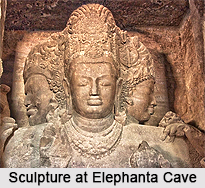
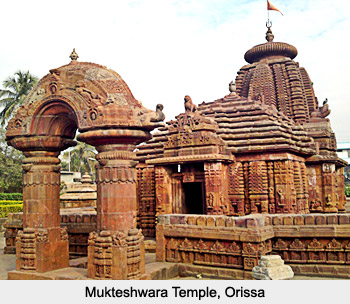
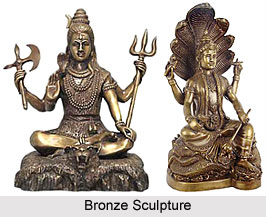
 Sculpture of Bronzes immensely radiates a sense of immortality and powerfully reflects the fascination and mystery about the ancient cultures of Buddhism, Jainism and Hinduism. The art of making Bronze sculptures began in the Indus Valley Civilization (2400-B.C.), where the Indus Bronze statuette of a slender-limbed "dancing girl" was found in Mohenjodaro. The stone sculptures and their inner sanctum images in the temple remained on a fixed place, until the 10th century, where the newly emerged religious concepts demanded that the deities should appear in a variety of public roles. As a consequence, large bronze images were created as these images could be carried outside the temple places. Then from the 9th to the 13th centuries in the Chola period, the art activities were carried out in enormous quantity, where new temples to show the architectural skills were built and old ones renovated with additional beauty and grand festivals were organized.
These art works are a visual interpretations of celestial beings, illustrate about the human condition of transcendence through which he led to spiritual enlightenment. Some of the features of the Bronze sculpture are closely linked with the regional basis. Some of the characteristics of Bronzes sculptures that are found commonly can be marked on the basis of geographical division:
Western Indian Bronze: The metal sculpture flourished in this region of Gujarat and Rajasthan from the 6th-12th century. Most of the Bronze sculptures from this side are associated with Jainism, including the savior figures of Mahavira and many ritual objects such as incense burners and lamp bearers. Made with using lost-wax casting method, the eyes and ornaments of the statue were frequently inlaid with silver and gold metal, to add look in it.
Eastern Indian Bronze: The metal sculpture flourished in the states of modern Bihar and West Bengal from the 9th century. Most of these metal sculptures were made from alloys of the eight metals; the bronze sculptures were produced by lost-wax casting only. These mainly represent various divinities like Shiva, Vishnu.
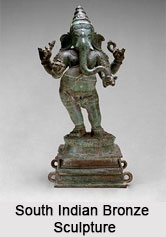
South Indian Bronze: The metal sculpture flourished in the districts of Thanjavur and Tiruchchirappalli in Tamil Nadu from the 8th-16th century. These artworks in Bronze were ranging from small household images to almost life-size sculptures intended to be carried in temple. These included the figures of Hindu divinities, especially in the various iconographic forms of the god Shiva and Lord Vishnu.
 Bronze is of exceptional historical interest and still used widely for various applications. It was prepared before 3000 BC, for making statues, coins and other decorative articles. Later, the bronze sculpture continued through the 10th and 11th centuries in many countries including India.
The Chola-period bronzes have their figures depicting sensuous and detailed clothing and jewelry. The art works of this period are famous for their subtle modeling and clear outline marked on the form, as well as for maintaining an ideal balance of graceful realism and heroic classicism. During Chola-period, Bronze images were made using the lost wax technique.
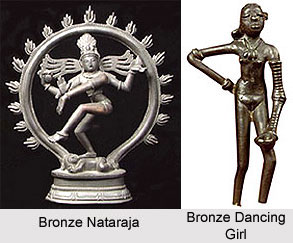
From this period only, many fine figures made from Bronze, an alloy of copper are famous - it contains Shiva in various forms, such as Vishnu and his consort Lakshmi, and the Shiva saints. The sculptors in the 11th and the 12th centuries worked in real sense to achieve classic quality. The best example of this is the form of Nataraja; the Lord of the dance is a creation of this period.
Even the Indus valley sculptures gain significant attention when aesthetic values are concerned. From many sculptures that are discovered from this place, the most remarkable is the statue of the dancing girl in Bronze, since it illustrates the details that were achieved through it, when considered as a whole. She is shown as nude with erect posture placing her right hand on her hip and both her legs are bent at the knee point as if she is dancing. A trefoil necklace and the bangles worn in her left arm are carved beautifully. Available to us from centuries, the Bronze temple images seem to have been cast specially for eternity.